championfactoryministry777@gmail.com
(858) 316-8408
Estos Términos de Uso rigen tu acceso y uso del sitio web de Champion Factory Ministry en championfactoryministry.org. Al acceder o usar nuestro sitio web, aceptas estar sujeto a estos términos. Si no estás de acuerdo, por favor no uses el sitio.
Champion Factory Ministry es una organización sin fines de lucro registrada como 501(c)(3) con sede en California. Nuestro EIN es 41-4910669. Existimos para servir a comunidades vulnerables a través del alcance, el apoyo en la recuperación, alianzas con orfanatos y programas basados en la fe en los Estados Unidos, México y Filipinas.
Correo electrónico: support@championfactoryministry.org
Teléfono: (858) 316-8408
Aceptas usar este sitio web únicamente para fines lícitos y de una manera que no infrinja los derechos de otros ni restrinja su uso y disfrute del sitio.
Aceptas no:
Todo el contenido de este sitio web, incluyendo texto, imágenes, gráficos, logotipos y video, es propiedad de Champion Factory Ministry o de sus colaboradores de contenido, y está protegido por las leyes aplicables de derechos de autor y propiedad intelectual.
Puedes compartir enlaces a nuestro contenido y citar breves extractos para fines no comerciales con la atribución adecuada. No puedes reproducir, republicar, vender ni distribuir nuestro contenido en ninguna forma sin permiso previo por escrito.
Para solicitar permiso, contáctanos en support@championfactoryministry.org.
Las donaciones realizadas a través de este sitio web se procesan de forma segura a través de nuestro procesador de pagos externo. Todas las donaciones son definitivas a menos que se indique lo contrario en nuestra Política de Donaciones. Por favor revisa nuestra Política de Donaciones para obtener información sobre reembolsos, donaciones recurrentes y cómo se utilizan los fondos.
Las donaciones a Champion Factory Ministry pueden ser deducibles de impuestos en la medida permitida por la ley. Recomendamos consultar a un asesor fiscal calificado con respecto a tu situación específica.
Este sitio web se proporciona "tal cual" y "según disponibilidad". Champion Factory Ministry no ofrece garantías, expresas o implícitas, con respecto a la exactitud, integridad, confiabilidad o disponibilidad del sitio o su contenido.
No garantizamos que el sitio sea ininterrumpido, libre de errores o libre de virus u otros componentes dañinos.
En la máxima medida permitida por la ley, Champion Factory Ministry y su liderazgo, personal y voluntarios no serán responsables de ningún daño indirecto, incidental o consecuente que surja del uso de este sitio web o de la confianza en su contenido.
Nuestro sitio web puede contener enlaces a sitios web de terceros para tu comodidad. Estos enlaces no constituyen un respaldo de esos sitios ni de su contenido. No somos responsables del contenido, la exactitud ni las prácticas de ningún sitio web de terceros.
Podemos actualizar estos Términos de Uso periódicamente. Las actualizaciones se publicarán en esta página con una fecha de vigencia revisada. El uso continuado del sitio web después de que se publiquen los cambios constituye tu aceptación de los términos actualizados.
Estos Términos de Uso se rigen por las leyes del Estado de California, sin tener en cuenta los principios de conflicto de leyes. Cualquier disputa que surja de estos términos estará sujeta a la jurisdicción exclusiva de los tribunales ubicados en el Condado de San Diego, California.
Si tienes preguntas sobre estos Términos de Uso, contáctanos:
Champion Factory Ministry
Correo electrónico: support@championfactoryministry.org
Teléfono: (858) 316-8408
Sitio web: championfactoryministry.org
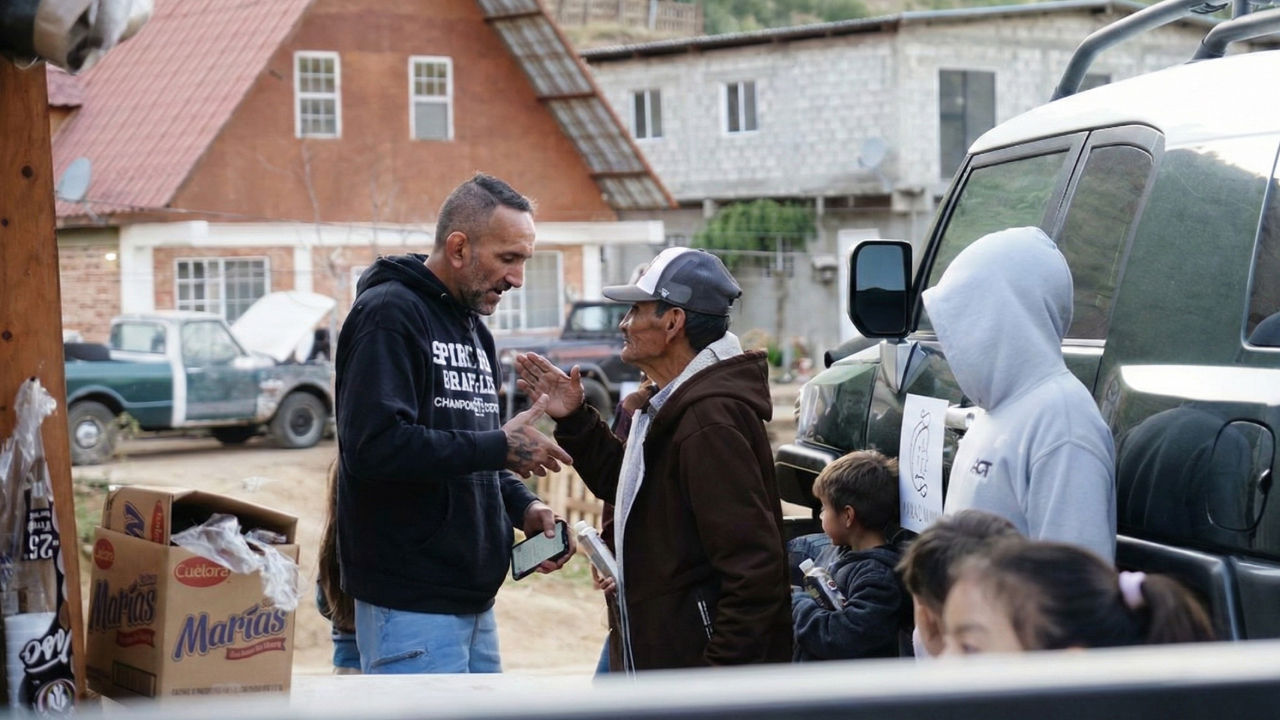
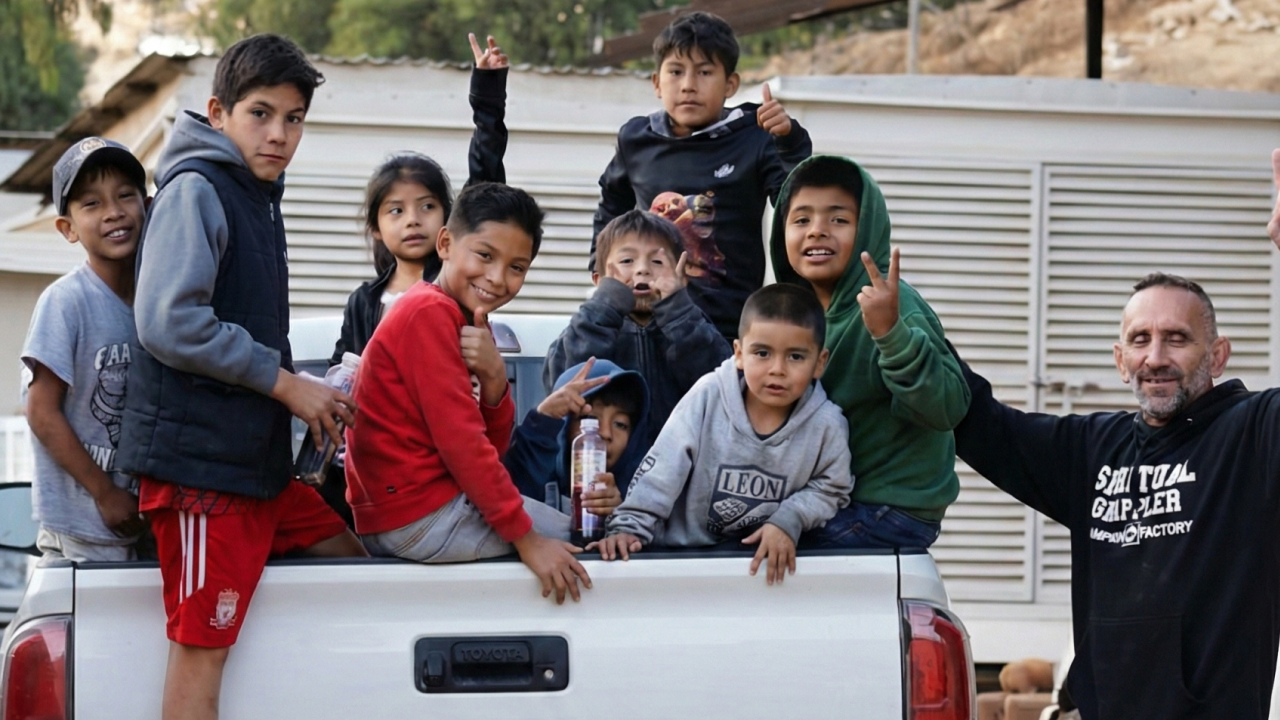
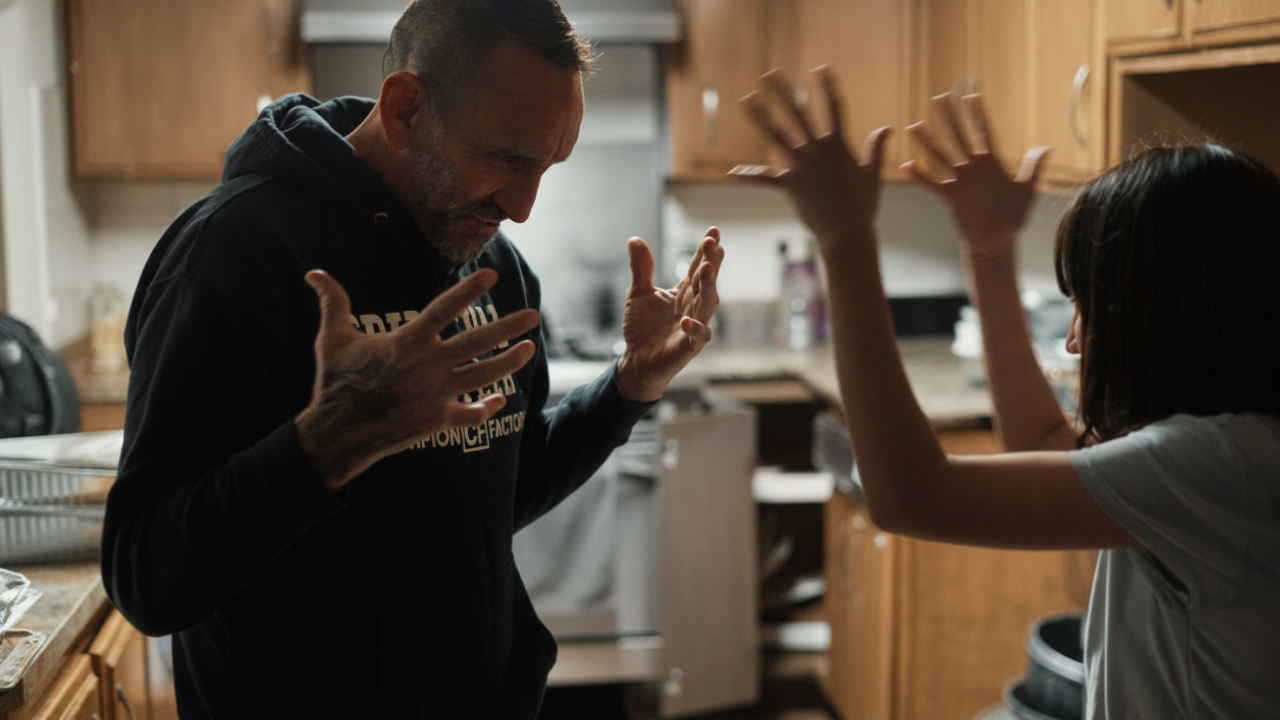

Help us build a full 10-station computer lab, matching or beating what a typical U.S. school classroom has, so these students learn on real, current technology.
Right now, students at this school have never touched a school computer. No lab, no keyboard, no login of their own, while kids just across the border grow up assuming a laptop is part of a normal classroom.
A complete 10-station lab, not hand-me-down machines. Each workstation is a Dell Tower Desktop with an Intel Core Ultra processor, 16GB of DDR5 RAM, a 1TB solid-state drive, Windows 11 Pro, Wi-Fi 6, and a 27-inch monitor, the same specs (or better) as a current U.S. school computer.
Rounding out the lab: two HP LaserJet Pro multifunction printers (print, scan, copy, and fax) shared across the ten stations, the same ratio U.S. school labs use; battery backup power protection on every few stations, which matters because power fluctuations are common in this area and a surge can take out a computer in seconds; webcams for video calls and distance learning; a wired network switch to keep the connection reliable; and a year of Microsoft 365 Education so every student has real Word, Excel, and PowerPoint access, not a trial version.
| Item | Qty | What it does |
|---|---|---|
| Dell Tower Desktop, Core Ultra, 16GB RAM, 1TB SSD | 10 | The workstation itself |
| Dell 27" monitor | 10 | Display for each station |
| HP LaserJet Pro multifunction printer | 2 | Shared print, scan, copy, fax |
| APC UPS battery backup | 4 | Power protection against outages and surges |
| Surge protector power strips | 10 | Secondary protection per station |
| 1080p webcams | 10 | Video calls and distance learning |
| Network switch | 1 | Wires the lab for reliable internet |
| Microsoft 365 Education (1 year) | 1 license | Word, Excel, PowerPoint for every student |
Goal: $15,000
Hands-on access to real technology means these students walk into a digital world already knowing how to use it, instead of learning for the first time on the job, or not at all. It's the same standard of classroom technology kids get across the border, just a few miles and a very different budget away.
New. Every workstation is a current-model Dell Tower, fully loaded and ready for students on day one.
Power fluctuations are common in this area, and an unprotected surge can damage a computer instantly. The backup units protect the investment.
Ten complete workstations, plus the printers, power protection, networking, and software a working lab needs, not just the bare machines.
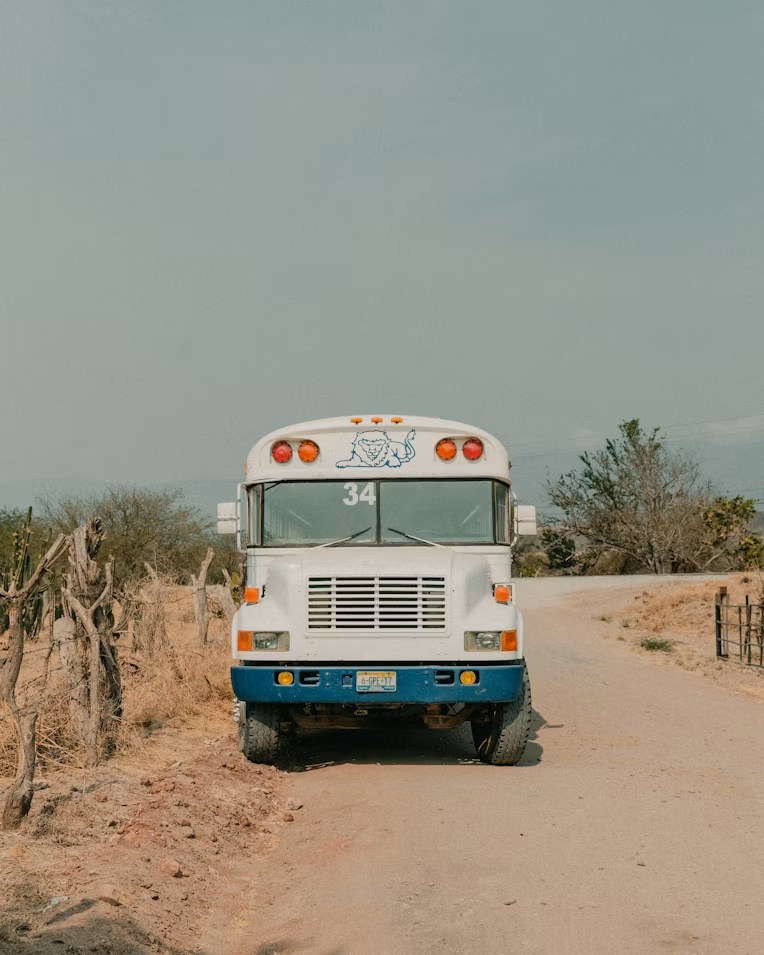
Help us bring home a safe, reliable van so kids in this community never miss a day of school because they had no way to get there.
For many kids in this community, the walk to school isn't safe: long distances, no sidewalks, no dependable way to get there and back. When there's no ride, kids miss school, and missed school adds up fast for a child already facing more obstacles than most.
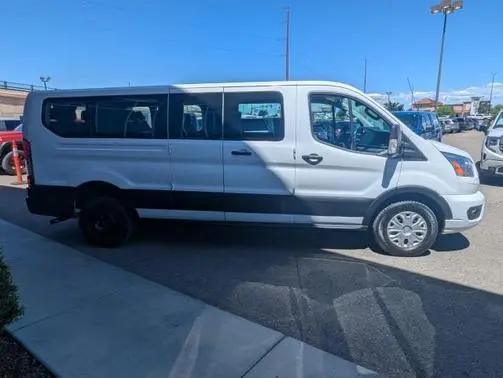
A 2019 to 2021 Ford Transit 350 XLT, a 15-passenger van built specifically for the job. From 2020 onward, the Transit comes standard with forward collision warning, automatic emergency braking, and pedestrian detection, with blind spot warning and adaptive cruise control available as options. It's a non-CDL vehicle, meaning our own staff can drive it without a special license, and it's a platform mechanics everywhere know well, which matters for a vehicle running rough roads in a maintenance-limited area.
A new 15-passenger van in this class starts north of $60,000, well outside what this cause needs to raise. But a clean, low-mileage 2019 to 2021 Ford Transit 350 XLT, already equipped with modern safety features, typically runs $22,000 to $25,000 on the used market, right in this campaign's $25,000 goal. That's the sweet spot: full safety equipment, a reliable and well-known platform, at a fraction of the cost of new.
A reliable ride means a student shows up to class instead of missing another day. It means parents don't have to choose between getting to work and getting their kids to school safely. One van, used every school day, keeps a whole group of kids connected to their education, and to the community activities that happen around it.
Goal: $25,000
A 15-passenger van covers the same route and rider count a small school bus would, at a fraction of the purchase price, insurance cost, and licensing requirement, since it doesn't require a commercial driver's license to operate.
Forward collision warning, automatic emergency braking, and pedestrian detection come standard on 2020 and newer Transit models, with blind spot warning and adaptive cruise control available.
Used. A well-maintained 2019 to 2021 model gives us the same safety equipment as a new van, at less than half the cost.
Daily school transport for children in the community, plus trips to other community activities tied to the ministry's work.
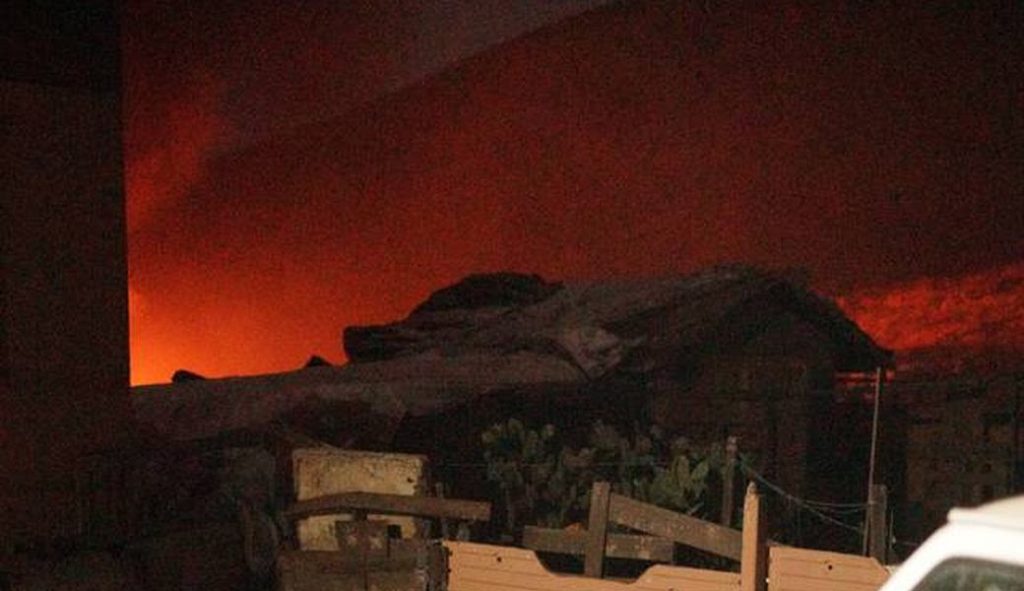
After watching a neighbor's home burn down in this same neighborhood, we made a decision: this school would be built in steel, not wood. Help us finish two fireproof classrooms and a kitchen so 48 students have a safe place to learn and breakfast to start the day.
For years, our team has built homes in the hillside neighborhoods around Tijuana: foam panels and wood framing, because that's what a family here can afford. We've handed over keys. We've watched kids run through rooms that were theirs for the first time.
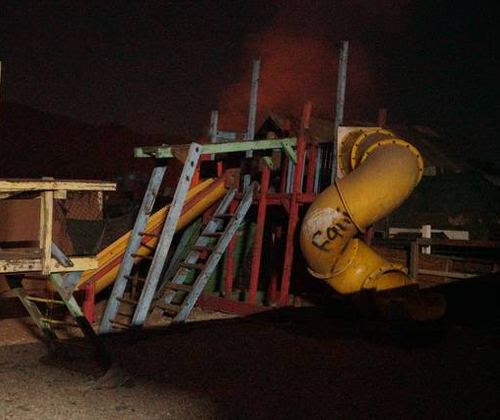
But a few doors down from one of those homes, another family's house burned to the ground. We came back afterward, not to build, but to help the community pick itself back up, and stood in the ashes of what used to be someone's kitchen, someone's bedroom. It's happened more than once, in more than one neighborhood.
So when it came time to give these kids their first real school, we were not going to build it the same way.
A candle burns at up to 2,500°F. Wood starts to burn at around 450°F. Steel doesn't even begin to weaken until well past that: a gap big enough that it changed what this school is made of.
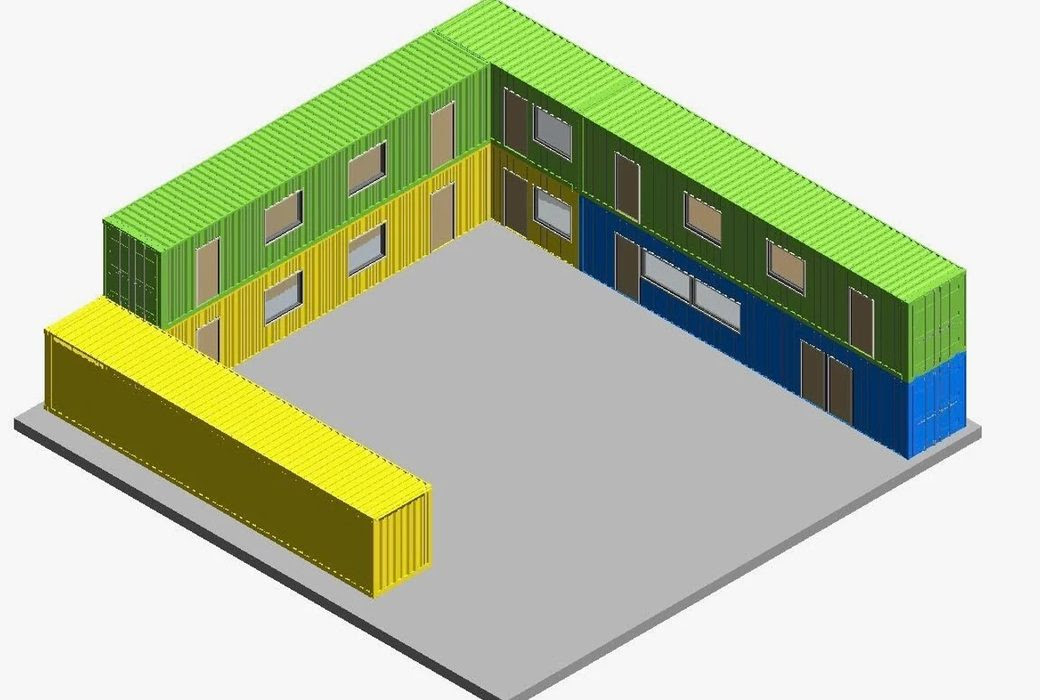
That's why this classroom isn't foam panels and lumber. It's two 40-foot steel shipping containers. Converting them is slower, harder work than framing a wood building: every door and window has to be cut by hand straight out of the steel wall, then framed and welded back so the container is just as strong with openings in it as it was without. But it means these kids get a classroom built to outlast what took a neighbor's home in minutes.
A standard 40-foot high-cube shipping container measures about 39.5 feet long, 7.8 feet wide, and 8.9 feet high on the inside, roughly 285 square feet of usable floor space once walls and framing are in. That high-cube ceiling height matters for classroom comfort; it's noticeably better than a standard container's lower ceiling.
For capacity, we're seating 20 to 24 students per container. A spacious U.S. classroom runs closer to 45 square feet per student, but that includes room most schools don't strictly need: reading corners, extra storage, wide aisles. Container classrooms worldwide operate safely and comfortably at a tighter, efficient row layout, and 20 to 24 students per room is the number that keeps this classroom real and functional without feeling cramped.
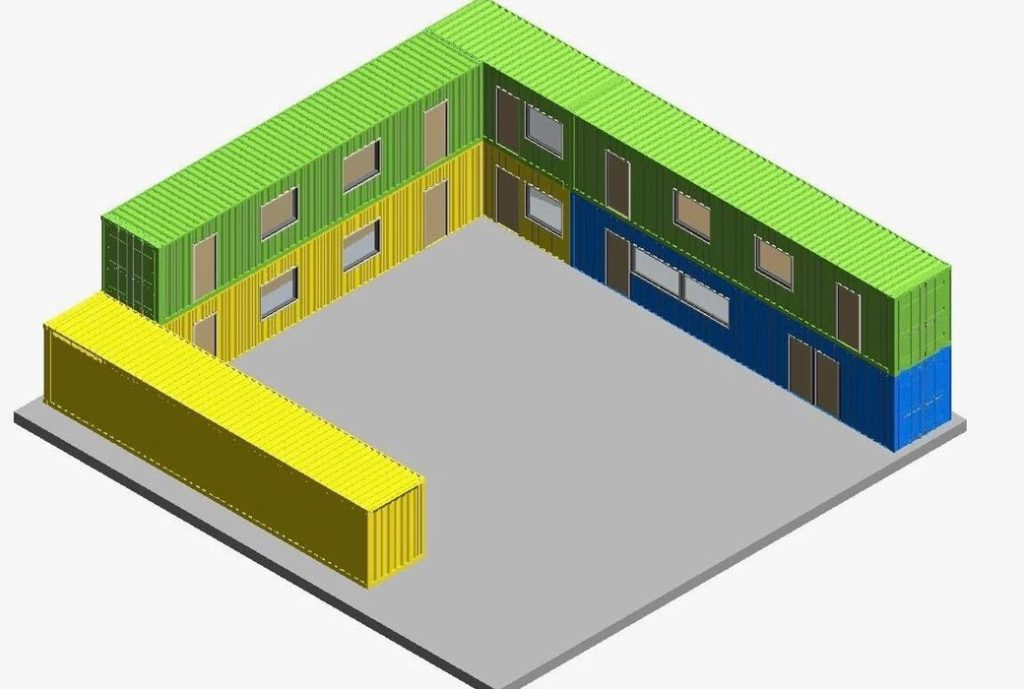
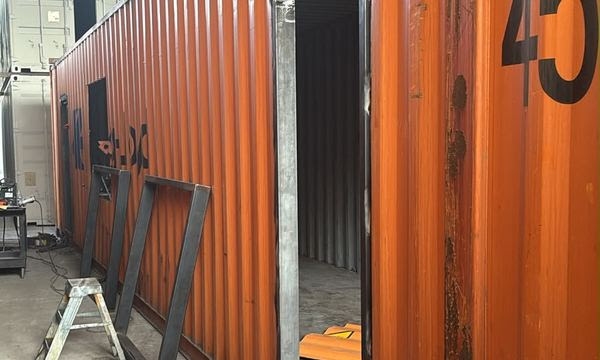
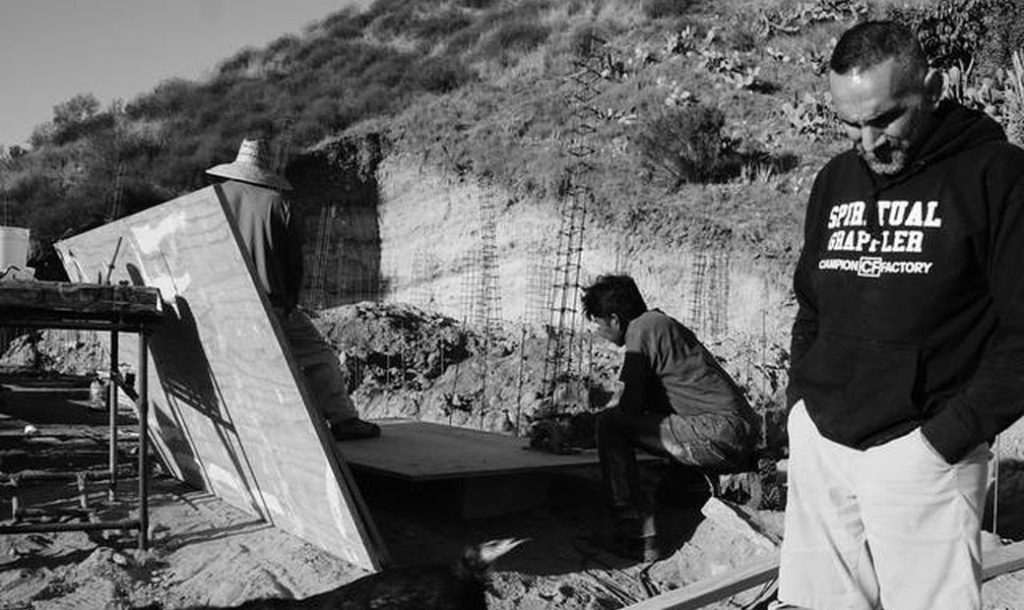
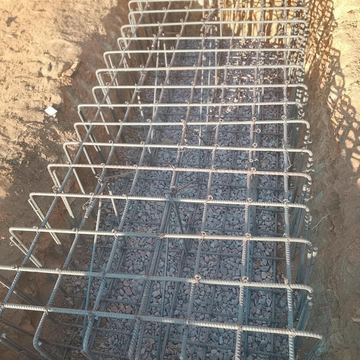
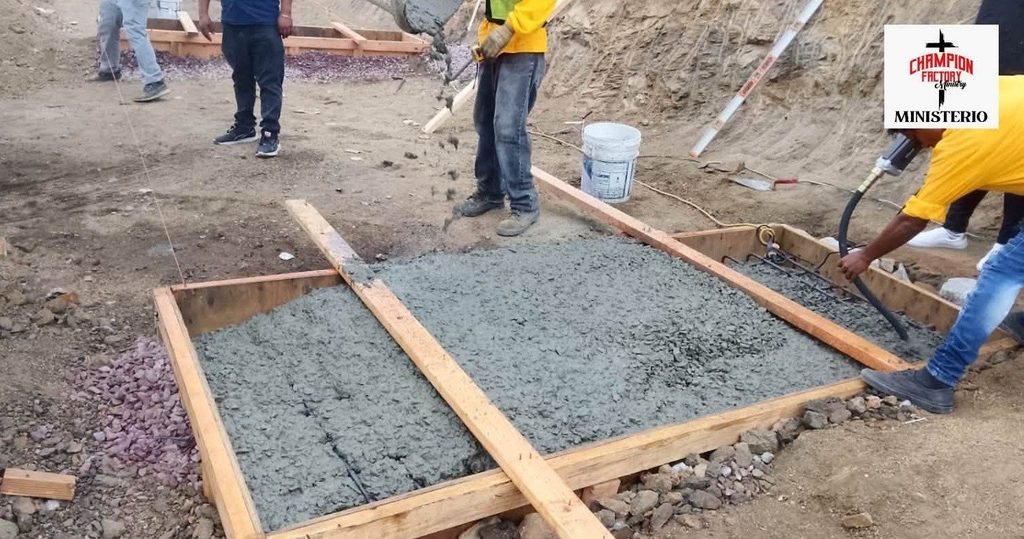
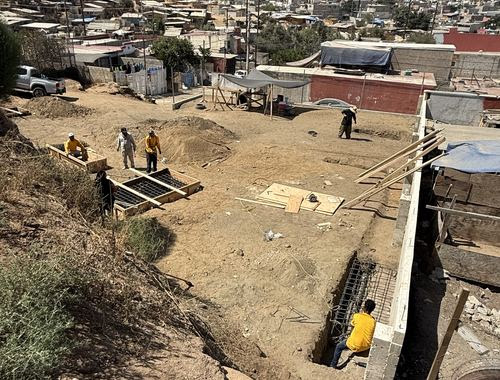
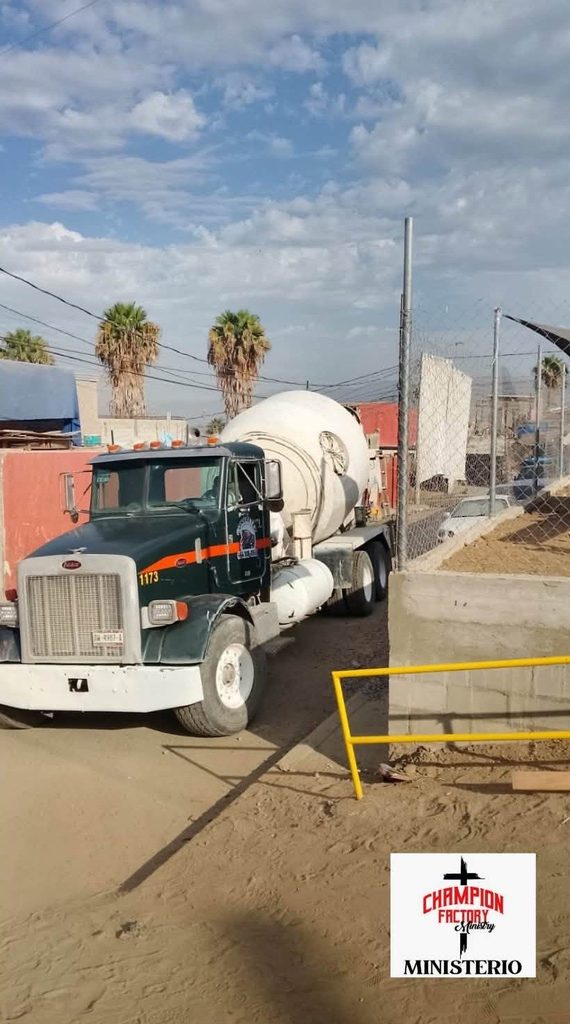
As of September 2026: both classroom containers have been cut, framed, sealed, primed, and painted, one green, one blue, and have left the fabrication yard on flatbed trucks bound for the school site. On the hillside, the crew has already poured the foundations these containers will sit on, footing by footing, with every rebar cage tied by hand.
Next up: insulation, wiring, lighting, and desks inside the classrooms, plus construction of the kitchen next door.
A finished classroom means a student sits at a real desk for the first time. It means breakfast every school day, not just some. And it means the building around them won't disappear in an afternoon the way homes nearby already have. Somewhere on that Tijuana hillside, in a room that doesn't exist yet, a child is about to have their first day of real school.
Goal: $45,000
Steel doesn't burn the way the wood and foam homes in this neighborhood do. After watching a nearby house burn down, we chose a material built to last decades, not years.
48 students, seated across two converted classrooms, 20 to 24 per room.
A hillside neighborhood in Tijuana, Mexico, where CFM has worked for years.
No, it's phase one. The full plan is two levels of steel classrooms wrapped around a courtyard, built section by section as funding allows and more kids come.
The $45,000 goal covers finishing both classrooms (insulation, wiring, desks) and building the kitchen that will serve breakfast to every student.