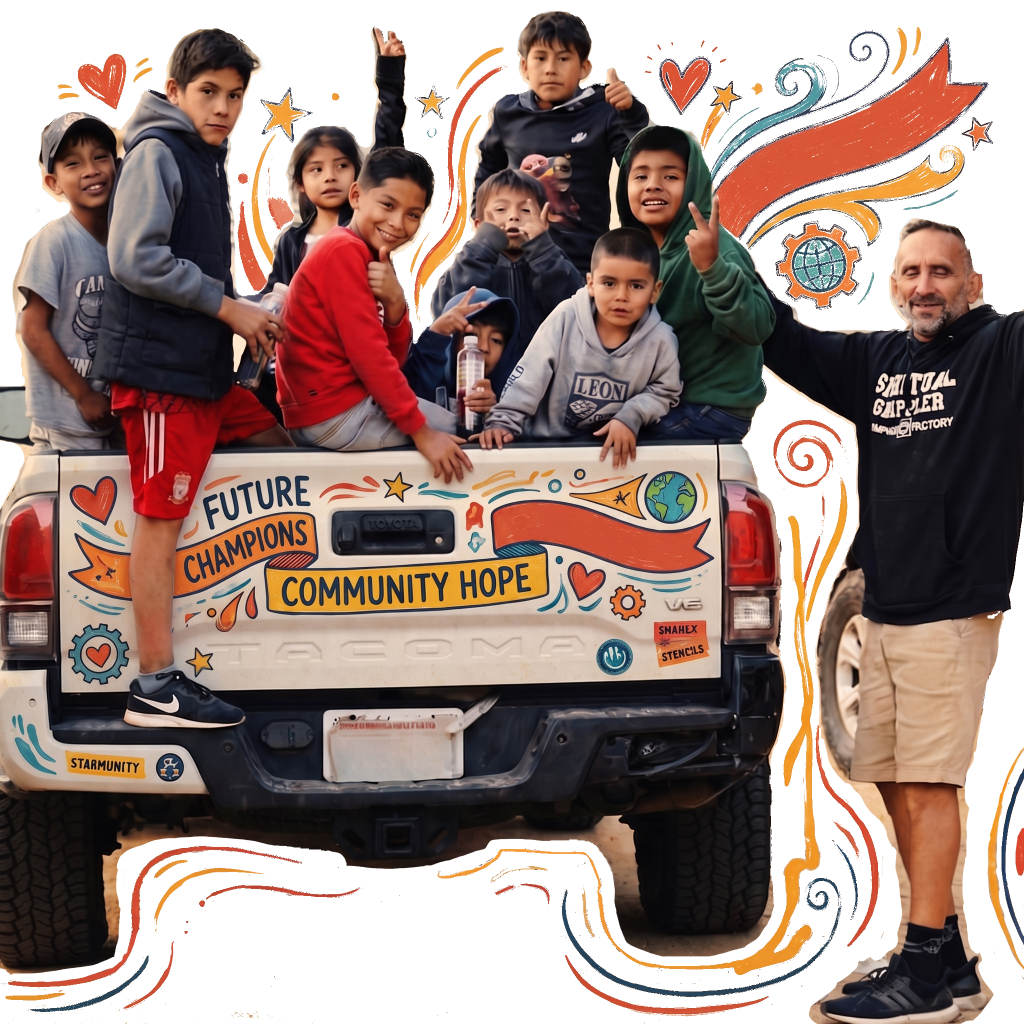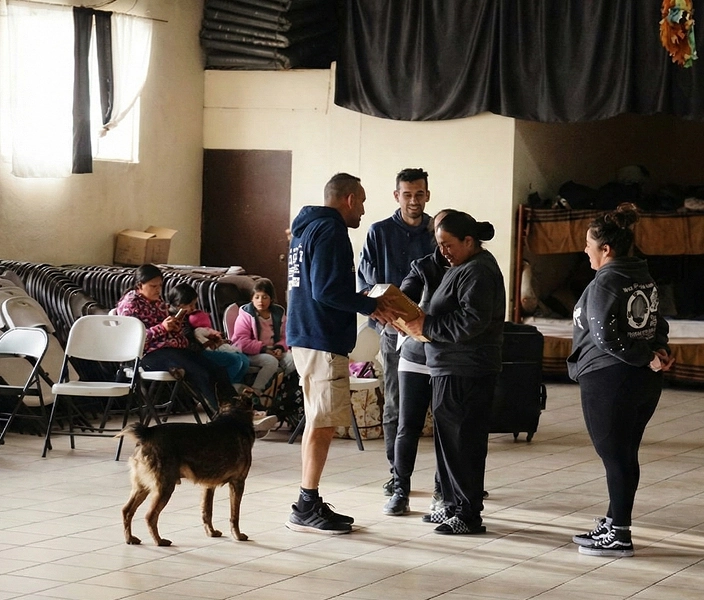





The need for community support around vulnerable children is not distant or abstract. Millions of families across the United States live in conditions that make daily life genuinely hard. There is often not enough food, not enough stable adult support, and not enough stability when one difficulty follows another. The children inside those families carry those conditions into school, into relationships, and into adulthood.
Faith communities are responding to that need, and the response matters. This article explains why supporting vulnerable children is one of the most significant forms of care a faith-based organization can offer, what the data and scripture say about the stakes, and what long-term, dignified support actually looks like in practice.
The Scale of Child Hardship in the United States Today
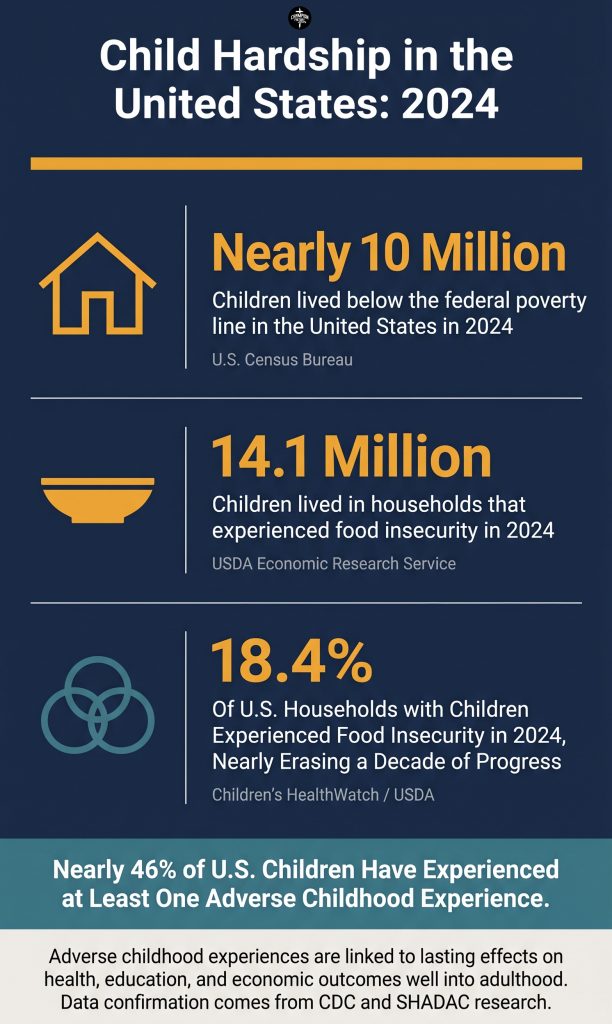
According to the U.S. Census Bureau, 13.4% of U.S. children, nearly 10 million in total, lived below the federal poverty line in 2024. That same year, the USDA reported that 14.1 million children lived in households that experienced food insecurity. These are not outliers. They reflect a widespread and ongoing pattern of hardship that touches families in every region of the country, including communities where a local church or ministry is among the most consistent and trusted presences in a neighborhood.
Food insecurity among households with children reached 18.4% in 2024, according to Children's HealthWatch, citing USDA data. That figure nearly erases a full decade of progress. It reflects growing pressure on families who are working hard but cannot consistently provide adequate food for their children.
"The families we work with are resourceful. What they often lack is consistent access to food and a steady adult presence. When both of those needs are met over time, the difference is real." Patty Villa, Mexico Community Outreach and Educational Intervention Director
Understanding the scale of this need matters for faith communities because compassionate responses work best when they are grounded in reality. These numbers represent real children with real families. Knowing the scope of the problem is the first step toward responding well.
What the Bible Says About Caring for Vulnerable Children
Scripture is direct and consistent about the responsibility of God's people toward children who lack protection or stability. Psalm 68:5 describes God as "a father to the fatherless, a defender of widows." James 1:27 calls caring for orphans and widows in their distress the mark of genuine faith. These are not minor or peripheral texts. They reflect the character of God and the shape of the community he builds around that character.
Jesus placed children at the center of his teaching. In Matthew 18:5 he said, "Whoever welcomes one such child in my name welcomes me." That welcome is both relational and spiritual. It is a posture toward people the world tends to overlook.
Isaiah 1:17 connects that posture to action: "Learn to do good. Seek justice. Help the oppressed. Defend the cause of orphans" (NLT). The call is to show up, take action, and stay engaged. Faith-based community work is the lived expression of these texts.
Why Faith Communities Are Uniquely Positioned to Help
Faith communities bring something to child welfare that government systems and secular programs often cannot replicate: community trust built over time through consistent, genuine relationships. Research from Casey Family Programs notes that in many neighborhoods, families hold deep mistrust of formal agencies, while local faith organizations have earned credibility through long-term presence and real investment in their neighbors. That trust creates access and opportunities that formal programs simply cannot.
When a family will not approach a government office, they may accept a meal, a conversation, or a mentoring relationship from a church they already know. Faith communities also draw volunteers motivated by calling and conviction rather than program requirements. That kind of commitment sustains long-term relational work in ways that institutional staffing cannot.
"When a church has been part of a neighborhood for years, families already know the people there. That familiarity makes it possible to have conversations and offer support that a new program or agency simply cannot." Robert Crouse, Community Liaison
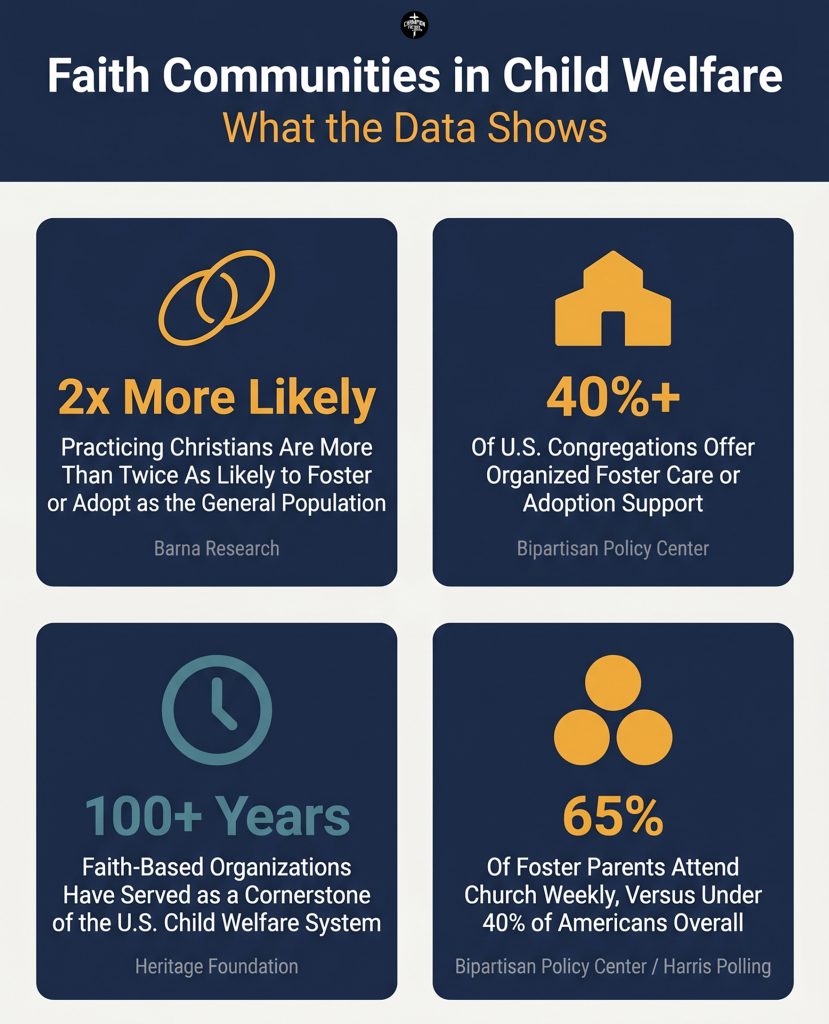
The data reflects this engagement. According to research from the Bipartisan Policy Center and Barna Research, practicing Christians are more than twice as likely to foster or adopt as the general population. More than 40% of congregations in the United States offer organized support around foster care and adoption. Faith-based organizations have also served as a cornerstone of the U.S. child welfare system for over 100 years, with states continuing to rely on them for foster care, adoption services, and family support programs.
The Long-Term Impact of Sustained, Consistent Support
Children who experience serious adversity early in life carry those experiences into adulthood in ways that affect their health, education, and relationships. According to the CDC and research compiled by the State Health Access Data Assistance Center, nearly 46% of U.S. children have experienced at least one adverse childhood experience. Adults who experienced four or more such events face significantly higher rates of chronic health conditions and lower educational and economic outcomes. Early, sustained support is one of the most effective ways to shift that pattern.
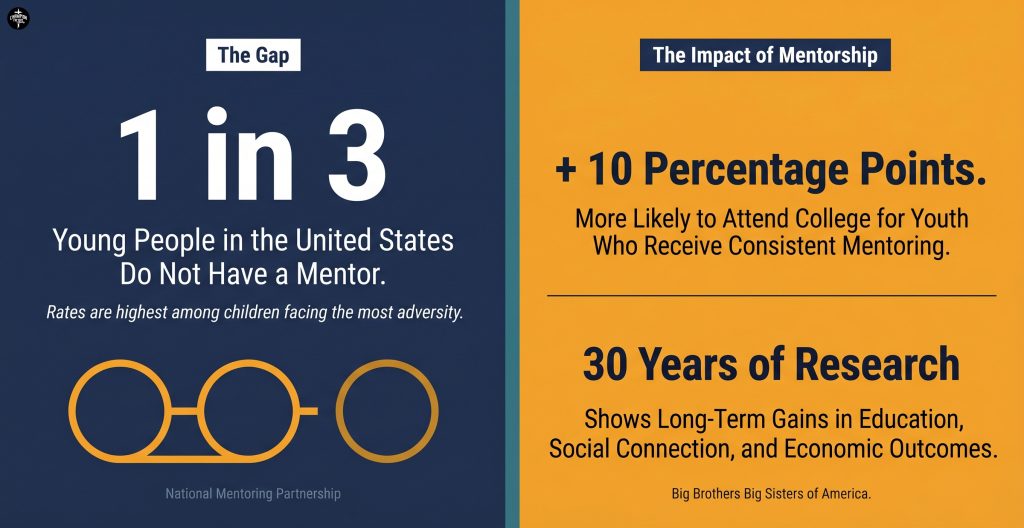
Mentorship is a central part of that sustained support. A long-term study from Big Brothers Big Sisters of America found that children who received consistent mentoring were 10 percentage points more likely to attend college, with lasting gains across social and economic areas of life. Peer-reviewed research confirms that a stable, committed adult relationship is one of the most significant protective factors for children growing up in difficult circumstances.
The gap in availability is real. The National Mentoring Partnership reports that one in three young people in the United States lacks a mentor, with the highest rates of absence among children facing the most adversity.
The ministry's mentorship and discipleship programs are built on this understanding. Sustained presence over time is the work.
What Trauma-Informed, Dignity-Centered Support Looks Like
Trauma-informed support means recognizing that many children and families have been shaped by experiences of harm, loss, or instability, and that how care is offered matters as much as what is offered. It means approaching people with patience, consistency, and respect. In a faith context, it means seeing every person as someone with dignity and potential, regardless of the circumstances that brought them to the door.
"We have learned that how you show up matters as much as what you bring. A child who has experienced harm does not need urgency. They need someone who will come back." Patty Villa, Mexico Community Outreach and Educational Intervention Director
In practice, trauma-informed, dignity-centered support looks like:
- Providing food and essential care in an environment free from shame or qualifying conditions
- Building mentoring relationships that are patient and grounded in the person's own pace and growth
- Offering discipleship and spiritual support that meets people where they are
- Responding to individuals impacted by unsafe situations or exploitation with care, compassion, and connection to appropriate professional and legal support
For individuals facing serious trauma, mental health challenges, or legal concerns, community care works best alongside licensed counselors, healthcare providers, and other professional services. The ministry actively encourages those in need of that support to access it, and programs are designed to complement professional care, not replace it.
How to Engage Meaningfully in This Work
Meaningful engagement with vulnerable children does not require a professional background or a formal title. It requires consistency and care offered without conditions. Proverbs 31:8-9 calls believers to "open your mouth for the mute, for the rights of all who are destitute. Open your mouth, judge righteously, defend the rights of the poor and needy" (ESV). That call is active and practical, and it is within reach of any willing community member.
There are several ways to get involved:
- Volunteer for the mentorship program and commit to showing up consistently for a child or young person over time
- Support food and essential care outreach through donations or hands-on service with families in need
- Connect your church or organization as a community partner in long-term ministry work
- Give toward recovery support and discipleship programs that help individuals rebuild stability and hope
- Pray consistently for the children, the families, the volunteers, and the broader community being served
Learn more about current opportunities through the volunteer and involvement page at Champion Factory Ministry. Every form of participation counts, and consistent engagement over time makes the deepest difference for the children served.
Choosing to Stay: The Heart of Faith-Based Community Care
Vulnerable children do not need perfect systems. They need people who show up, and keep showing up. The research is consistent, and scripture has always been clear: stable, caring relationships are among the most significant factors for lasting change in a child's life.
The ministry's work in mentorship, food outreach, discipleship, and recovery support is grounded in the belief that faith-based care fills a relational and spiritual gap that formal systems are simply not designed to address. A trusted adult who stays present, brings dignity-centered care, and points a child toward hope is not something a policy program can create.
If you feel drawn to this work, that response is worth following. It comes from genuine calling. Take one step. Learn how to get involved, give, or partner through the ministry's involvement page, and become part of a community that chooses to stay.
Frequently Asked Questions
Why Do Vulnerable Children Need Long-Term Community Support Rather Than One-Time Help?
Short-term help meets an immediate need, and that matters. But children who have experienced poverty, food insecurity, or early trauma need consistent relationships to address the developmental and relational gaps those experiences create. Research confirms that sustained mentoring and community support produce better long-term outcomes in education, health, and social wellbeing. One-time giving is valuable, but it does not replace the stability of an ongoing relationship.
What Does Trauma-Informed Support Mean in a Faith Community Setting?
It means recognizing that many people carry the lasting effects of past harm, and that how care is given matters. In a faith community setting, trauma-informed support is patient, non-judgmental, and consistent. It avoids shame and pressure. It also means knowing when to connect someone with professional counseling, medical care, or legal support, and actively helping them access those resources alongside any community-based care being offered.
What Does the Bible Say About Caring for Children in Need?
Several passages speak directly to this. Psalm 68:5 presents God as a father to the fatherless. James 1:27 describes caring for orphans in their distress as central to genuine faith. Isaiah 1:17 calls believers to actively defend the oppressed and take up the cause of orphans and the vulnerable. These texts reflect a consistent biblical theme: caring for children in need is an expression of who God is and what he calls his people toward.
How Does Champion Factory Ministry Approach Work with Children Facing Serious Harm?
The ministry serves individuals impacted by exploitation, unsafe situations, and significant adversity using trauma-informed, dignity-centered care. This work focuses on safety, support, and long-term restoration. For individuals who need mental health, legal, or medical services, the ministry actively encourages access to those professional resources and works alongside them as a complementary source of relational and spiritual care.