






Read through the Gospels and you will notice that Jesus carries more than one title. People often ask why one person is called both the Son of God and the Son of Man. The two phrases can sound almost opposite, and that leaves many sincere readers confused.
This article explains both titles in plain words. You will learn what each one means, where they come from, and why they fit together. You will also see why this truth brings real comfort when life feels heavy.
What Does "Son of God" Mean?
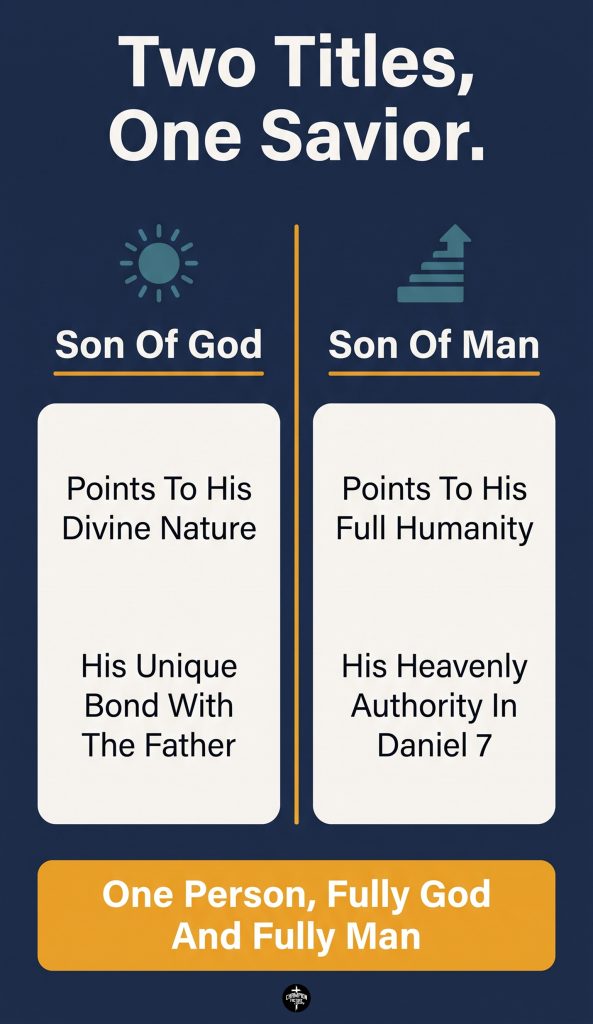
Son of God means Jesus shares the very nature of God and a unique relationship with God the Father. The title does not describe a created being or a good teacher. It points to His divine identity. When the Bible calls Jesus the Son of God, it says that He is fully God, one with the Father in a way no one else is.
This title appears at key moments in the Gospels. At His baptism, and again at the transfiguration, a voice from heaven calls Jesus "my Son." When Peter says, "You are the Messiah, the Son of the living God" (Matthew 16:16, NIV), Jesus welcomes the words rather than correcting them.
One common mix up is worth clearing up. The Bible also calls believers children of God. That happens through adoption into God's family. Jesus's sonship is different. He is the unique and eternal Son, not a son by adoption. In the Old Testament, kings and the nation of Israel were sometimes called sons of God, so the first hearers did not always treat the phrase as a claim to deity. The New Testament makes Jesus's unique sonship clear.
What Does "Son of Man" Mean?
Son of Man means Jesus is fully human. He was born, grew tired, felt hunger, and knew sorrow. Yet the title holds more than humanity. It also points to a heavenly figure of great authority. Son of Man was the title Jesus used for Himself most often, and it carries both His closeness to us and His royal power.
At a plain level, the phrase "son of man" was a common Old Testament way to say "a human being." God addressed the prophet Ezekiel that way many times, simply meaning a person. So when Jesus used the title, people heard humility and humanity first.
That surface meaning is real, but it is not the whole picture. The title has a deeper root that most readers miss, and that root changes how you read the Gospels.
Where Does the Title "Son of Man" Come From?
The deeper meaning of Son of Man comes from the book of Daniel. In a night vision, Daniel saw one like a son of man coming with the clouds of heaven and receiving an everlasting kingdom. This figure was no ordinary man. He held divine authority. By taking this title, Jesus pointed straight to that prophecy and to His own royal identity.
Here is the passage that shaped the title. "In my vision at night I looked, and there before me was one like a son of man, coming with the clouds of heaven" (Daniel 7:13, NIV). The vision goes on to say this figure receives authority, glory, and a kingdom that will never end.
So the title is not a small word for a regular person. It joins true humanity with heavenly authority. This is why so many readers misunderstand it. They hear only "human," when Jesus meant much more.
Why Did Jesus Call Himself the Son of Man So Often?
Jesus used Son of Man more than any other title because it held truth without forcing a fight. The word sounded humble, yet it pointed to Daniel's prophecy for those ready to listen. It let Jesus reveal His mission step by step, including His suffering and His coming glory, without matching the crowd's hope for a political king.
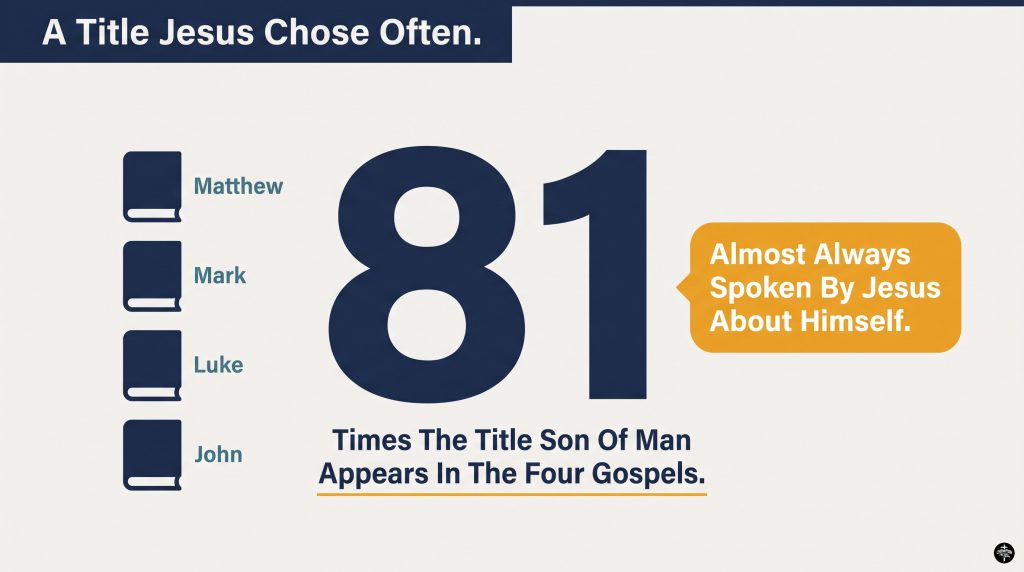
The title appears about 81 times in the four Gospels, almost always on Jesus's own lips. Scholars have studied its meaning for well over a century and still debate the finer points. That is a good reason to explain it with care and to avoid overclaiming.
"In outreach, people connect with the Son of Man first. They meet someone who understands their life before they trust His authority to change it." Art Montgomery, Global Evangelism Strategy Architect
One scene brings both titles together. At His trial, the high priest asked Jesus if He was the Messiah, the Son of the Blessed One. Jesus answered, "I am," and spoke of the Son of Man seated at the right hand of God and coming on the clouds of heaven (Mark 14:61-62, NIV). In that moment, the Son of God and the Son of Man are the same person.
Do the Two Titles Contradict Each Other?
No. The two titles do not contradict each other. They describe one person from two angles. Jesus is fully God and fully man at the same time. Son of God highlights His divine nature. Son of Man highlights His full humanity and His authority. The early church affirmed this with care, teaching that Jesus is one person, not two.
Scripture shows this union plainly. "The Word became flesh and made his dwelling among us" (John 1:14, NIV). Paul wrote that Jesus, "being in very nature God," took "the very nature of a servant" and was "made in human likeness" (Philippians 2:6-7, NIV). Centuries later, the early church affirmed at the Council of Chalcedon that Jesus is truly God and truly man, one person with two natures.
A simple comparison can help you hold both truths at once.
| Title | What It Points To | A Verse To Read |
|---|---|---|
| Son of God | Jesus's divine nature and His unique bond with the Father | Matthew 16:16 |
| Son of Man | Jesus's full humanity and His heavenly authority | Daniel 7:13-14 |
Why This Truth Matters When Life Is Hard
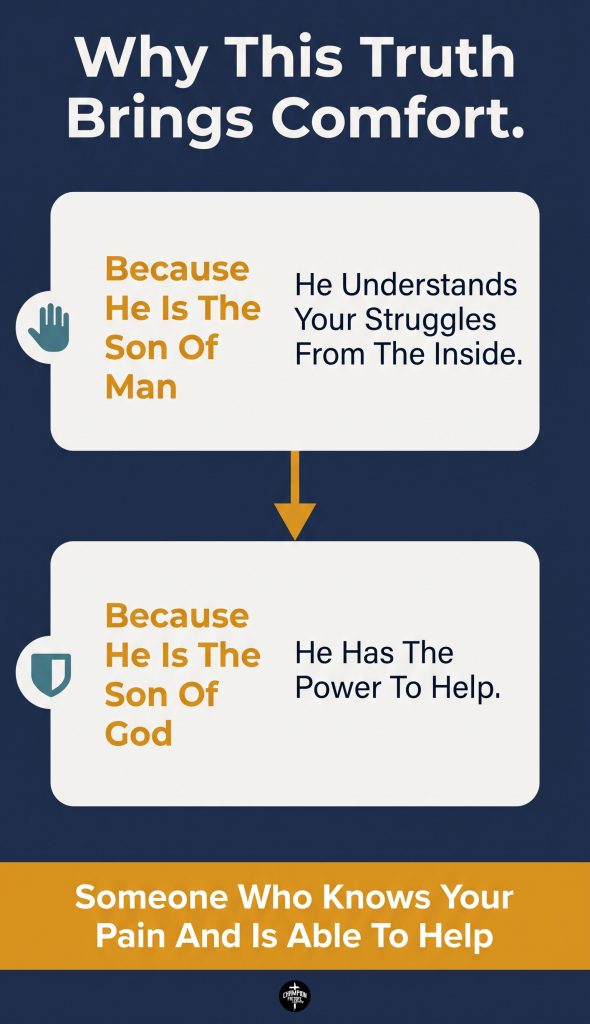
This is where the two titles meet your real life. Because Jesus is the Son of Man, He understands your struggles from the inside. Because He is the Son of God, He has the power to help. You are not met by a distant figure. You are met by someone who knows your pain and is able to carry you through it.
The book of Hebrews puts it gently. "This High Priest of ours understands our weaknesses, for he faced all of the same testings we do, yet he did not sin" (Hebrews 4:15, NLT). Jesus is not far off from your hardship. He has known hunger, grief, betrayal, and pressure. He meets you with understanding and with strength.
"When we teach children who Jesus is, the Son of Man is the title that opens their hearts. They learn that He understands them before they learn how much He can do." Todd Medina, President & Founder
If you are carrying a heavy burden right now, please reach out for support. Prayer and faith matter deeply, and so does help from a trusted pastor, counselor, or doctor. Questions about who Jesus really is often come up in mentorship and discipleship, including through the Champion Factory Ministry focus on spiritual growth and discipleship. You do not have to sort through these questions alone.
Holding Both Truths With Hope
When you read the Gospels again, you will see both titles with new eyes. Son of God tells you that Jesus is fully God, strong enough to save. Son of Man tells you that He is fully human, close enough to understand. Held together, they point to one Savior who is both able and near.
A simple next step is to read one of the verses above slowly, then pray and ask Jesus to meet you as both. If you want to grow in faith alongside others, you can connect with the Champion Factory Ministry community and keep learning in good company.
FAQ
Is Son of Man the same as Son of God?
They describe the same person, Jesus, but from two angles. Son of God points to His divine nature. Son of Man points to His humanity and His heavenly authority.
Does Son of Man only mean Jesus was human?
No. It includes His humanity, but it also draws on Daniel 7, where the son of man receives an everlasting kingdom. The title carries real authority too.
Why did Jesus prefer the title Son of Man?
It revealed His identity without forcing the crowd's political hopes onto Him. It let Him teach about His mission, His suffering, and His glory in His own way.
Is Jesus more God or more man?
Neither. The broadly accepted Christian teaching is that Jesus is fully God and fully man at the same time, one person with two natures.