






You may have heard the words expiation and propitiation in a Good Friday service or a Bible study and felt lost. They sound technical and almost identical. Many people nod along without knowing what either one means or why both matter.
This article explains both terms in plain language. You will learn what each word means, why your Bible may translate them differently, and how they help you understand the meaning of the cross. The goal is clarity, not debate, so you can carry these truths into Good Friday with a settled heart.
What Does Expiation Mean?
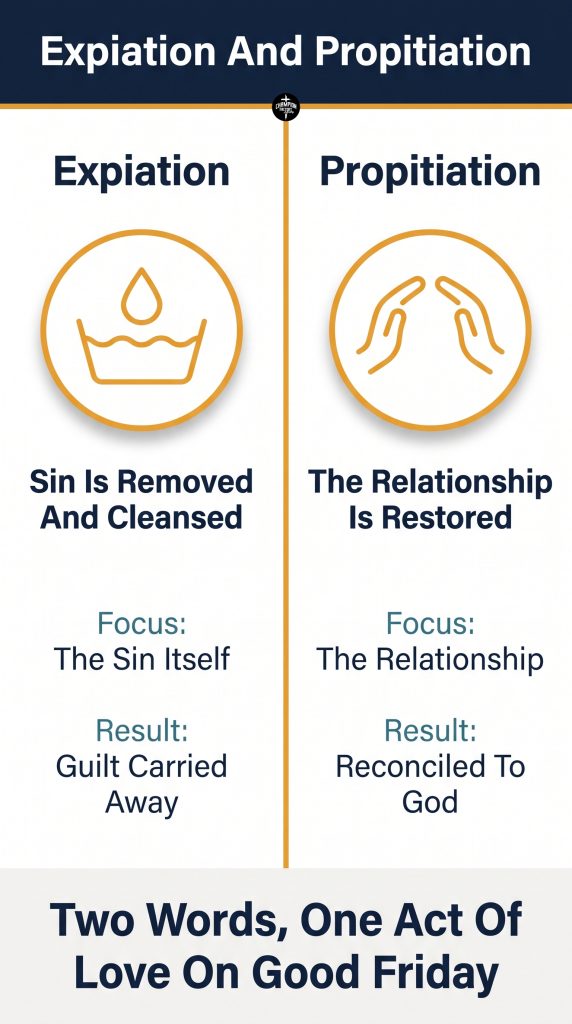
Expiation means the removal of sin and guilt. When the Bible describes expiation, it points to sin being cleansed, covered, and carried away so it no longer stands between a person and God. Christians believe that on the cross, Jesus dealt with what people could not remove on their own, leaving them cleansed rather than condemned.
The word centers on the problem of sin itself. Think of a debt that is canceled or a stain that is washed clean. Expiation describes the result. The thing that separated you from God is gone.
Scripture often shows this. The psalmist writes that God removes our wrongs as far as the east is from the west (Psalm 103:12). Expiation says the cross makes that removal real and lasting.
What Does Propitiation Mean?
Propitiation means a restored relationship. While expiation deals with the sin, propitiation deals with the relationship between God and people. Merriam-Webster defines the word propitiate as to gain or regain favor or goodwill. In Christian teaching, propitiation describes how the cross removes the separation between God and us and restores us to fellowship with him.
This is where many readers grow nervous, because the word can sound like calming down an angry God. Scripture frames it the other way around. Propitiation does not begin with human fear. It begins with God's love.
The apostle John makes this clear. He writes, "In this is love, not that we have loved God but that he loved us and sent his Son to be the propitiation for our sins" (1 John 4:10, ESV). The starting point is love. God moved first, toward us.
Why Do Bibles Translate the Same Word Differently?
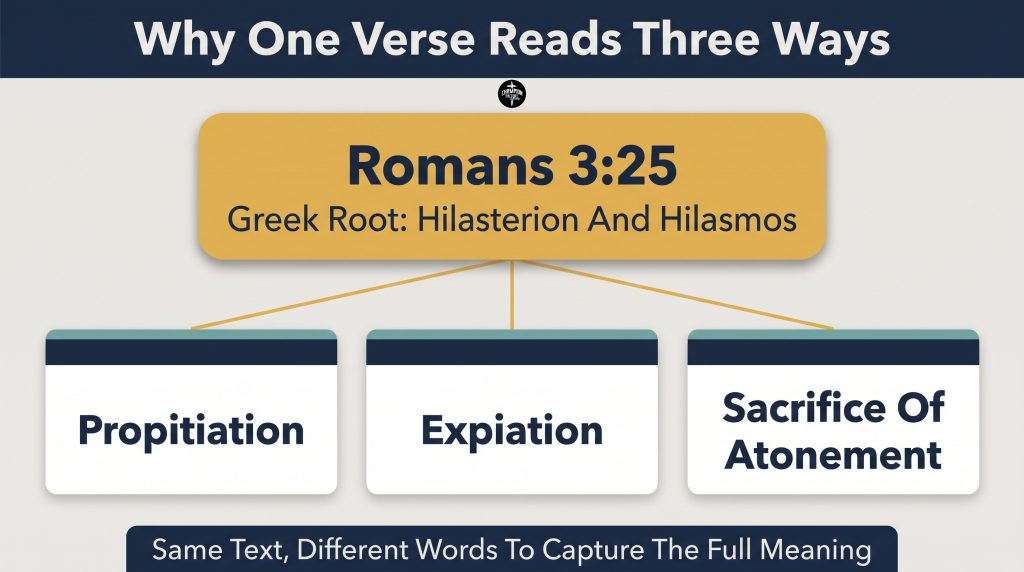
The two English words come from the same family of Greek words, hilasmos and hilasterion. Because one Greek word carries more than one shade of meaning, translators choose different English words. Some Bibles say propitiation, some say expiation, and others say atoning sacrifice. They all work from the same text and try to capture its full meaning.
You can see this in a single verse. In Romans 3:25 the New International Version reads, "God presented Christ as a sacrifice of atonement, through the shedding of his blood, to be received by faith" (Romans 3:25, NIV). Other translations render that same phrase as propitiation or expiation.
The choice reflects an honest and longstanding conversation. The meaning of the word in Romans has been called a crux for interpreters in academic study. In the twentieth century, the scholar C.H. Dodd emphasized the idea of covering sin, which fits expiation. Others emphasized the restoring of relationship, which fits propitiation.
This article does not try to settle that scholarly question. Thoughtful Christians have read these words in more than one way for a long time. What they share matters more than where they differ.
The Day of Atonement as a Picture of the Cross
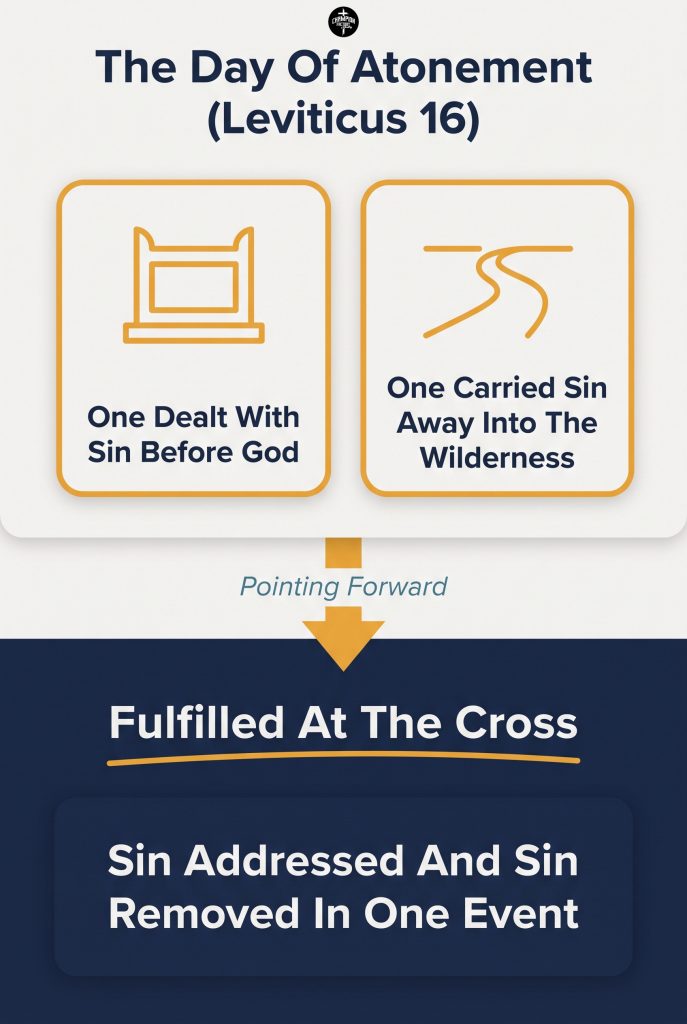
Long before Good Friday, God gave Israel a yearly picture of both ideas. On the Day of Atonement in Leviticus 16, the people used two goats. One dealt with sin before God. The other carried sin away into the wilderness. Together they showed sin both addressed and removed, the same two ideas behind expiation and propitiation.
Scripture describes the second goat plainly. "The goat will carry on itself all their sins to a remote place, and the man shall release it in the wilderness" (Leviticus 16:22, NIV). Guilt is not ignored. It is carried far away.
The Greek Old Testament also used the word hilasterion for the mercy seat, the cover on the ark of the covenant where blood was placed on that day. The same word later appears in the New Testament. This connects the old picture to the cross, where Christians believe the full meaning arrived.
How Expiation and Propitiation Meet on Good Friday
On Good Friday, the two words come together in one event. Good Friday is the Friday before Easter when Christians remember the crucifixion of Jesus. According to Encyclopaedia Britannica, the church has observed it from its earliest days as a solemn day of sorrow and reflection. In 2026 it falls on April 3.
The day holds both truths at once. Expiation says your sin is removed. Propitiation says your relationship with God is restored. You do not have to choose between them. The cross accomplishes both.
This is why the day is called good even though it remembers suffering. The German name for it, Karfreitag, means sorrowful Friday. Yet the sorrow leads somewhere. As Scripture puts it, by his wounds we are healed (Isaiah 53:5).
"The cross is the heart of what we carry into every community. Good Friday says the door back to God is open, and that message travels anywhere." Art Montgomery, Global Evangelism Strategy Architect and Board Visionary Luminary
The shared center of both words is reconciliation. Paul writes that "God was reconciling the world to himself in Christ, not counting people's sins against them" (2 Corinthians 5:19, NIV). Sin removed and relationship restored both arrive at the same place, peace with God.
Why These Words Still Matter for You Today
These terms reach beyond scholars and study guides. They speak to anyone who carries guilt or feels distant from God. Expiation says your past does not have the final word. Propitiation says the door back to God is open. For a person weighed down by shame, this is news of relief and dignity, not condemnation.
Many people quietly believe they are too far gone. The message of Good Friday says otherwise. You are not defined by what you have done. You are invited back.
"We see it every week in discipleship. When someone believes their guilt is removed and their place with God is restored, they begin taking steps they thought were closed to them." Todd Medina, President and Founder
At Champion Factory Ministry, this hope shapes everyday work in discipleship and recovery support, where people take real steps toward restoration. The same truth that defines Good Friday meets people in ordinary life.
If guilt, grief, or distress feels heavy right now, please reach out for steady support. A trusted pastor, a counselor, or a mental health professional can walk with you in ways an article cannot. Asking for help is a sign of strength, not weakness.
Carrying This Truth Into Good Friday
You now have a clear way to hold both words. Expiation means your sin is removed. Propitiation means your relationship with God is restored. On Good Friday, both describe one act of love, freely given.
A simple next step is to sit quietly with that truth this Holy Week. You might read 1 John 4:10 slowly, pray honestly about anything you have been carrying, or talk with someone you trust. The cross does not ask you to clean yourself up first. It meets you where you are and makes a way home.
FAQ
What is the difference between expiation and propitiation?
Expiation refers to sin being removed and cleansed. Propitiation refers to the relationship between God and people being restored. They describe two sides of the same act on the cross.
Why does my Bible say atoning sacrifice instead of propitiation?
Both English phrases translate the same Greek word. Translators choose different wording to capture the meaning, so versions vary between propitiation, expiation, and atoning sacrifice.
Are expiation and propitiation actually in the Bible?
The ideas are. The English words appear in some translations of passages like Romans 3:25, 1 John 2:2, and 1 John 4:10. Other versions use different wording for the same texts.
What does Good Friday have to do with these words?
Good Friday remembers the crucifixion of Jesus. Both expiation and propitiation describe what Christians believe that day accomplished, sin removed and people reconciled to God.