






Many believers carry a quiet struggle with lust and feel unsure where the line falls between temptation and sin. Some feel ashamed and alone, convinced that no one else fights the same battle. That belief is not true, and it keeps people stuck.
This article explains what the Bible teaches about lust, clears up a common misreading of Jesus' words, and gives you practical steps to guard your heart. The tone here is honest and hopeful. The goal is freedom and dignity, not fear.
What Does the Bible Say About Lust?
The Bible describes lust as a deliberate, selfish desire to use another person for personal gratification. It treats lust as a matter of the heart, not only the body. Scripture takes it seriously because what fills the heart shapes the rest of life. Yet the Bible also offers mercy and a clear way forward, so the subject is never meant to crush you.
Lust goes beyond attraction. It is the choice to dwell on and feed a desire that treats a person as an object. James explains how this grows when it goes unchecked. "Each person is tempted when they are dragged away by their own evil desire and enticed. Then, after desire has conceived, it gives birth to sin" (James 1:14 to 15, NIV).
This is why the heart matters so much. Proverbs puts it plainly. "Above all else, guard your heart, for everything you do flows from it" (Proverbs 4:23, NIV). When you protect what you take in and what you dwell on, you protect the source that shapes your words and choices.
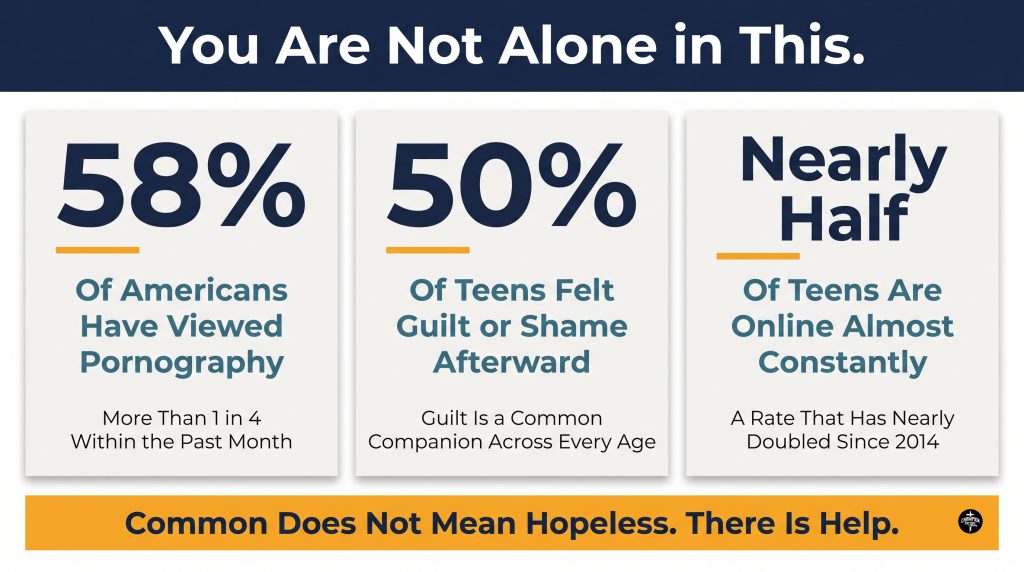
The struggle is also common, which is worth naming clearly. Research from the Institute for Family Studies found that roughly 58 percent of Americans report viewing pornography at some point, and more than one in four within the past month. If you battle this, you are not strange or uniquely broken. You are human, and there is help.
"I tell the children and families I serve the same thing every time. The goal is not shame. The goal is a heart that is free, and God meets you there." Todd Medina, President & Founder
What Did Jesus Mean in Matthew 5:28?
Jesus taught that lust begins in the heart, not only in physical action. He said, "Anyone who looks at a woman lustfully has already committed adultery with her in his heart" (Matthew 5:28, NIV). He was raising the standard from outward behavior to inner desire. He was not condemning every passing thought or the simple act of noticing someone.
This verse troubles many sincere believers. They read it and assume every stray thought makes them an adulterer. That reading misses what Jesus said.
The original language points to intent. The phrase describes a deliberate choice to look in order to feed desire, which connects back to the command against coveting in Exodus 20:17. Noticing that a person is attractive is not the sin Jesus describes. Choosing to dwell on that person with willful, possessive desire is.
Jesus addressed this in the Sermon on the Mount to show that God cares about the inner life, not only the visible one. He was not adding a heavier burden of guilt. He was inviting people to a deeper kind of wholeness that starts within.
A Common Misconception
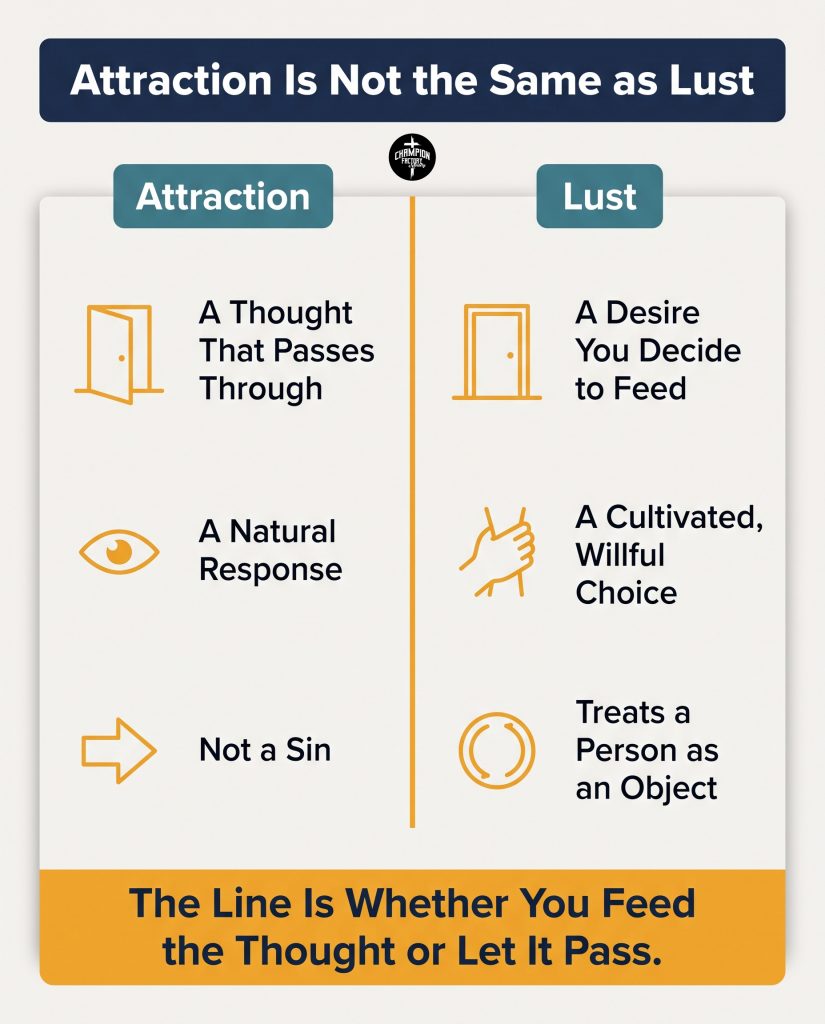
Many people confuse attraction with lust and live under needless shame. Attraction is a natural response. It becomes lust only when the will takes hold of it and feeds it. The first is a passing experience. The second is a chosen path. Knowing the difference frees you from false guilt and helps you focus on what truly needs your attention.
Is It a Sin to Find Someone Attractive?
No. Noticing that someone is attractive is not a sin. Scripture does not condemn a normal, passing recognition of beauty. The concern arises when a person chooses to dwell on that response and turn it into a fantasy that uses the other person. The line is the difference between a thought that passes through and a desire you decide to feed.
This distinction protects your conscience and keeps your focus where it belongs. If you treat every attraction as sin, you will live in constant guilt and miss the real work of the heart. If you ignore the moment a thought becomes a chosen indulgence, you miss the place where guarding the heart actually happens.
Picture a door. A thought may knock. You decide whether to open the door and invite it to stay. Guarding your heart means noticing that moment and choosing well, again and again, with God's help.
How Can Christians Guard Their Hearts Against Lust?
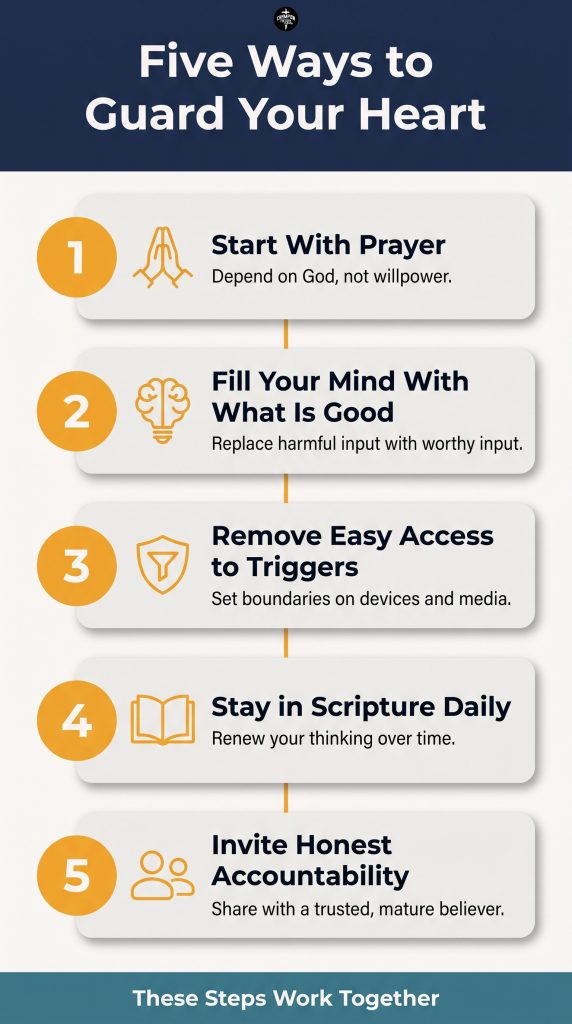
Christians guard their hearts through daily, intentional habits that depend on God rather than willpower alone. This includes time in Scripture and prayer, walking by the Spirit, limiting access to triggers, replacing harmful input with what is good, and staying connected to honest relationships. These practices protect the heart over time and make real freedom possible.
The culture makes this harder than it used to be. The Survey Center on American Life reports that nearly half of teens are online almost constantly, a rate that has nearly doubled since 2014. Constant access means guarding the heart cannot be a one time decision. It has to become a way of living.
Here are practical steps you can begin this week.
- Start with prayer and dependence on God. Galatians 5:16 says, "Walk by the Spirit, and you will not gratify the desires of the flesh" (ESV). Change flows from God's help, not from self effort.
- Fill your mind with what is good. Philippians 4:8 calls believers to think about whatever is true, noble, right, and pure. Replace harmful input with worthy input.
- Remove easy access to triggers. Use filters, change routines, and set boundaries on devices and media. Cutting off easy access is wise, not weak.
- Stay in Scripture daily. Regular time in God's Word renews your thinking and steadies your heart.
- Invite honest accountability. Share the struggle with a trusted, mature believer who will encourage and support you.
These steps work together. No single habit carries the whole load. Over time, they form a heart that is harder to pull off course.
Why Does Community and Accountability Matter?
Community matters because isolation makes the struggle harder and secrecy gives it power. Honest relationships bring support, encouragement, and gentle correction. Scripture says, "Two are better than one... If either of them falls down, one can help the other up" (Ecclesiastes 4:9 to 10, NIV). You were never meant to fight alone.
Accountability is not about shame or surveillance. It is about walking with people who want the best for you and will tell you the truth in love. A trusted friend, a mentor, or a small group can carry encouragement into the moments you feel weakest.
At Champion Factory Ministry, our discipleship and spiritual growth work through Nourish is built on this idea. Growth happens in relationship, through Scripture, prayer, and steady support. The same pattern applies to guarding the heart. You grow stronger in the company of people who point you back to God.
"We see people change fastest when they stop hiding. A mentor and a small group of honest friends do more than any private effort ever could." Art Montgomery, Global Evangelism Strategy Architect & Board Visionary Luminary
What Should You Do After You Fail?
When you fall, return to God quickly and honestly. Confession leads to mercy, not rejection. Scripture promises, "If we confess our sins, he is faithful and just and will forgive us our sins and purify us from all unrighteousness" (1 John 1:9, NIV). Shame keeps people stuck, but grace restores them and helps them get back up.
Many people carry deep guilt over this struggle. That weight is real. A Common Sense Media report found that half of teens felt guilty or ashamed after viewing pornography. Guilt is a common companion to this struggle across every age.
Grace does not make sin small. It makes restoration possible. When you fall, name it honestly before God, receive His forgiveness, and take the next faithful step. Do not let one failure convince you to give up. The path forward is repentance and renewed dependence, not despair.
When Should You Seek Additional Help?
Reach out for help when the struggle feels compulsive, when it controls your daily life, or when you cannot find freedom on your own. Talking with a trusted pastor or a licensed counselor is a wise and healthy step. Seeking support is a sign of courage and humility, not failure.
Some patterns run deep and need more than personal effort and prayer. Researchers studying problematic use across many countries note that experts still disagree on where heavy use ends and a problem begins. That uncertainty is one reason to seek qualified guidance rather than carry it alone.
This article offers encouragement and biblical guidance. It is not a substitute for professional counseling or medical care. If your struggle feels overwhelming, please speak with a trusted pastor or a licensed mental health professional who can walk with you personally.
"I always remind people that asking for help is part of healing, not a sign of weakness. Pair faith with a good counselor, and you give yourself the best chance to grow." Todd Medina, President & Founder
A Gentle Word on Sensitive Struggles
Some readers carry past experiences of exploitation, abuse, or trauma that make this topic especially heavy. If that is you, please be gentle with yourself and seek safe, qualified support. Your worth is not defined by what happened to you or by what you have struggled with. God's care for you is steady, and healing is possible with the right help and time.
Walking Forward in Freedom and Hope
Guarding your heart is not a burden of rules. It is a daily, hopeful practice that protects your dignity and your freedom. Lust begins in the heart, and the heart is exactly where God meets you with grace and strength. You do not have to win this through willpower, and you do not have to fight it alone.
Take one step today. Pray and ask God for help. Open His Word. Reach out to one trusted person who can walk with you. If the struggle runs deep, talk with a pastor or counselor. If you want to grow alongside others who are pursuing the same kind of freedom, you can learn more about our community and ways to get involved. The path forward is steady, honest, and full of hope.
FAQ
Is lust the same as attraction?
No. Attraction is a natural, passing response. Lust is a chosen, willful desire that uses another person in your mind. The difference is whether you feed the thought or let it pass.
Does Matthew 5:28 mean every stray thought is a sin?
No. Jesus addressed deliberate, lustful intent, not the simple act of noticing someone. He was raising the focus from outward action to the inner life of the heart.
Can God forgive lust?
Yes. Scripture promises that God forgives and cleanses those who confess (1 John 1:9, NIV). Grace and restoration are always available when you return to Him.
What if I cannot stop on my own?
Reach out for help. A trusted pastor or licensed counselor can support you, and honest community makes a real difference. Seeking help is a wise and courageous step.