






Many people pause at the phrase fear God. It can sound like God wants you to be afraid of Him. If you have known fear that controlled you or caused harm, the phrase can feel even heavier.
The Bible uses this phrase often, and it means something different from being scared. This article explains what the fear of God actually means, why Scripture connects it to wisdom and security, and how to grow in it in everyday life.
What Does It Mean to Fear God in the Bible?
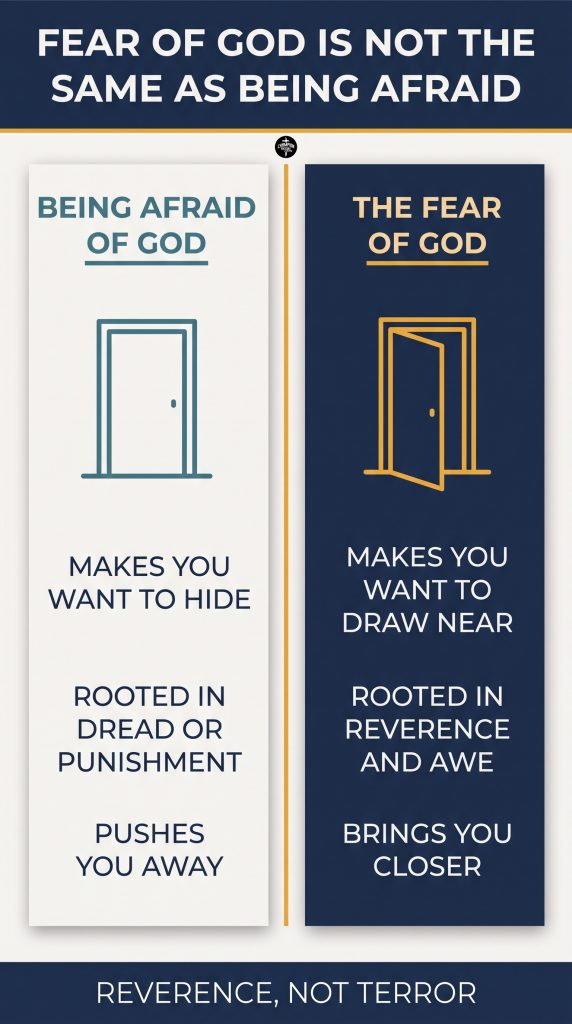
In the Bible, to fear God means to hold Him in deep reverence and awe, not to live scared of Him. The phrase describes a posture of honor before a holy and loving God. It recognizes who God is, responds with worship, and shapes how a person lives. This kind of fear draws people closer to God rather than pushing them away.
The Hebrew word often translated fear is yare. Depending on the context, it can mean to be afraid or to stand in awe. According to a language resource from the University of Iowa, the same word can carry the sense of reverence rather than dread. The theme runs throughout the Bible. Strong's Concordance lists this word hundreds of times.
Two passages show the tone clearly. Hebrews 12:28 to 29 calls believers to "worship God acceptably with reverence and awe, for our God is a consuming fire" (NIV). Psalm 33:8 invites "all the earth" to fear the Lord and then describes that as standing in awe of Him. The fear of God is closer to wonder and honor than to panic.
Is Fearing God the Same as Being Afraid of Him?
Fearing God is not the same as being afraid of Him. Being afraid makes you want to hide or run. Reverent fear makes you want to draw near. The Bible separates the dread that comes from guilt or harm from the honor that flows from trust. For someone who follows Jesus, the fear of God grows out of relationship, not terror.
This distinction matters, because some readers have known fear used to control or hurt them. That is not what the Bible means by the fear of God.
Scripture shows that reverence for God can quiet other fears. First John 4:18 says, "There is no fear in love. But perfect love drives out fear" (NIV). That verse speaks about the fear of punishment, the kind that torments a person. It does not cancel reverence. It frees us from dread. Psalm 34:4 adds a personal note, "I prayed to the LORD, and he answered me. He freed me from all my fears" (NLT). If the word fear feels hard because of past harm, that response makes sense, and the fear of God is not meant to repeat that harm.
Why the Fear of God Is the Beginning of Wisdom
The Bible calls the fear of God the beginning of wisdom because reverence changes how you see everything else. When you honor God first, your choices gain a steady center. Proverbs 9:10 says this fear is where real understanding starts. Wisdom here is not stored facts. It is the skill of living well, and it begins with knowing who God is.
Two verses make the point. Proverbs 9:10 says, "The fear of the LORD is the beginning of wisdom, and knowledge of the Holy One is understanding" (NIV). Proverbs 1:7 echoes it, "The fear of the LORD is the beginning of knowledge" (NIV).
The Old Testament scholar Bruce K. Waltke, in his commentary on Proverbs, ties wisdom to reverence for God rather than to information alone. In practice, this gives you a starting point for decisions. When you honor God first, you weigh your options differently and you build on a foundation that holds.
How the Fear of God Brings Security and Freedom
The fear of God brings security because it puts your trust in the One who is bigger than your circumstances. Reverence does not shame you. It steadies you. Scripture describes the fear of the Lord as a secure place and a source of life. For people carrying hardship or past harm, this is good news, not another weight to bear.
Fear and love belong together here. Deuteronomy 10:12 says God asks His people to fear Him and, in the same breath, to love and serve Him with all their heart and soul (NLT). Proverbs 14:26 to 27 then calls the fear of the Lord "a secure fortress" and "a fountain of life" (NIV). Reverence is described as a place of safety, not a source of fear.
This shapes whole communities. Acts 9:31 describes the early church "living in the fear of the Lord" and finding strength and peace (NIV).
"In our outreach, reverence for God is what gives people a foundation that holds when life gets hard. It steadies them long before their circumstances change." Art Montgomery, Global Evangelism Strategy Architect & Board Visionary Luminary
We have seen that same reverence steady people through hard seasons at Champion Factory Ministry, which is part of why we invest in discipleship and spiritual growth. Reverence for God is not a replacement for professional care. If you carry trauma, anxiety, or deep distress, please reach out to a trusted pastor, counselor, or qualified professional who can walk with you.
How to Grow in the Fear of God Each Day
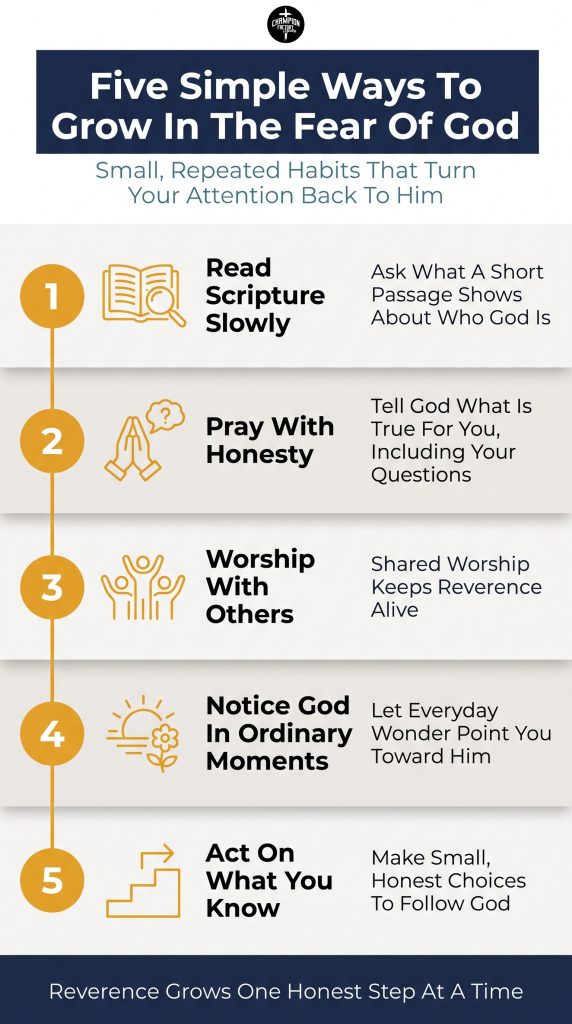
You grow in the fear of God through small, repeated habits that turn your attention back to Him. Reverence is not a feeling you force. It develops as you spend time in Scripture, prayer, and worship, and as you notice God's character in daily life. Over time, honoring God becomes a steady part of how you think and choose.
"When people begin to see God as both holy and good, fear loses its grip. They pray with more honesty, and they start making steadier choices." Todd Medina, President & Founder
Here are simple practices to begin:
- Read Scripture slowly. Choose a short passage and ask what it shows about who God is.
- Pray with honesty. Tell God what is true for you, including your doubts and questions.
- Worship with others. Shared worship keeps reverence alive when your own focus fades.
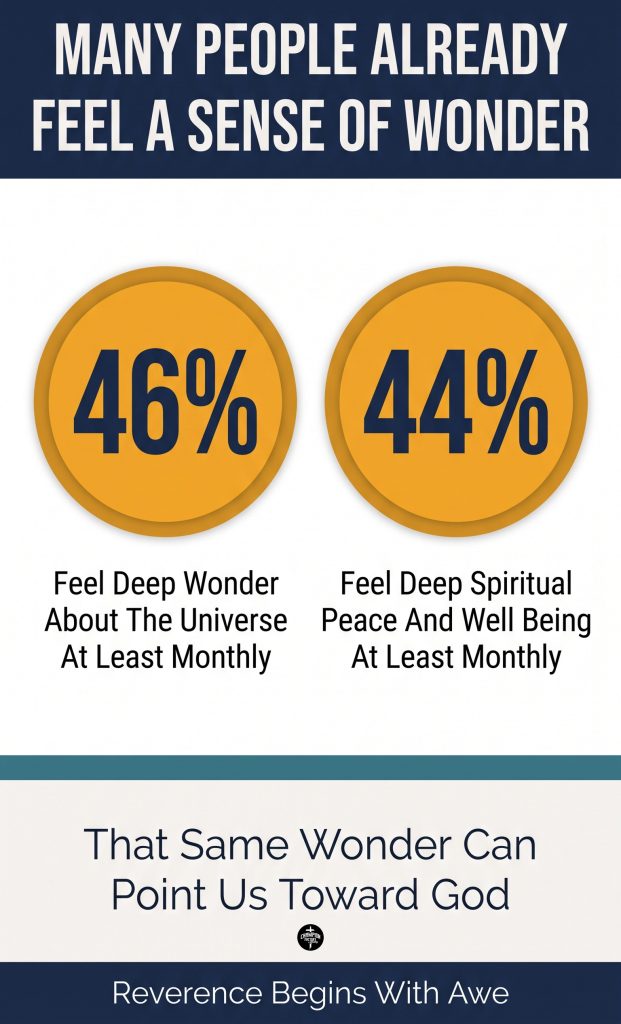
- Notice God in ordinary moments. Research from Pew Research Center found that nearly half of U.S. adults feel a deep sense of wonder about the universe at least monthly. Let that wonder point you toward God.
- Act on what you know. Reverence grows as you make small, honest choices to follow God.
Walking Forward in Reverence and Hope
The fear of God is not terror. It is reverence for a God who is holy, loving, and worthy of honor. That reverence is the beginning of wisdom, and it brings a steady sense of security rather than shame. For anyone who has known harmful fear, this is a different and gentler word.
A good next step is to pick one small practice this week. Read a single verse slowly, or pray honestly for a few minutes, or find people you can worship alongside. If you would like encouragement and connection as you grow, you are welcome to reach out and get involved. Reverence grows quietly, one honest step at a time.
FAQ
Does Fearing God Mean I Should Be Scared of Him?
No. The biblical fear of God means reverence and awe, not terror. It draws you closer to God rather than driving you away.
What Does the Fear of the Lord Is the Beginning of Wisdom Mean?
It means reverence for God is the starting point for living well. When you honor God first, your understanding and choices gain a steady foundation (Proverbs 9:10).
How Can I Fear God and Still Believe He Loves Me?
Fear and love belong together in Scripture. Deuteronomy 10:12 links fearing God with loving and serving Him. Reverence is a fitting response to a God who is both holy and loving.
What If the Word Fear Is Hard for Me Because of Past Harm?
That response is understandable. The fear of God is not the fear used to control or hurt people. If the word carries pain, talking with a trusted pastor or counselor can help.