





A child who lived through a fire, flood, or storm may cry more, sleep less, or seem completely fine. Parents and helpers often wonder which changes are normal and which mean a child needs more help.
We believe noticing a hurting child is an act of love. Jesus made room for children and took them in his arms. Recovery after a disaster unfolds over months, so care has to stay present long after the emergency supplies stop arriving. This guide shows what to watch for, when to get help, and how faith can steady you both.
Common Signs of Trauma in Children After a Disaster
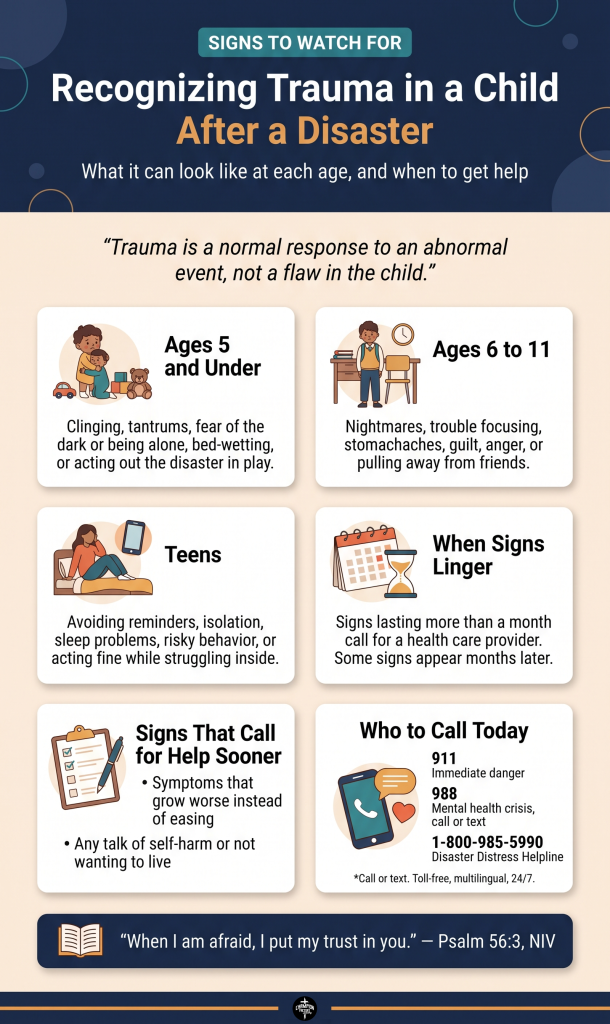
The most common signs of trauma in children after a disaster are changes in sleep, appetite, mood, and behavior. Look for nightmares, clinging, new fears, irritability, withdrawal, headaches or stomachaches, and trouble at school. Younger children may return to earlier behaviors such as bed-wetting. Many reactions are normal at first. What matters most is how long they last and whether they grow.
Trauma is a normal response to an abnormal event, not a flaw in the child.
What Trauma Can Look Like at Each Age
- Ages 5 and under: clinging, tantrums, fear of the dark or being alone, bed-wetting, or acting out the disaster in play.
- Ages 6 to 11: nightmares, trouble focusing, stomachaches, guilt, anger, or pulling away from friends.
- Teens: avoiding reminders, isolation, sleep problems, risky behavior, or acting fine while struggling inside.
Fear Is Not a Lack of Faith
Some families worry that a scared child is not trusting God. Scripture shows something different. David prayed under real threat, "When I am afraid, I put my trust in you" (Psalm 56:3, NIV). He named his fear first. Try saying this verse together at bedtime, alongside the comfort you give, never in place of it.
"A scared child is not a faithless child. When we pray David's words with them, we show them God welcomes honest hearts." Todd Medina, President & Founder
Why Signs of Trauma Can Appear Months Later
Many parents watch a child seem fine after a disaster, then struggle weeks or months later. This is common, and it does not mean you missed something. Recognizing trauma is not a one-week checklist. It is attention that lasts as long as recovery does.
The Myth of the Quick Bounce Back
A meta-analysis of 39 studies found pooled PTSD prevalence among child and adolescent survivors of earthquakes and floods of 19.2 percent in the first six months, 30.0 percent in the second six months, 24.4 percent in the third, and 20.4 percent in the fourth. These figures describe groups of children, not a prediction for yours. Most children rebound without long-term effects. As clinical psychologist Jerry Bubrick, PhD, says, "Everyone grieves at a different pace."
Support That Outlasts Storm Season
Champion Factory Ministry has adopted several orphanage missions in the Philippines as ongoing partners. Typhoon season runs June through November, but the need is year-round, so the team deliberately chose regular shipments of brand-new clothing rather than one-time responses.
"Steady, year-round support frees caregivers to give children their full attention." Art Montgomery, Global Evangelism Strategy Architect & Board Visionary Luminary
When to Seek Professional Help for a Child After a Disaster
Start by writing down what you notice and when it began. If symptoms last more than a month, get worse, or keep your child from sleeping, learning, or playing, contact your pediatrician or a licensed counselor. A clear record helps a professional see patterns you may be too close to notice.
The National Institute of Mental Health advises families to reach out to a health care provider when symptoms last more than a month.
Signs That Call for Help Sooner
- Symptoms that grow worse instead of easing
- Refusing school or pulling away from everyone
- Constant fear about safety or death
- Any talk of self-harm or not wanting to live
Who to Call Today
- Call 911 if anyone is in immediate danger.
- Call or text 988 in a mental health crisis.
- Call or text the Disaster Distress Helpline at 1-800-985-5990. It is toll-free, multilingual, and available 24/7 across the U.S. and its territories.
This guide does not diagnose and does not replace a pediatrician or licensed counselor.
How to Help a Child Feel Safe Again After a Disaster
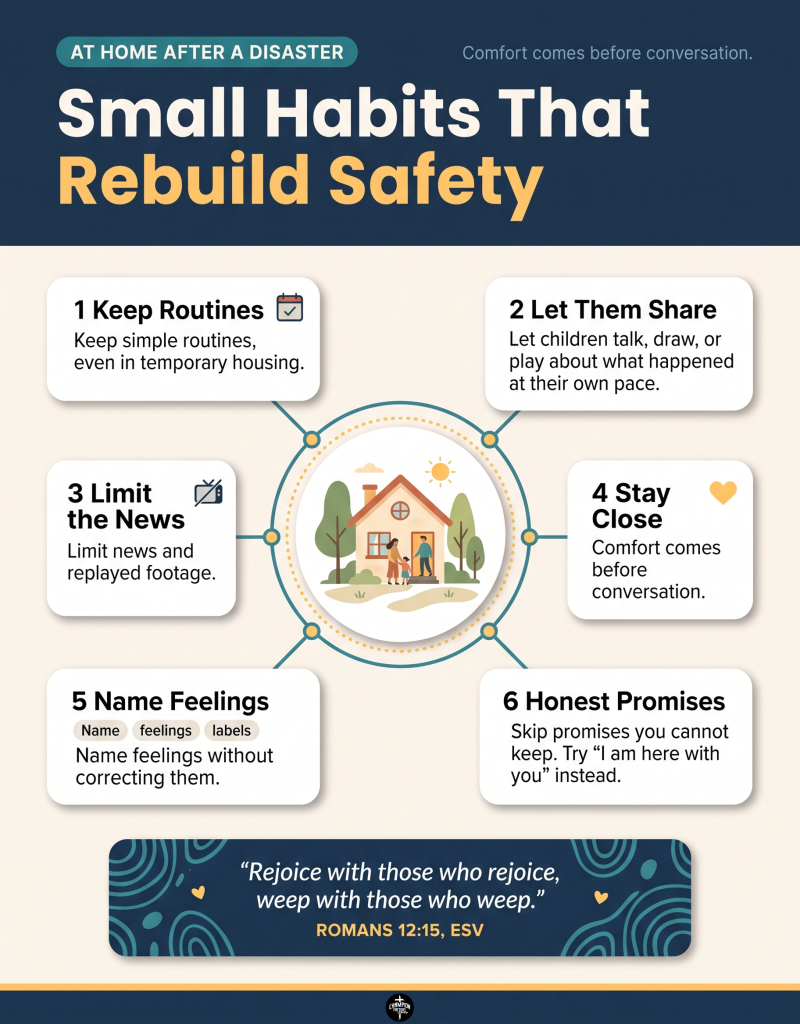
Romans 12:15 (ESV) says, "Rejoice with those who rejoice, weep with those who weep." The verse calls believers to share sorrow, not hurry past it. For a frightened child, that means staying close, naming feelings without correcting them, and rebuilding daily safety one small step at a time. Comfort comes before conversation.
As HelpGuide puts it, "There's no 'right' or 'wrong' way to feel after a traumatic event."
Small Habits That Rebuild Safety at Home
- Keep simple routines, even in temporary housing.
- Let children talk, draw, or play about what happened at their own pace.
- Limit news and replayed footage.
- Skip promises you cannot keep. NIMH cautions against lines like "You will be OK tomorrow." Try "I am here with you" instead.
Why Shelter and Warmth Come First
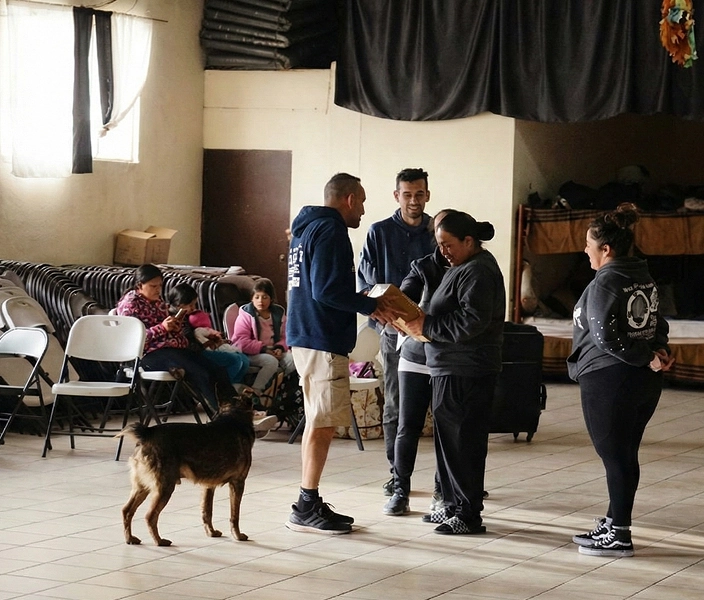
After a fire destroyed eight homes in a small Mexican community, rain continued for several days, and families with children had no shelter, dry clothing, or supplies. Within days, the ministry distributed truckloads of clothing, blankets, and essential supplies, and provided food and financial support to stabilize temporary housing.
The same lesson shaped the ministry's school in Tijuana. After fires happened more than once in more than one neighborhood, the team chose steel over wood. Two converted steel containers will seat 48 students, with a kitchen so every student gets breakfast every school day.
What to Say When a Child Asks Why God Allowed the Disaster
Children in faith families often ask why God let their home burn or flood. You do not need a full answer. Be honest that you do not know every reason. Then point to what is sure. God is close to people who are hurting, and you are right here with them.
Avoid answers that suggest the disaster was a punishment. A child who hears that may quietly decide it was their fault.
"Honest questions are part of faith. Children should feel safe bringing them to God and to us." Todd Medina, President & Founder
God's Nearness in the Hardest Questions
Psalm 34:18 (NIV) says, "The LORD is close to the brokenhearted and saves those who are crushed in spirit." The next verse admits the righteous still face many troubles. The psalm does not promise a life without hardship. It points to God's nearness within it. You might say, "I don't know why it happened. I know God is close to us, and so am I."
How Caregivers and Churches Can Help Children Recover
Children lean on the adults around them, so caregivers need support too. Churches and community helpers can notice changes gently, stay in contact with families for months, and connect them to professional care when needed. The goal is steady presence, not fixing or diagnosing.
Care for the Adult in the Room
If you lived through the disaster too, your grief is real. NIMH notes that how adults respond to trauma strongly influences how children react. Talk with a trusted friend, pastor, or counselor.
How Churches and Volunteers Can Stay Close
- Learn children's names and notice changes over weeks.
- Share concerns with parents privately and kindly.
- Keep checking in after the meals and supplies stop.
- Refer families to licensed professionals rather than counseling children yourself.
Churches ready to serve this way can get involved alongside the ministry.
Staying Present Through the Whole First Year
Recognizing trauma in a child takes steady attention over the whole first year. Call a professional when signs last more than a month or grow. Mark 10:16 (NIV) shows the heart behind it all: "And he took the children in his arms, placed his hands on them and blessed them."
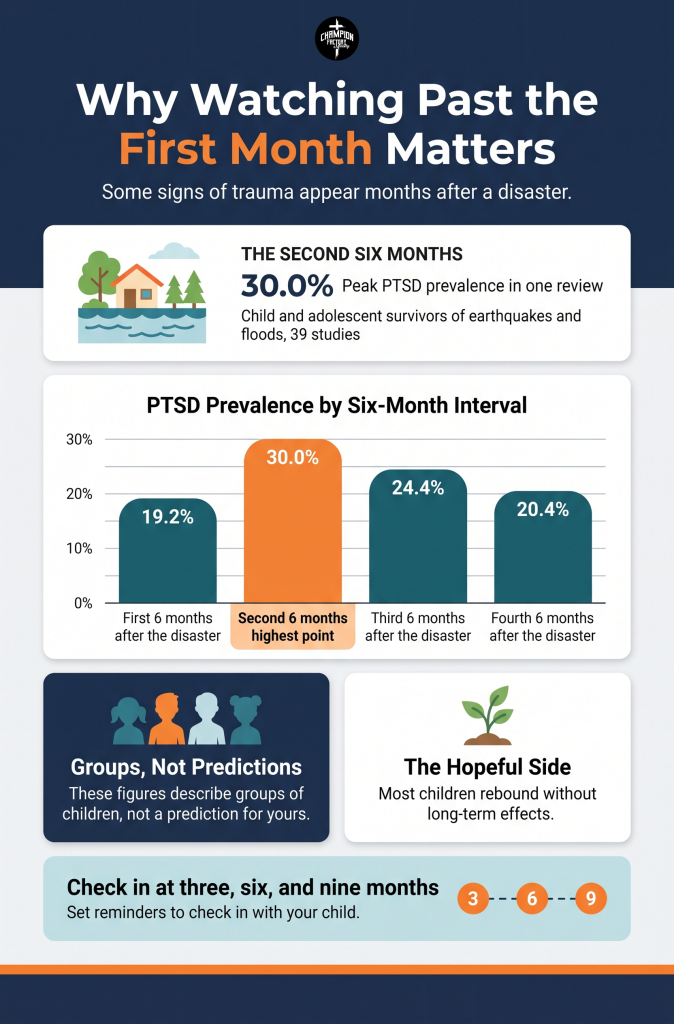
Next, set reminders to check in with your child at three, six, and nine months. If your family needs practical care or encouragement, learn about Support for Children and Families.
FAQ
Which Children Are Most at Risk After a Disaster?
According to the Child Mind Institute, children who witnessed injuries or death, lost immediate family, had previous trauma, or are not resettled in a new home may show more symptoms after the first month.
Does Champion Factory Ministry Provide Counseling?
No. The ministry offers practical care, mentorship, and faith-centered support, not clinical treatment. For counseling, see a licensed professional. Families seeking practical help can contact the ministry.