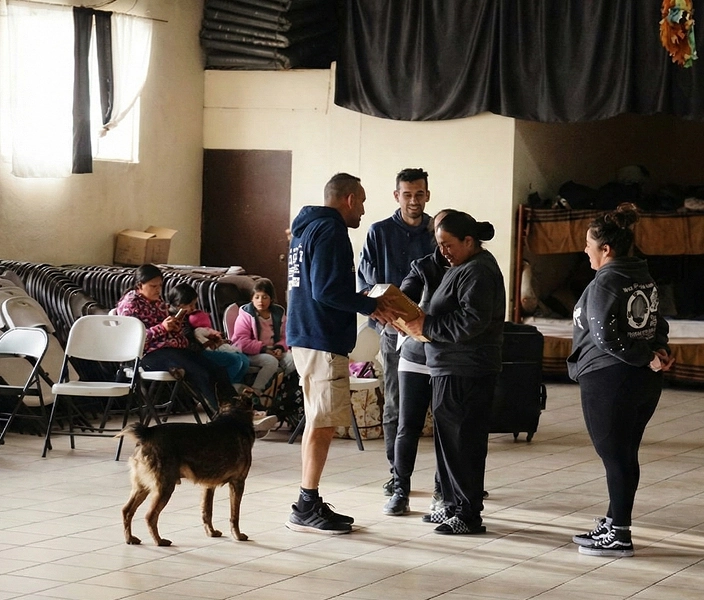






Many families feel pressure from rising costs, unstable work, health challenges, and unexpected crises. When support feels inconsistent or judgmental, it can add stress instead of relief.
Faith-based programs can offer practical help and steady care rooted in Christ’s love. You can support families with respect, clear boundaries, and consistent follow-through. This article gives you a clear path to help families well.
Start With Dignity-Centered Support That Builds Trust
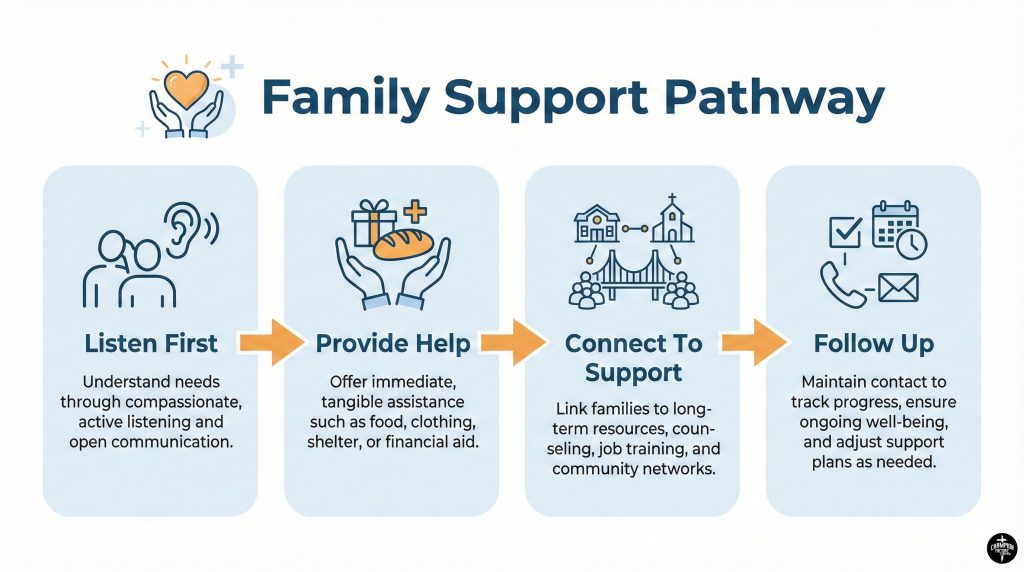
Start by protecting dignity through privacy, listening, and clear consent. Families often need to feel safe before they can accept resources or guidance. When you ask thoughtful questions, protect confidentiality, and offer choices, you build trust and reduce shame. This approach also helps volunteers serve with clarity and consistency.
Dignity-centered support treats families as partners. You listen first. You avoid assumptions. You keep details private. You offer help without pressure.
Practical ways to lead with dignity:
- Ask, “What would be most helpful right now?”
- Offer a few options, then let the family choose, such as food support, resource connection, or prayer.
- Keep needs private. Do not share details publicly or in group messages without clear permission.
- Offer prayer gently. Do not connect prayer to eligibility for support.
- Use respectful language like “families facing hardship” and “families seeking support.”
“Dignity starts when you slow down, listen, and treat every family like they matter, because they do.”
Todd Medina, Co-Founder
Scripture can support this mindset when used in context. Jesus saw people with compassion and met real needs with care and presence (Matthew 9:36).
Meet Immediate Needs While Planning For Long-Term Stability
Meet urgent needs today while building a pathway toward stability over time. Short-term support can reduce immediate stress, but families often need steady relationships and practical guidance to move forward. The healthiest programs offer both, and they stay consistent so families do not feel alone after a single moment of help.
Food needs affect many households. The USDA reported that 13.7 percent of U.S. households were food insecure at some point in 2024, and 5.4 percent experienced very low food security. Reference this with one link using anchor text like the USDA household food security report.
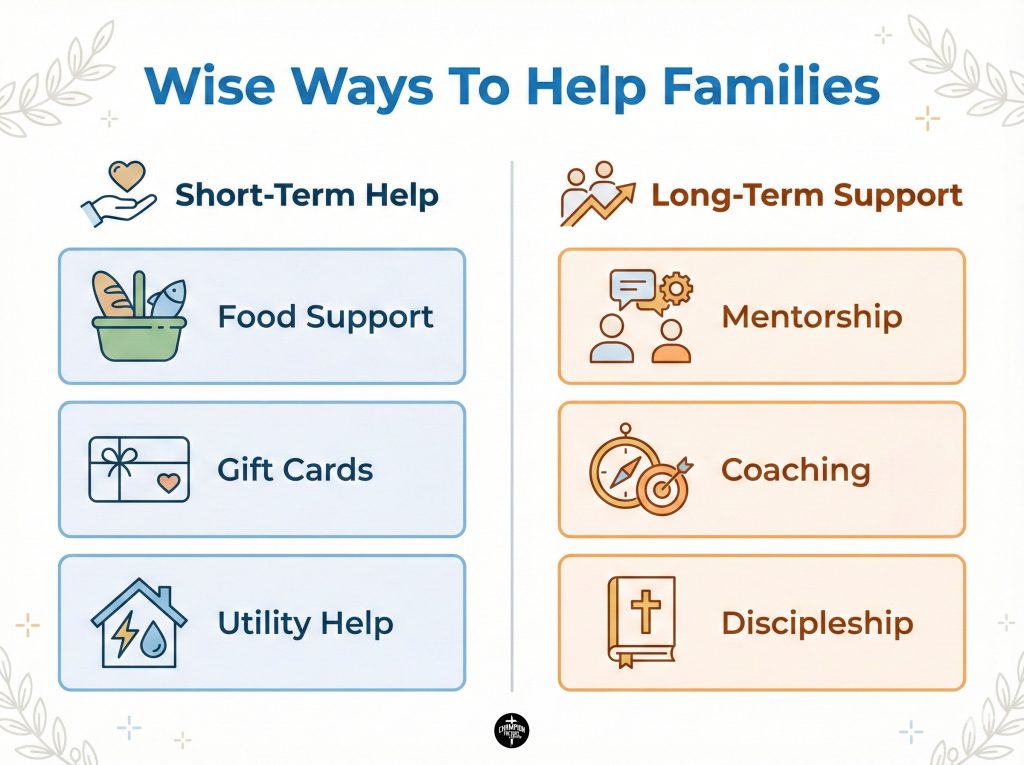
Examples of immediate support that respects dignity:
- Food and essentials outreach with consistent hours and clear instructions
- Grocery or gas support when a family faces a short-term gap
- School supply support in partnership with local schools
- Utility support with a clear process and documentation
Examples of long term support that builds stability:
- Mentorship for parents and caregivers with regular check-ins
- Goal-based coaching for budgeting, job readiness, or housing navigation
- Child and youth mentorship that builds safe, consistent relationships
- Discipleship groups that support spiritual growth and belonging
A simple structure helps you stay focused:
- Stabilize today with practical care
- Support tomorrow with a plan and follow-up
- Strengthen over time through steady relationships and community
Offer Mentorship That Creates Safe, Steady Relationships
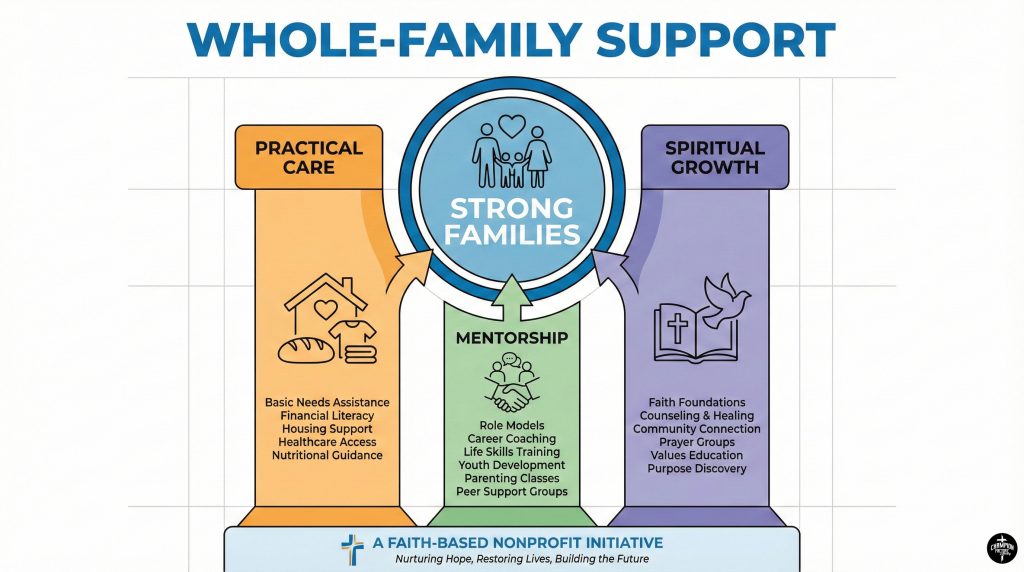
Offer mentorship that is consistent, trained, and focused on encouragement plus practical next steps. A steady relationship can reduce isolation and help families navigate decisions with more support. Mentorship is not about fixing people. It is about walking alongside families with humility, clear boundaries, and dependable care.
The CDC highlights the value of safe, stable, nurturing relationships and environments for children and families. Link once using anchor text like CDC guidance on safe and stable relationships for children.
What strong mentorship looks like in a faith-based setting:
- Consistent contact, such as weekly or biweekly check-ins
- Clear boundaries, including what mentors can and cannot provide
- Listening, encouragement, and practical next steps
- A referral mindset, so mentors connect families to resources rather than trying to solve every need
Simple mentor training topics to include:
- Active listening and respectful questions
- Trauma-informed communication basics
- Confidentiality and privacy
- When to refer to professional help or crisis support
- Prayer that is offered, not required
Scripture can support the posture of mentorship in context. Galatians 6:2 calls believers to share burdens through compassionate community care.
Build Practical Programs Churches And Ministries Can Run
Build programs that are simple, repeatable, and tied to real needs with clear volunteer roles. You do not need a large budget to start. You need consistency, a clear process, and basic safeguards. When your program runs the same way each time, families know what to expect, and volunteers serve with confidence.
Below are program ideas that many churches and ministries can implement.
Food And Essential Care Outreach
- Schedule pantry days with consistent hours and a predictable process
- Offer essentials kits with hygiene items, diapers, and household basics
- Keep a partner list of local pantries and community resources for referrals
- Provide a private request pathway to protect confidentiality
Benevolence Support With Clear Safeguards
Many churches offer benevolence during emergencies. Written policies help churches respond quickly and graciously with accountability. Link once using anchor text like guidance on benevolence policies for churches.
A simple benevolence process can include:
- A private request form or intake conversation
- A clear eligibility approach focused on need and safety
- A small review team for accountability
- A defined support limit and follow-up plan
- A referral step to public or local services when needed
Family Support And Stability Pathways
- Host family support nights with dinner, practical classes, and childcare
- Run parenting support groups with trained leaders and clear boundaries
- Offer job readiness support, including resume help and interview practice
- Create a resource navigator role to help families find local services
Discipleship And Spiritual Growth
- Offer small groups with scripture, prayer, and gentle encouragement
- Keep a consistent rhythm so families can rely on it
- Build belonging through community, not pressure
Champion Factory Ministry’s Nourish discipleship focus can fit here as one example of steady spiritual support that helps people grow in faith and stay connected.
Partner With Local Resources And Encourage Professional Help When Needed
Strengthen your support by connecting families to trusted local resources and professional services when needed. Faith-based care works best when it complements safe community support. Many families benefit from public benefits, counseling, housing support, and crisis services alongside spiritual care.
Helpful referral options:
- 211 can connect families to local services like food, housing, and health resources. Link once using anchor text like 211 local resource support.
- SNAP helps families access food benefits through an EBT card. Link once using anchor text like USDA SNAP participation information.
If a family faces urgent emotional distress or immediate safety concerns, encourage immediate support. 988 offers crisis support by phone, text, or chat. Link once using anchor text like the 988 crisis lifeline.
You can pray with families and care for them while also helping them access the right level of support. This approach protects dignity and increases safety.
Use Trauma-Informed Language When Families Have Experienced Harm
Use trauma-informed support that prioritizes safety, choice, and respect, especially when families have experienced harm or unsafe situations. You do not need details to serve well. You need calm, respectful communication and a process that helps families feel safe.
Trauma-informed basics for faith-based programs:
- Safety: Use predictable processes and private spaces for conversations.
- Choice: Offer options and respect a family’s pace.
- Trust: Explain what happens next and follow through.
- Collaboration: Ask what support looks like for the family.
- Empowerment: Name strengths and progress, even small steps.
Avoid graphic details. Avoid labels that shame. Avoid rescuer language. Use calm phrases like support, safety, recovery, and next step.
When sensitive issues are present, encourage trained help and safe systems. Families deserve care that protects privacy and promotes long-term restoration.
Help As A Volunteer Or Donor In Ways That Strengthen Families
Help families best by supporting consistent programs, reducing stress for caregivers, and respecting boundaries. The goal is to make support easier to receive and more effective over time.
Practical ways to volunteer:
- Serve on a food and essentials team with consistent shifts
- Offer childcare during parenting classes or support groups
- Become a trained mentor with clear boundaries and support
- Help as a resource navigator to connect families to services
- Support logistics, organization, and follow-up behind the scenes
Practical ways to give:
- Fund essentials families need regularly, like food, diapers, and hygiene items
- Support mentorship and discipleship programs that require consistency
- Give toward emergency support that follows a clear policy
- Provide gift cards through a structured ministry process when possible
“Consistency builds trust. Families feel cared for when support shows up in a steady, respectful way.”
Champion Factory Ministry Review Team
James 2:15–17 supports practical love in context. Faith becomes visible through real care for real needs.
A Simple Next Step Plan For Helping A Family With Wisdom
Take action by listening first, offering one clear form of help, and connecting families to steady support over time. A simple plan reduces pressure and helps you respond with care and clarity.
- Start with a respectful conversation and ask what they need most.
- Offer one practical step you can support this week.
- Connect them to a program pathway, not a one-time response.
- Use referrals like 211 for local services, and encourage professional help when needed.
- Follow up with consistency, even a short check-in can matter.
If you serve through a ministry, build boundaries, confidentiality practices, and a support team for volunteers. These safeguards protect families and the people serving.
A Hopeful Path Forward With Clear Next Steps
Families facing hardship deserve steady support that is respectful, safe, and consistent. Faith-based programs can help when they combine practical care, mentorship, and spiritual encouragement without pressure. If you want to help, start small and stay consistent. If you need support, reach out for safe local resources and caring community support.
If you are connected to Champion Factory Ministry, visit the Get Involved and Donate pages to explore ways to serve and support ongoing programs. If you need immediate local help, consider calling 211 to find services near you.
FAQ
What Is A Faith-Based Program For Families?
A faith-based program offers practical support and relational care guided by biblical values. It can include food outreach, mentorship, parenting support, and discipleship. Healthy programs protect dignity, avoid pressure, and partner with trusted community resources.
How Can A Church Help A Family Without Causing Shame?
Start with listening and privacy. Offer options and ask permission before sharing information. Use clear processes and avoid public requests for help. Support families in ways that protect dignity and give them choice.
What Are Good Examples Of Long Term Support For Families?
Long-term support can include mentorship, parenting groups, job readiness support, resource navigation, and a consistent discipleship community. These supports help families move toward stability over time.
When Should We Refer A Family To Professional Help?
Refer families when there are urgent safety concerns, serious mental health distress, medical needs, or situations beyond what volunteers can safely handle. You can encourage families to use 211 for local services and 988 for crisis support if they need immediate help.
How Can Donors Help In A More Effective Way?
Donors help most by supporting consistent programs and core needs. This can include funding food and essentials, mentorship support, and emergency help that follows a clear policy. Recurring giving can help ministries plan steady care.