






Many of us carry a quiet worry that our mistakes, or our plain and ordinary lives, put anything meaningful out of reach. We read about people of strong faith and assume they were always steady. Peter was not. He spoke too fast, acted on impulse, and failed his closest friend at the worst possible moment.
That is exactly why his story still helps people today. This article walks through who Peter was and what his life offers you. You will find an honest picture of a man who stumbled and started again, along with practical lessons you can carry into your own faith and daily life.
Who Was the Apostle Peter?
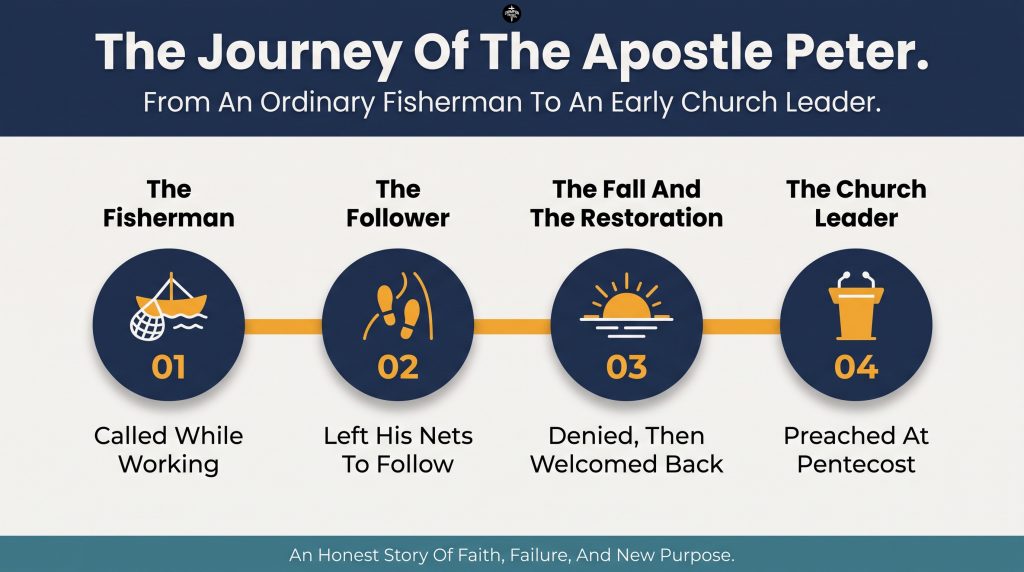
Peter was a Jewish fisherman from Galilee whom Jesus called to follow him near the start of his ministry. Born Simon, he worked with his hands and had no formal religious training. Jesus gave him a new name, Cephas in Aramaic and Petros in Greek, both meaning rock. He grew into a leader among the twelve apostles.
Most of what we know about Peter comes from the New Testament, including the Gospels, the book of Acts, and the letters that carry his name. According to Encyclopaedia Britannica, the sources describe him as an everyday man rather than a trained scholar, and they picture him as someone who was at times unsure and inconsistent. That honesty is part of his appeal.
His calling began in the middle of ordinary work. Jesus met him by the water with a simple invitation: "Come, follow me ... and I will send you out to fish for people" (Matthew 4:19). Peter left his nets and went. The new name pointed to who he would become, not who he had been. For anyone who feels defined by their past, that shift in identity is worth holding onto.
Peter's Bold Faith and His Painful Failure
Peter showed strong faith and deep loyalty, and he also stumbled in public. He confessed Jesus as the Messiah and stepped out in trust more than once. Yet on the night of Jesus' arrest, fear took over, and Peter denied knowing him three times. His story holds both courage and failure, which is one reason so many readers recognize themselves in him.
At a key moment, Jesus asked his followers who they believed he was. Peter answered plainly, "You are the Messiah, the Son of the living God" (Matthew 16:16). It was a clear and bold statement of faith. Peter often spoke first and meant what he said.
But sincerity is not the same as strength under pressure. Before Jesus was arrested, Peter promised he would never fall away. Jesus knew better, and he responded with care rather than blame. He told Peter that he had prayed for him, and that after his failure Peter would turn back and strengthen others (Luke 22:31-32). The hope was already spoken before the failure happened.
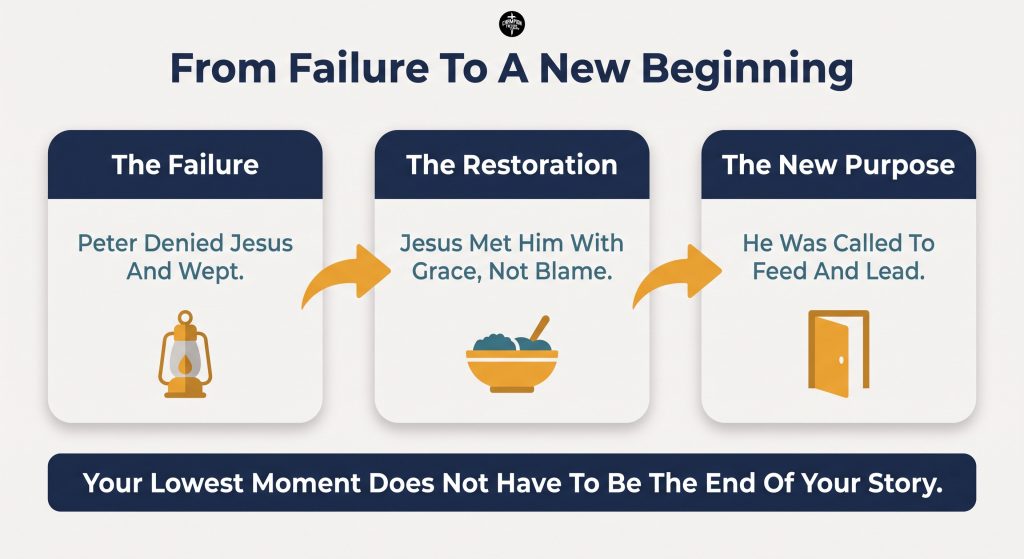
Then came the hard part. As Jesus stood trial, Peter said three times that he did not know him. When he realized what he had done, he wept. This is a low point many people understand from their own lives. It helps to notice what the account does not do. It does not shame Peter or write him off. It records his failure with honesty and leaves room for what comes next.
How Jesus Restored Peter After He Failed
After the resurrection, Jesus did not reject Peter. He met him, shared a meal, and gently invited him back. Three times Jesus asked Peter if he loved him, once for each denial, and each time he gave Peter something to do. The message was clear. Peter's failure did not cancel his calling.
The restoration was personal and kind. Jesus did not lecture Peter or rehearse his mistakes. He asked a question about love, and he answered Peter's renewed devotion with purpose, telling him, "Feed my sheep" (John 21:17). Grace led somewhere. It led back to work that mattered.
This is good news for anyone living with regret. A failure, even a serious one, does not have to be the end of your story. Many people find that their hardest season becomes the starting point for real growth.
"In our discipleship work, we often watch people who felt written off by their past become the steadiest mentors once they receive grace." Todd Medina, President and Founder
If you carry heavy shame, or you are healing from a painful experience, you do not have to sort it out alone. Talking with a trusted pastor, a counselor, or another professional can be a healthy and faithful step. Care for your heart the way Jesus cared for Peter, with patience and honesty.
What Peter Did in the Early Church
Peter became a central leader of the early church. He preached on the day of Pentecost, when the church began its public mission, and many people responded. He later helped welcome people outside the Jewish community. The movement he helped begin grew over the centuries into the largest faith tradition in the world today.
After Jesus returned to heaven, the once fearful Peter spoke out in public with courage. Britannica notes that he was the first to raise his voice and preach at Pentecost. The man who had denied Jesus in a courtyard now told crowds about him openly.
One of the clearest signs of Peter's growth came when he met a Roman officer named Cornelius. Peter had assumed that God's welcome was limited to people like him. Through that encounter, he changed his mind and said, "I now realize how true it is that God does not show favoritism but accepts from every nation the one who fears him and does what is right" (Acts 10:34-35). He learned to value people he once kept at a distance.
"Peter learned to welcome people he once overlooked. That same shift shapes how we plan outreach today, person by person." Art Montgomery, Global Evangelism Strategy Architect
That lesson still guides faithful service. Today Christianity is the world's largest religious group, with about 2.3 billion people counted in 2020, according to the Pew Research Center. The reach of that movement traces back to ordinary followers like Peter who kept going after they failed. At Champion Factory Ministry, that same conviction guides our discipleship and spiritual growth work, which treats every person as worthy of care and attention.
What Christians Can Learn From the Apostle Peter
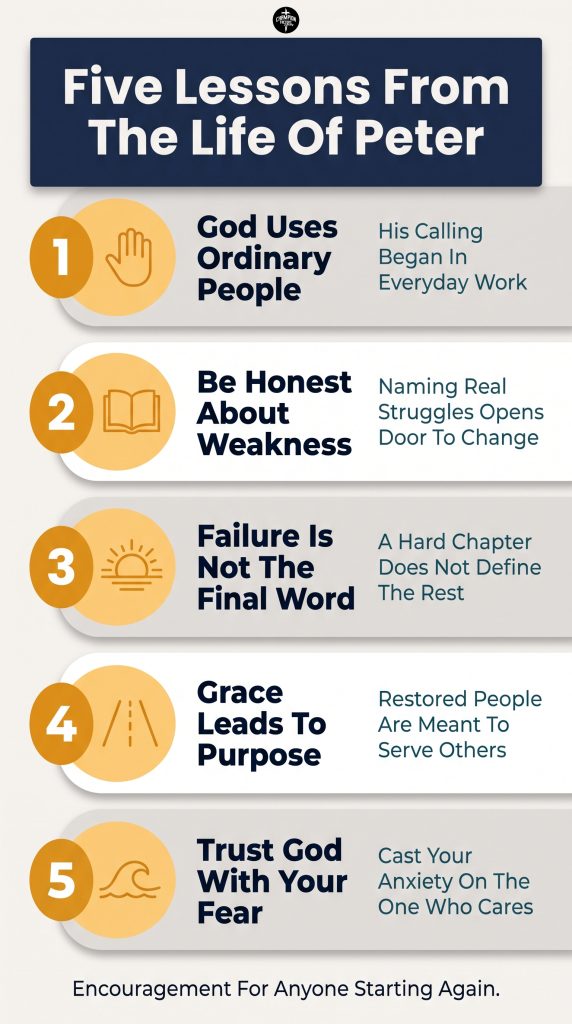
Peter's life offers clear lessons for anyone who feels unqualified or stuck in regret. God calls ordinary people. Honesty about weakness is a starting point. Failure is not final. Grace restores. And restored people are meant to serve others. These are not abstract ideas. They are patterns you can recognize and live out.
Here are five practical lessons from Peter's story and simple ways to apply them.
- God uses ordinary people. Peter had no special training. If you have ever felt too plain or too unprepared, his life is a steady reminder that God works with who you are now.
- Honesty about weakness helps you grow. Peter's overconfidence set up his fall. Naming your real struggles, rather than hiding them, opens the door to change.
- Failure is not the final word. Peter denied Jesus and still found a future. A hard chapter does not have to define the rest of your life.
- Grace leads to purpose. Jesus restored Peter and gave him work to do. Receiving grace is not the end. It often becomes the start of serving others.
- Trust God with your fear. Peter wrote from a life that knew fear and recovery when he urged readers to "cast all your anxiety on him because he cares for you" (1 Peter 5:7).
You can start small. Choose one area where you feel disqualified and bring it honestly to God in prayer. Then look for one practical way to encourage or help someone else this week. Peter's pattern moved from receiving grace to serving people, and that same path is open to you.
Finding Hope in a New Beginning
Peter's life carries a simple and steady message. An ordinary person can be called, can fail, and can still be restored to real purpose. That hope does not rest on being strong enough. It rests on the patience and grace that met Peter by the water.
If his story speaks to something you are carrying, take one gentle next step. You might pray honestly about a regret, talk with someone you trust, or find a place to serve. If you would like to walk alongside others who are growing in faith and starting again, you can learn more about ways to get involved with our community. Like Peter, you do not have to be finished growing to be useful. You only have to be willing to follow.
FAQ
Why is Peter called the rock?
Jesus gave Simon the name Peter, which comes from words meaning rock in Aramaic and Greek. The new name pointed to the steady, foundational role Peter would grow into as a leader in the early church, even though he was still impulsive and unpolished when he received it.
Did Peter write part of the Bible?
Two New Testament letters carry Peter's name, known as 1 Peter and 2 Peter. They offer encouragement to believers facing hardship. Scholars widely accept the first letter as Peter's, while the authorship of the second is debated, so it is best to mention that point with care.
What is the biggest lesson from Peter's life?
The clearest lesson is that failure is not final. Peter denied Jesus, yet he was restored and given renewed purpose. His life shows that God calls ordinary, imperfect people, offers grace when they fall, and invites them back into meaningful service.