





Many volunteers step into modern ministry wanting to help people but feel unsure of how to guide them safely. Whether you are serving a family experiencing sudden poverty or supporting someone on a difficult journey of recovery, offering the right kind of help requires wisdom. You might wonder how to share your faith when someone is worried about their next meal or how to provide support without overstepping into the role of a professional counselor.
This article breaks down the difference between biblical discipleship and practical mentorship. They work together to create holistic support that changes lives. By the end of this guide, you will understand how to build safe and encouraging relationships. These relationships respect the dignity of every individual while pointing them toward spiritual hope and practical stability.
The Difference Between Mentorship And Discipleship
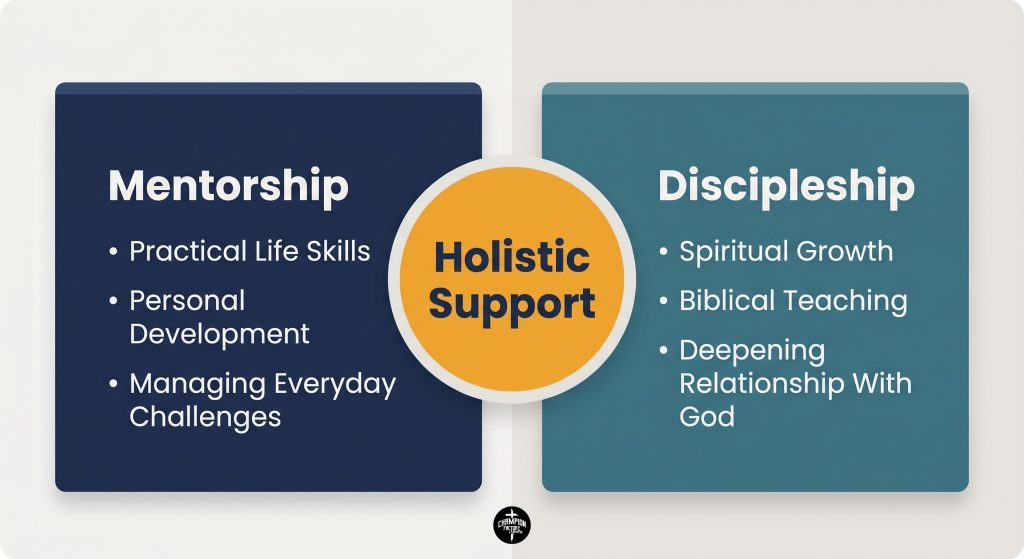
Mentorship and discipleship serve different, complementary roles in ministry. Mentorship focuses on practical life skills, personal development, and managing everyday challenges. Discipleship focuses on spiritual growth, biblical teaching, and deepening a relationship with God. Modern ministry requires both approaches to provide holistic support that meets physical and spiritual needs.
When someone faces deep hardship, they need tangible help managing the realities of life. A mentor steps in to help an individual write a resume, connect with community resources, or set a household budget. These practical steps build immediate stability. At the same time, people need spiritual grounding to find lasting hope and purpose. This is where discipleship enters the picture.
In a healthy ministry environment like the Nourish program at Champion Factory Ministry, these two concepts blend naturally. You do both. Practical care often opens the door to deeper spiritual conversations. When you help someone meet a physical need, you demonstrate the love of Christ in action.
"Mentorship builds the daily foundation, while discipleship points the heart toward eternal hope. Both are essential for true restoration." - Todd Medina, President & Founder
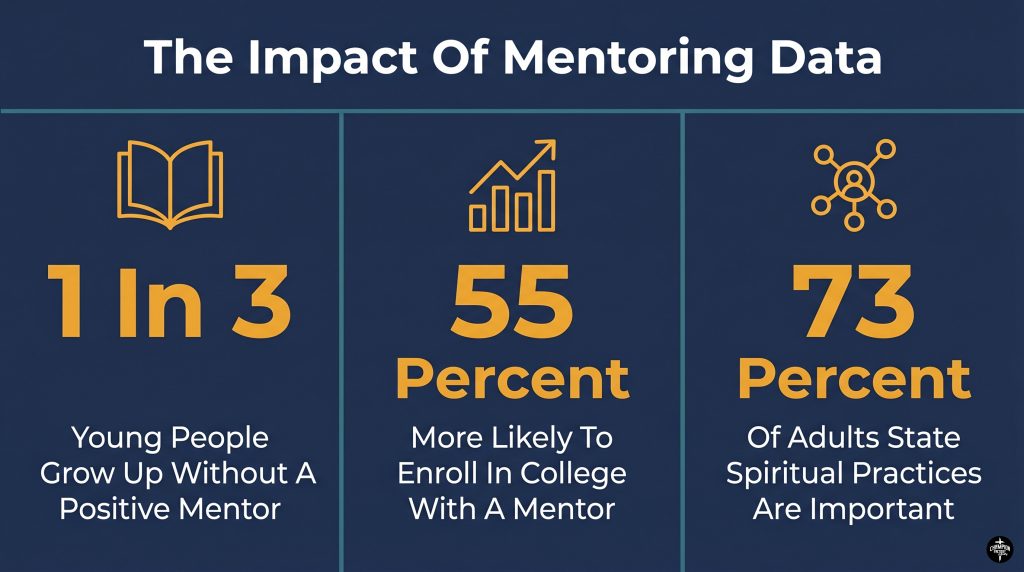
Pew Research Center data shows that 73 percent of adults state that spiritual practices are important in their daily lives. People naturally seek spiritual grounding alongside practical help. True support meets people in their physical reality while guiding them toward spiritual hope.
According to Proverbs 27:17 (NIV), "As iron sharpens iron, so one person sharpens another." This verse captures the mutual growth of a healthy mentoring relationship. It is a shared journey of personal and spiritual growth.
Why Vulnerable Populations Need Consistent Support
Vulnerable populations require long-term, consistent relationship-building to achieve lasting recovery and stability. Trust takes time to develop, especially for those who have experienced trauma or abandonment. Consistent support networks reduce the physical and mental impacts of chronic stress and provide a foundation for future success.
Short-term relief helps in a crisis. Long-term restoration requires a dedicated relationship. Individuals recovering from exploitation or community violence often face intense isolation. Connecting them to a stable community acts as a protective factor. A steady presence proves to the individual that they matter and that they are not alone.
Data from MENTOR National highlights that one in three young people grow up without a positive mentor. Young adults who face an opportunity gap but have a mentor are 55 percent more likely to enroll in college. The presence of a caring adult changes the trajectory of a life.
The Centers for Disease Control and Prevention states that having safe and stable relationships is a primary factor in building resilience against adverse childhood experiences. Similarly, research from JAMA Pediatrics proves that positive experiences involving non-parent adults significantly lower the risk of future mental health challenges.
Jack Shonkoff from the Center on the Developing Child at Harvard University notes that supportive relationships with adults who are not their parents are essential building blocks for healthy youth development. Ministry programs provide the perfect environment to foster these essential relationships.
"True evangelism happens through consistent, patient presence. People trust the gospel when they see it lived out in a reliable relationship." - Art Montgomery, Global Evangelism Strategy Architect & Board Visionary Luminary
Applying Trauma-Informed Care In Mentoring
Trauma-informed mentoring prioritizes safety, dignity, and patience. Mentors must recognize that individuals facing hardship carry hidden wounds that affect their behavior and trust. A trauma-informed approach means listening without judgment, avoiding graphic questions about their past, and focusing on their present stability and future hope.
Many individuals served in modern ministry are on a path of rescue and recovery. They have experienced situations that require deep healing. Volunteers must step into these relationships with a trauma-informed mindset. This means you do not force conversations about painful memories. You allow the individual to share what they want when they are ready.
Trauma-informed care requires treating the person with dignity and using people-first language. You see the individual facing hardship, not a label defined by their crisis.
The Polaris Project research team explains that connection to community and consistent support systems drastically reduce the likelihood of re-victimization. Your role is to provide that safe community connection. The Centers for Disease Control and Prevention also confirms that community connectedness acts as a protective factor against exploitation and community violence.
To practice trauma-informed care:
- Listen more than you speak.
- Ask permission before praying for specific sensitive topics.
- Provide choices to help the individual regain a sense of personal control.
- Keep your commitments to build trust over a long period of time.
Scripture supports this gentle approach. Galatians 6:2 (ESV) says, "Bear one another's burdens, and so fulfill the law of Christ." We bear burdens by walking alongside people in their pain and helping them carry the weight without forcing them to relive it.
Setting Healthy Boundaries In Ministry Work
Healthy boundaries protect both the mentor and the individual receiving support. Clear limits on time, communication, and resources prevent volunteer burnout and keep the relationship safe. Boundaries also prevent the mentee from developing an unhealthy dependence on one person instead of relying on God and their broader community.
When you care deeply about someone, it is very easy to overextend yourself. Rescuing someone is not your job. Your role is to support them as they walk their own path of recovery. Giving too much too quickly often leads to exhaustion for the volunteer and confusion for the individual.
Jean Rhodes from the Center for Evidence-Based Mentoring states that the most effective mentoring relationships involve structure, clear expectations, and a commitment to understanding the background of the mentee. Setting boundaries from the very beginning creates that necessary structure.
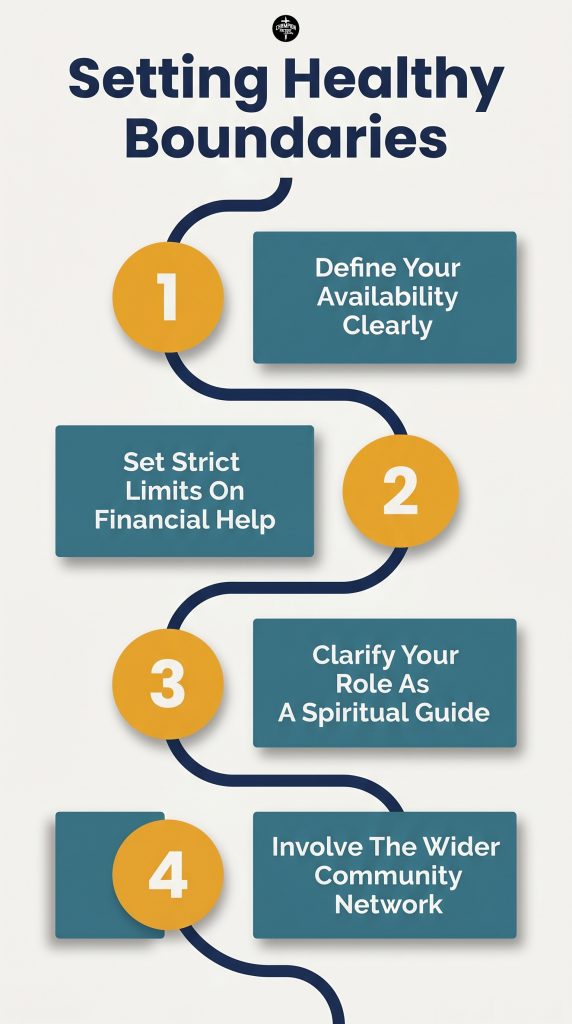
Steps for setting healthy boundaries:
- Define your availability clearly. Tell the individual exactly when you can and cannot answer phone calls or text messages.
- Set strict limits on financial help. Direct the individual to official ministry resources rather than giving personal money to prevent transactional relationships.
- Clarify your role. Remind the individual frequently that you are a spiritual friend and guide.
- Involve the wider community. Connect the individual with other volunteers, church members, and programs so they build a broad network of support.
This structured approach aligns with 1 Thessalonians 2:8 (NLT). "We loved you so much that we shared with you not only God's good news but our own lives, too." Sharing your life requires sustainable rhythms so you can stay in the relationship for the long haul.
Knowing When To Recommend Professional Help
Mentors provide spiritual and practical support, but they are not professional counselors or medical experts. Volunteers must recognize their limits and refer individuals to licensed professionals when dealing with severe mental health crises, active addiction, or legal issues. Ministry support complements professional care rather than replacing it.
Modern ministry work intersects with highly complex challenges. Prayer and discipleship are vital. They do not replace the need for clinical therapy, medical intervention, or professional social work. A good mentor knows when a problem requires a licensed expert.
The American Psychological Association highlights that strong social support networks reduce the physical and mental impacts of chronic stress. You provide that crucial social and spiritual support. The licensed therapist provides the clinical treatment. The two work together beautifully.
Signs that an individual needs professional help:
- They express thoughts of harming themselves or harming others.
- They are experiencing severe depression or anxiety that prevents daily functioning.
- They are dealing with active substance abuse or severe addiction.
- They are facing complex legal, custody, or immigration battles.
When these situations arise, connect the individual with the appropriate professional resources immediately. Champion Factory Ministry programs work alongside professional services to ensure individuals get comprehensive care. Never promise that mentorship or prayer alone will cure severe trauma. Frame your support as a vital piece of a much larger healing journey.
"We must be humble enough to know our limits. Referring someone to a medical or mental health professional is an act of deep Christian love." - Todd Medina, President & Founder
Building A Legacy Of Hope And Restoration
Effective ministry changes lives by combining practical mentorship with the lasting hope of biblical discipleship. When volunteers step forward to offer consistent, trauma-informed support, they help vulnerable individuals find stability and dignity. Your willingness to build a relationship can be the turning point in someone else's story.
The work of restoring hope takes time, patience, and a dedicated community. It requires volunteers who are willing to show up consistently and offer grace. You do not need to have all the answers to be a good mentor. You simply need to be present, listen well, and point people toward truth.
Take a moment today to reflect on how you can support those facing hardship in your community. Whether through prayer, volunteering your time, or supporting organizations like Champion Factory Ministry, your involvement matters deeply. Consider exploring local mentorship opportunities to see how you can help individuals move toward stability, growth, and restored hope.
FAQ
What is the main difference between mentorship and discipleship?
Mentorship focuses on teaching practical life skills and personal development. Discipleship focuses on guiding someone in their faith and understanding of biblical truth.
Do I need professional training to be a mentor?
No. Trauma informed training is highly recommended and often provided by ministries. You do not need to be a professional counselor. You just need to be a consistent and caring presence.
How long should a mentoring relationship last?
Effective mentoring requires a long-term commitment. Building trust with someone who has faced hardship can take months. Plan to commit for at least a year to provide true stability.
What do I do if the person I am mentoring shares a traumatic experience?
Listen calmly and offer compassion without asking for graphic details. Validate their pain and gently encourage them to speak with a licensed professional counselor for clinical support.