





Most Christians want to live with wisdom, but everyday life brings a lot of noise. You hear advice from friends, social media, podcasts, and even well-meaning believers who see things differently.
This article will help you build biblical discernment in a practical, steady way. You will learn what discernment is, how to test what you hear, and how to make everyday choices that reflect the character of Christ.
What biblical discernment is and what it is not
Biblical discernment is the habit of testing what is true and wise using Scripture, prayer, and godly counsel, then choosing the next faithful step with humility and love. It is not suspicion, harshness, or fear. Healthy discernment leads to clarity, peace, and steady growth.
Discernment starts with a simple commitment. You want God’s Word to shape your thinking. You want the Holy Spirit to guide your heart. You also want trusted believers around you who can help you see clearly.
Discernment is not about winning arguments. It is about growing in spiritual maturity so your choices look more like Jesus.
A simple biblical picture of discernment
Scripture calls believers to test what they hear and hold on to what is good (1 Thessalonians 5:21). It also warns against being easily carried by every new teaching (Ephesians 4:14). These passages point to a steady, thoughtful faith.
Discernment can sound like this in real life:
- “That sounds spiritual, but does it match Scripture?”
- “Does this produce love, humility, and righteousness, or does it stir pride and division?”
- “Am I reacting in fear, or responding with wisdom?”
Why discernment matters more than ever
Discernment matters because many of your inputs arrive fast and without context, and repeated exposure shapes how you think. When you practice discernment, you learn to slow down, test ideas, and choose what leads toward truth and spiritual health.
A large share of adults use platforms like YouTube and Facebook, and many also get news and commentary through social media. This is one reason believers can feel pulled in different directions. The speed of content can train you to react instead of reflect. Pew Research Center data on how Americans use social media helps show how common these inputs are.
Discernment does not require you to fear the world. It invites you to steward your attention with care.
Discernment protects peace and people
Healthy discernment helps you:
- Avoid spreading unverified claims
- Choose teaching that is sound and Christ-centered
- Respond to conflict with grace
- Make decisions with clarity instead of pressure
It also protects relationships. It helps you listen carefully, speak honestly, and avoid labeling or attacking others.
Build a strong foundation in Scripture, prayer, and community
Discernment grows best when Scripture becomes your steady reference point, prayer becomes your reflex, and trusted Christian community becomes your support. A strong foundation matters because you cannot test teaching well if you rarely hear God’s Word, and you cannot apply wisdom well if you try to decide alone.
If you want discernment to become part of everyday life, start with small habits you can repeat.
Scripture: let God’s Word set your baseline
Start with a plan you can keep. Consistency matters more than intensity.
- Read one Gospel chapter a day for a month
- Add one Psalm when you feel anxious or scattered
- Choose one short passage to reread for a week
Research from Barna suggests Bible engagement has shown signs of rebound in recent years. Their reporting on Bible reading trends supports a simple point: discernment grows as Scripture becomes normal again.
“Tie your decisions back to the Word, not the moment. That habit builds steadiness over time.”
Todd Medina, Co-Founder
Prayer: ask for wisdom, not just answers
James 1:5 encourages believers to ask God for wisdom. This fits discernment well. Wisdom helps you apply truth to real life, not just collect information.
Try simple prayers like:
- “Lord, show me what is true.”
- “Help me respond with love and self-control.”
- “Give me wisdom for the next step.”
Community: use wise counsel without giving away responsibility
Discernment does not mean you outsource every choice. It means you invite trusted counsel when it matters.
Look for people who are:
- Grounded in Scripture
- Gentle and honest
- Not driven by fear or controversy
- Willing to ask good questions
If you want a steady discipleship rhythm, Champion Factory Ministry’s Nourish program can support spiritual growth and practical habits over time. You can explore the Nourish program.
Use a simple framework to test teachings and messages
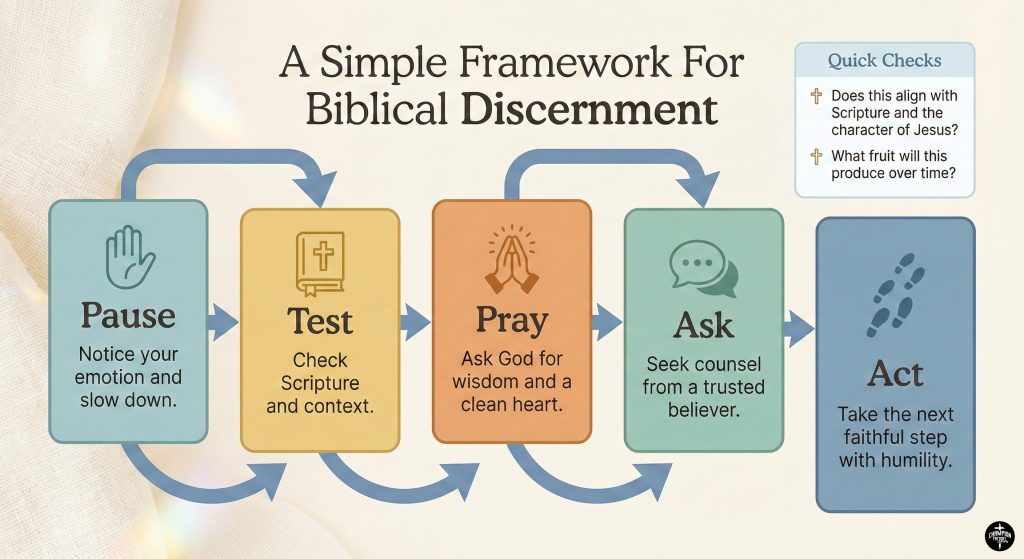
A simple framework keeps you from reacting quickly and helps you test ideas with clarity. You can evaluate sermons, social clips, and advice by pausing, checking Scripture, examining fruit, and seeking wise counsel before you accept or share it. This approach keeps discernment humble and practical.
Not every message needs a deep review. But when something shapes your beliefs, decisions, or emotions, it is worth testing.
The “pause, test, pray, ask, act” process
- Pause
- Ask: “Why is this grabbing me right now?”
- Notice fear, anger, or excitement that might cloud judgment
- Test with Scripture
- Ask: “Is this consistent with the character of God and the teaching of Jesus?”
- Look for clear biblical support, not isolated proof texts
- Pray for wisdom
- Ask God to correct your motives and guide your response
- Ask wise counsel
- Share the idea with a trusted believer and ask: “What do you see here?”
- Act with humility
- If you are unsure, slow down
- If you are convicted, obey in a practical way
Two quick fruit checks
Jesus teaches that you can recognize fruit over time (Matthew 7:16). When you evaluate a teaching or influence, ask:
- Does this produce greater love for God and people?
- Does this lead to humility, repentance, and peace, or to pride and division?
Discernment is not about attacking people. It is about testing what you receive and choosing what builds faithful life.
Practice discernment in everyday decisions
Everyday discernment is the skill of choosing what is wise, honest, and loving in normal decisions like relationships, money, priorities, and commitments. You practice it by asking clear questions, considering impact, and choosing the next faithful step instead of chasing perfect certainty.
Many people want God to give a full map. Often, He guides through wisdom for the next step.
Questions that bring clarity fast
Use these questions when you feel unsure:
- “Does this align with Scripture’s values and commands?”
- “Is my motivation love, fear, pride, or pressure?”
- “Will this choice help me serve God and others well?”
- “What is the wise, peaceful next step I can take today?”
- “Who will this impact, and have I considered them with care?”
Example scenarios
- A new opportunity sounds exciting, but it removes rest, family presence, or church community. Discernment can look like slowing down and talking with a mentor before committing.
- A relationship feels intense, but it pulls you away from honesty, boundaries, or godly counsel. Discernment can look like seeking help and setting clear limits.
- A trending teaching makes you angry and suspicious. Discernment can look like stopping the share, opening Scripture, and choosing a calmer response.
If you feel stuck in anxiety or constant second guessing, it can help to talk with a trusted pastor or a licensed counselor. Seeking help is a wise step, not a failure of faith.
Build digital discernment without fear or isolation
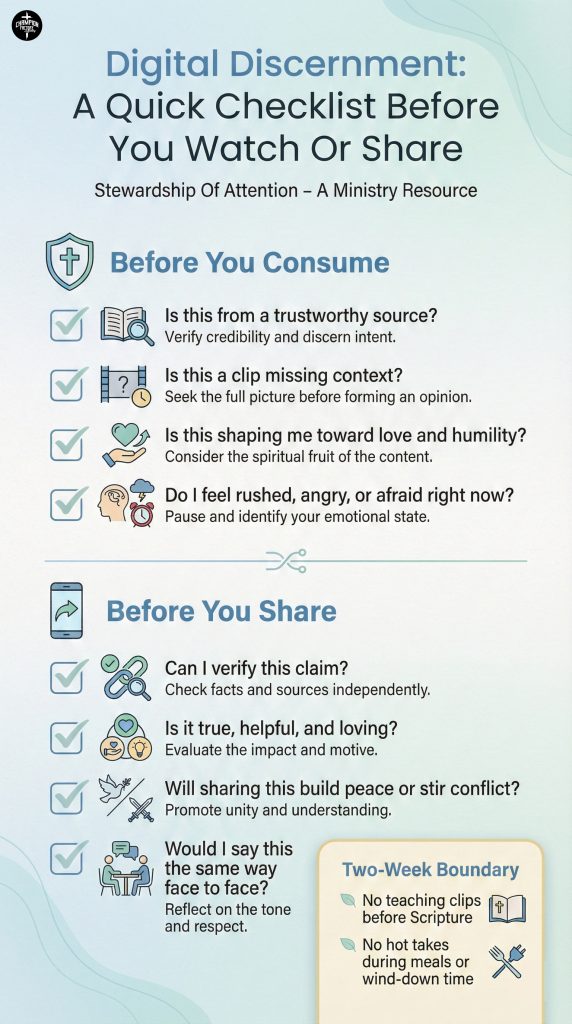
Digital discernment is the practice of stewarding what you consume online so your mind stays anchored in truth. It matters because many people receive ideas and “spiritual teaching” through short clips and viral commentary, which can shape beliefs quickly without context.
Your phone can become a discipleship tool or a distraction engine. The difference is your habits.
Pew Research Center notes that many people use social platforms to access news and information. Their social media and news fact sheet supports a practical point: what you consume repeatedly can shape your worldview.
Three digital habits that strengthen discernment
- Choose a primary voice
- Make Scripture and your local church your primary source of formation
- Let online voices be secondary, not central
- Slow your sharing
- Do not share something because it feels urgent
- Verify claims and ask: “Is this helpful, true, and loving?”
- Curate your inputs
- Unfollow accounts that stir fear, outrage, or constant suspicion
- Follow content that promotes humility, biblical depth, and wise action
A gentle boundary that helps most people
Try one simple boundary for two weeks:
- No teaching clips before you read Scripture that day
- No hot takes while you eat meals or wind down at night
Small boundaries create space for wisdom.
Common discernment traps and how to avoid them
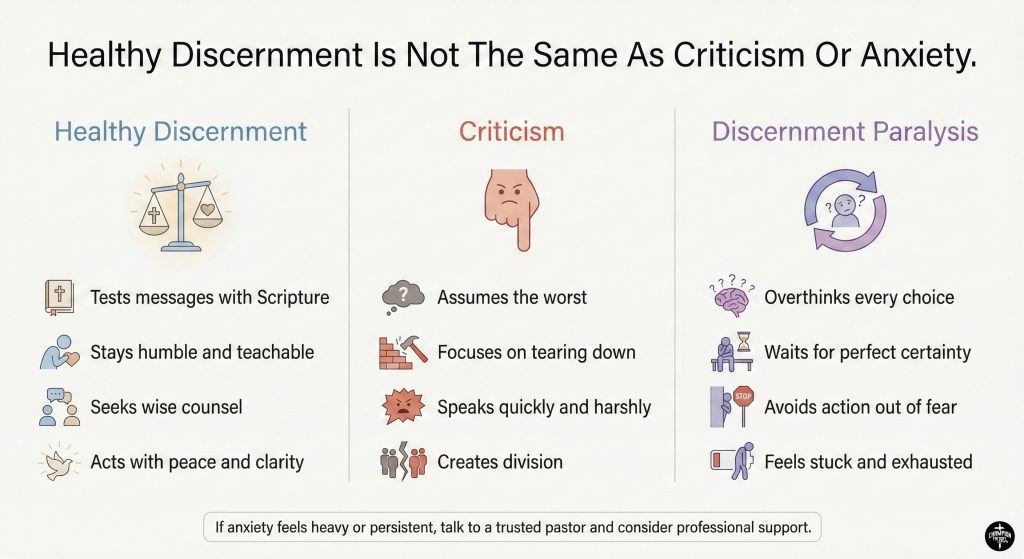
Discernment can break down when fear, pride, or overconfidence takes the driver’s seat. Common traps include assuming the worst, searching for hidden meanings everywhere, or becoming so cautious that you never act. Healthy discernment stays humble, slow to speak, and willing to learn.
You do not need to be perfect to grow. You need a steady direction.
Trap: confusing discernment with criticism
If you feel quick to label, mock, or dismiss others, pause. Ask:
- “Am I protecting truth, or feeding pride?”
- “Does my tone reflect Christ’s gentleness?”
Truth and love belong together (Ephesians 4:15).
Trap: discernment paralysis
If you cannot decide because you fear getting it wrong, start smaller.
- Choose the next wise step, not the final outcome
- Ask one trusted person for counsel
- Pray and act in obedience to what you already know
Trap: spiritual language used to control or shame
Sometimes people misuse Scripture or spiritual authority to pressure others. If you feel confused, shamed, or controlled, it is wise to seek safe support. Talk to a trusted pastor, a mature believer, or a licensed professional when needed. You deserve dignity and care.
A simple daily plan to strengthen discernment over time
A daily plan builds discernment by turning wisdom into routine. You do not need a complicated system. You need repeatable steps that keep you close to God’s Word, honest in prayer, and connected to wise community.
Here is a simple practice you can use:
- Read (5 to 10 minutes)
- Read a short passage
- Write one sentence: “What is God showing me about who He is?”
- Pray (2 minutes)
- Ask for wisdom for one decision or relationship
- Reflect (2 minutes)
- Ask: “What is one thing I need to say yes to, or no to, today?”
- Ask (as needed)
- If a decision feels heavy, text or call a trusted mentor
- Act (one step)
- Choose one clear action that aligns with Scripture
If you want to grow with others, consider stepping into community through Champion Factory Ministry. You can explore ways to serve on the Get involved page or learn about real stories of hope through Impact stories.
A hopeful next step toward wisdom and peace
Discernment is not a special gift for a few. It is a steady practice for every believer. God grows wisdom in you as you stay near His Word, pray honestly, and walk with trusted community.
Start small this week. Choose one boundary for your inputs, one simple test for what you hear, and one daily Scripture habit. If you want to support faith-centered care in your community, you can also visit the Donate page or explore current Causes to see where help is needed most.
FAQ
What is the difference between discernment and judgment?
Discernment tests ideas and choices against Scripture and wisdom. Judgment condemns people and assumes motives. Biblical discernment stays humble and focuses on truth and fruit, while leaving ultimate judgment to God.
How do I know if a teaching is sound?
Look for clear alignment with Scripture, the character of Jesus, and healthy fruit over time. Use the “pause, test, pray, ask, act” process and seek counsel from mature believers you trust.
What if I feel anxious and second guess everything?
Start with the next wise step, not the perfect outcome. Pray for wisdom, reduce noisy inputs, and talk with a trusted pastor or licensed counselor if anxiety feels heavy or persistent.
How can parents help kids build discernment?
Model calm truth-seeking. Read Scripture together, ask good questions about media, and teach kids to pause before believing or sharing. Encourage them to talk openly when something confuses them.
Should Christians avoid social media to be discerning?
Not always. Many believers use social media wisely. Discernment means you steward what you consume, verify claims, and refuse fear-driven content. Curate your inputs and keep Scripture and church community as primary influences.