




The word theology can sound like it belongs to scholars in quiet libraries. Many believers assume it is too complex or reserved for pastors, so they leave it alone. That is understandable, but it leaves a gap between what we believe and how confidently we can live it out.
This guide breaks theology down in plain language. You will learn what it means, why it matters on ordinary days, the main areas it covers, and a simple way to begin. No special training required. Just a willingness to know God a little better than you did yesterday.
What Does Christian Theology Actually Mean?
Christian theology means the study of God. The word joins two Greek roots, theos for God and logos for word or study. At its heart, theology is faith trying to understand the God it already trusts. You do not need a title or a degree to start. If you have ever wondered who God is or what He is like, you have already begun.
The 11th century thinker Anselm of Canterbury described theology as faith seeking understanding. That phrase keeps things in the right order. Faith comes first, and understanding grows from it. Theology is not cold analysis. It is a believer leaning in to know God more.
The theologian John Frame once defined theology as the application of Scripture to every area of life. That keeps it practical. Theology reaches into how we work, love, grieve, and hope.
Scripture frames the goal clearly. In John 17:3, Jesus says, "Now this is eternal life: that they know you, the only true God, and Jesus Christ, whom you have sent." The point of theology is knowing God, not collecting facts about Him. And in Matthew 22:37-38, Jesus calls us to love God with heart, soul, and mind. Thinking carefully about God is one way we love Him.
Why Does Theology Matter for Everyday Life?
Theology matters because what you believe about God shapes how you live. Your view of God affects how you handle fear, loss, money, and relationships. Good theology gives you steadier footing when life turns hard. It is not abstract. It meets you in real decisions, quiet doubts, and the moments when you most need hope.
Consider a hard season, such as a job loss or a difficult diagnosis. What you believe about God's character will shape how you respond. If you trust that God is good and present, you face the unknown differently than if you believe you are on your own.
Scripture connects belief to action. James 1:22 says, "Do not merely listen to the word, and so deceive yourselves. Do what it says." Theology that never reaches daily life stays unfinished.
"In our discipleship work, the people who grow most are not the ones who know the most terms. They are the ones who keep showing up to read, pray, and ask honest questions." Todd Medina, President & Founder
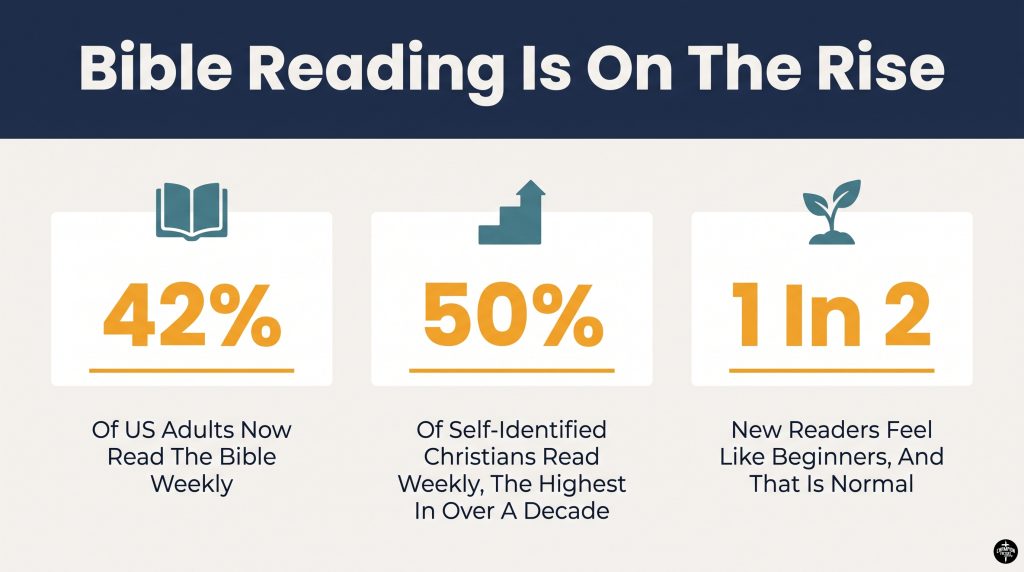
There is also an honest gap worth naming. Research from Barna Group found that Bible reading is rising, yet many people still feel unsure about what they believe. The group's CEO described this as engagement outpacing conviction. People are opening the Bible more, but understanding has not caught up. A simple grasp of theology helps close that gap, so your faith feels grounded rather than uncertain.
What Are the Main Areas of Christian Theology?
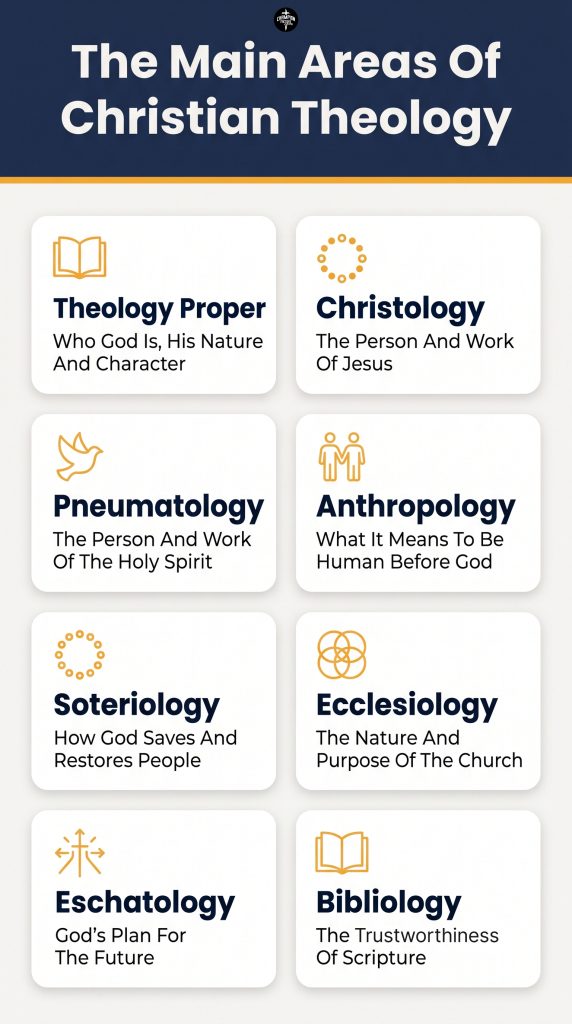
Theologians often sort the study of God into a handful of main areas. Each one focuses on a different part of the bigger picture, from who God is to how the story ends. You do not need to master them all at once. Knowing the basic map helps you see how the pieces connect, and it makes the whole subject feel far less overwhelming.
As the scholar A. C. Thiselton put it, theology is never purely abstract. Each area below answers real questions people ask about God and life.
| Area | What It Explores |
|---|---|
| Theology proper | Who God is, including His nature and character |
| Christology | The person and work of Jesus |
| Pneumatology | The person and work of the Holy Spirit |
| Anthropology | What it means to be human before God |
| Soteriology | How God saves and restores people |
| Ecclesiology | The nature and purpose of the church |
| Eschatology | God's plan for the future and the end of the story |
| Bibliology | The nature and trustworthiness of Scripture |
You will also hear about different approaches, such as systematic theology, which organizes what the whole Bible teaches by topic, and historical theology, which studies how Christians have understood these truths across the centuries. These are simply different ways of looking at the same God.
What Core Beliefs Can Every Christian Hold With Confidence?
Across centuries and traditions, Christians share a core set of beliefs. God is one God in three persons, Father, Son, and Holy Spirit. Jesus is fully God and fully human. He died and rose to reconcile people to God. Scripture is God's trustworthy word. These shared truths, summarized long ago in the Apostles' Creed and the Nicene Creed, form solid ground to stand on.
Here are the essentials in plain terms:
- God is one God in three persons. This is the Trinity. One God, eternally Father, Son, and Holy Spirit.
- Jesus is both God and human. The incarnation means God the Son became human in Jesus.
- Jesus reconciles us to God. Through His death and resurrection, He makes a way back to God. This is the heart of salvation.
- Scripture is God's word. As 2 Timothy 3:16 says, "All Scripture is God-breathed and is useful for teaching, rebuking, correcting and training in righteousness."
- The church is God's people. Believers grow together, not alone.
These beliefs are not new opinions. They are the same confessions Christians have held since the early church. When you learn them, you join a long line of believers who found steady footing in the same truths.
How Do You Tell Core Beliefs From Debated Ones?
Not every question carries the same weight. A small set of beliefs sits at the center of the faith, while many other topics are areas where sincere Christians disagree. Learning to tell the difference keeps you steady. You can hold the essentials firmly, stay gracious about secondary matters, and avoid feeling shaken every time you hear two believers debate.
The core beliefs above unite Christians. Other topics invite honest, faithful disagreement. A few examples include the timing and details of how the world ends, the practice of baptism, and how certain spiritual gifts work today. Thoughtful believers land in different places on these, and that is not a crisis of faith.
"When you are clear on the few beliefs that matter most, you can speak about your faith with confidence and still listen with respect to people who see things differently." Art Montgomery, Global Evangelism Strategy Architect & Board Visionary Luminary
A healthy habit is to test what you hear against Scripture. Acts 17:11 praises the Bereans, who "examined the Scriptures every day to see if what Paul said was true." You can do the same. When you encounter a new claim, ask where it appears in the Bible and whether it fits the whole of Scripture.
When you disagree with another believer, you can stay kind. Hold the center with confidence and the edges with humility. This posture protects both your faith and your friendships.
How Can You Start Studying Theology in a Simple Way?
You can grow in theology with small, steady steps. Start with Scripture, since it is the source. Add prayer, ask honest questions, and learn alongside other believers. You do not need to read thick textbooks first. A few minutes of regular, thoughtful reading will take you further than an occasional long session that leaves you worn out.
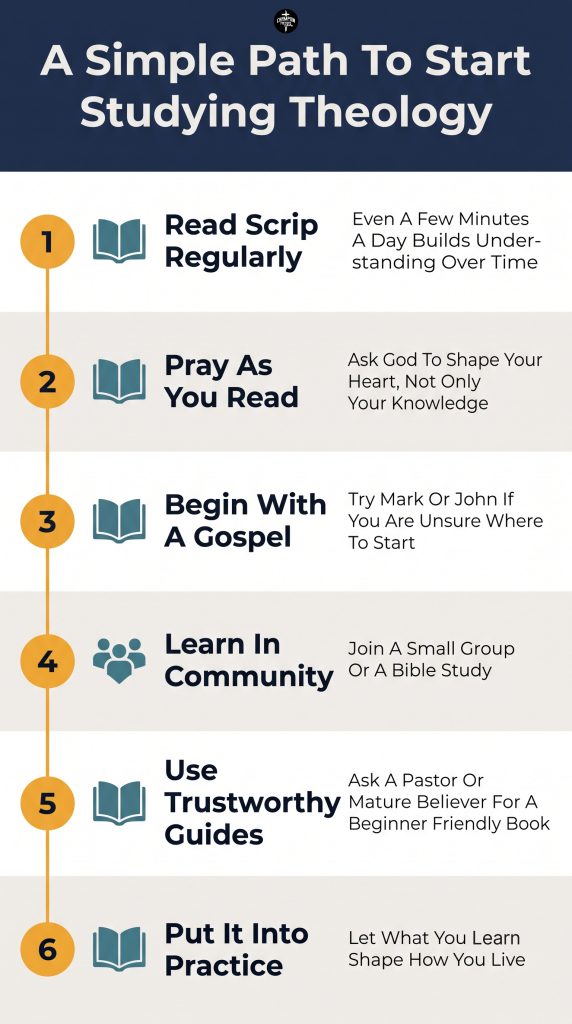
Here is a simple starting path:
- Read Scripture regularly. Even a short daily reading builds understanding over time. Barna Group reports that weekly Bible reading recently climbed to 42 percent of US adults, and reached 50 percent among Christians, the highest level in over a decade.
- Pray as you read. Ask God to help you understand and to shape your heart, not only your knowledge.
- Begin with a Gospel. If you are unsure where to start, try Mark or John. This is also reassuring, since a Pew Research Center survey found fewer than half of US adults could name all four Gospels. If you feel like a beginner, you are in good and ordinary company.
- Learn in community. Join a small group or a Bible study. Talking through questions with others helps the truths take root.
- Use trustworthy guides. Ask a pastor or a mature believer for a solid, beginner friendly book or study. A good guide saves time and prevents confusion.
- Put it into practice. Knowledge is meant to be lived. As 1 Peter 3:15 reminds us, be ready to share the reason for your hope, and do it with gentleness and respect.
If your questions grow heavy or touch on deep personal pain, reach out to a pastor, counselor, or trusted spiritual leader. Some questions are best walked through with someone beside you, and there is no shame in asking for that help.
Keep Walking Toward a God Who Welcomes You
Theology is not a test you can fail. It is the lifelong work of knowing the God who already knows you. You do not need every answer today. You only need a willingness to take the next small step.
Augustine of Hippo once wrote that our heart is restless until it rests in God. That restlessness is part of being human, and it is also an invitation. The more clearly you understand God, the more steadily you can rest in Him through every season.
A good next step is simple. Open your Bible to one of the Gospels this week, read a short passage, and pray over it. If you want to keep growing, the Nourish discipleship program walks alongside people learning the foundations of faith, and you are always welcome to connect with our community. Wherever you are on the journey, you can take one real step today.
FAQ
Do I need a seminary degree to study theology?
No. Theology simply means the study of God, and every believer can do it. A teachable heart, an open Bible, and regular prayer matter more than formal training.
What is the difference between theology and doctrine?
Theology is the broad study of God. Doctrine is a specific teaching that comes from that study, such as the Trinity or salvation. Doctrines are the building blocks theology helps you understand.
Where should I start reading the Bible if I am new?
Begin with one of the Gospels, such as Mark or John. They tell the life and teachings of Jesus and give a clear foundation for understanding the rest of Scripture.
What should I do when Christians disagree on a topic?
Focus first on the core beliefs that unite Christians. For secondary topics, hold your view with humility, test ideas against Scripture, and stay gracious with people who see things differently.