






The word “apostle” can feel confusing today. Some people use it as a formal title. Others avoid it completely. You may just want a simple, biblical answer.
This article explains what an apostle is in the Bible, how the New Testament uses the term, and what it means for everyday discipleship. You will also get practical ways to live with a “sent” mindset through humble service, healthy accountability, and steady care for others.
What does “apostle” mean in the Bible?
An apostle is someone Jesus sends with a specific mission, commissioned to represent Him and carry His message faithfully. The New Testament word for apostle comes from a Greek term that points to sending and mission, not status. Scripture connects apostleship with witness, teaching, and building up the early church. A clear definition helps you stay grounded when you hear the term used in different ways today.
At its simplest, apostle means “sent one.” A mainstream reference like Encyclopaedia Britannica’s definition of apostle describes apostles as those chosen and sent by Jesus. A Greek language resource like Bill Mounce’s explanation of apostolos also highlights the basic meaning of a messenger or sent delegate.
That matters because the Bible treats “sending” as practical. Jesus calls, teaches, and then sends people to serve.
“Being sent by Jesus always shows up as faithful service, not self-promotion.”
Todd Medina, Co-Founder
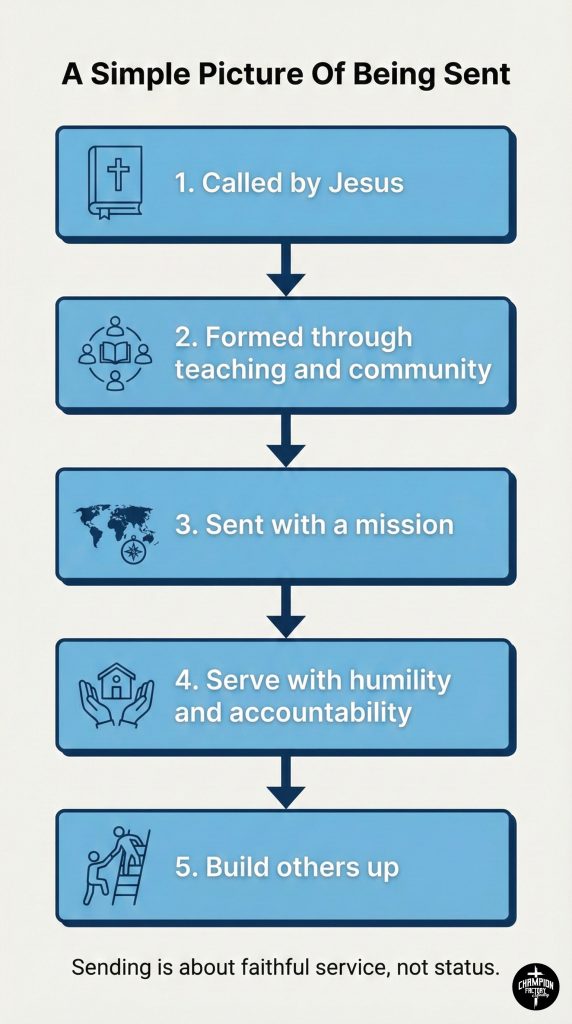
A simple picture of “sent”
You can think of the pattern like this:
- Jesus calls people to follow Him.
- Jesus forms them through teaching and community.
- Jesus sends them to represent His love and truth.
- They serve with humility and accountability.
- The church grows stronger as people are equipped and cared for.
This is not a ladder of importance. It is a pathway of faithful service.
Are apostles only the Twelve, or were there others?
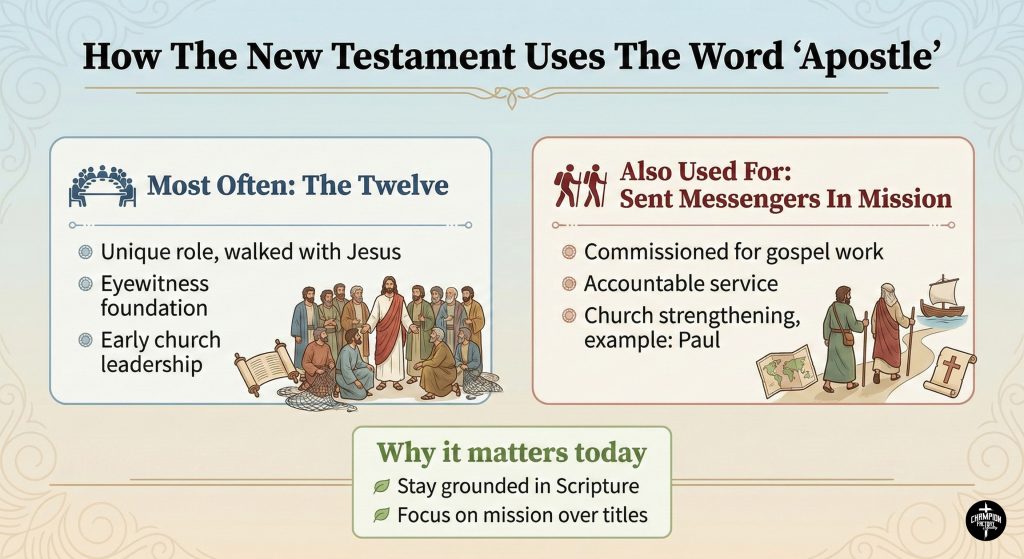
In the New Testament, “apostle” most often points to the Twelve, but the term can also describe others who were sent for gospel mission in specific contexts. The Twelve had a unique role tied to Jesus’ earthly ministry and the early foundation of the church. At the same time, Scripture also speaks of additional commissioned messengers, including Paul, who was called and sent by Christ.
Many readers ask a fair question: Is an apostle only one of the original Twelve? The Bible gives strong reasons to treat the Twelve as a distinct group. They walked with Jesus during His earthly ministry, received direct instruction, and served as key witnesses to His resurrection.
At the same time, Paul describes his calling and mission as one sent by Christ. Different New Testament authors also use the word with slightly different emphasis. Language studies often note Luke’s usage tends to focus on the Twelve.
A balanced approach looks like this:
- The Twelve apostles hold a unique, foundational place in the story of the early church.
- The New Testament also uses “apostle” more broadly at times to describe commissioned messengers sent for ministry work.
- Not every faithful leader is an apostle in the same sense as the Twelve.
- The main lesson is not a title. It is a calling to faithful witness and service.
This helps you stay grounded and avoid confusion.
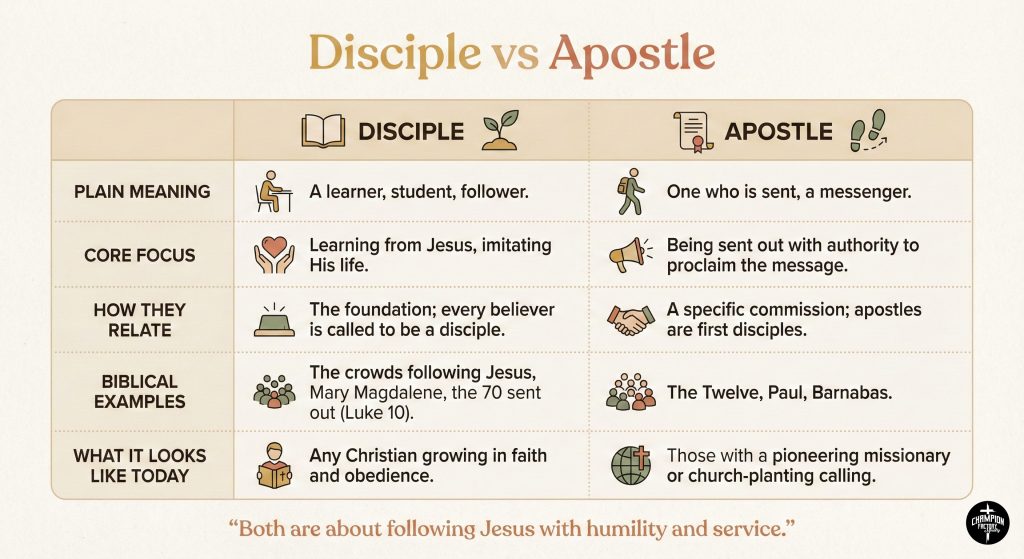
What is the difference between a disciple and an apostle?
A disciple is a follower and learner of Jesus, while an apostle is someone Jesus sends with a specific commission. All apostles were disciples, but not all disciples served in the same commissioned role. Keeping the difference clear helps you pursue growth without chasing labels.
A disciple focuses on learning from Jesus and living His teachings. A disciple grows through:
- Prayer and worship
- Scripture and obedience
- Community and accountability
- Practical service and love for others
An apostle, in the New Testament sense, involves sending. The apostolic role includes responsibility to represent Christ’s message faithfully.
Here is a simple comparison that keeps the language grounded:
| Term | Plain meaning | Core focus | Example in Scripture |
|---|---|---|---|
| Disciple | Learner and follower | Becoming like Jesus | Many followers of Jesus |
| Apostle | Sent one with a commission | Mission, witness, church building | The Twelve, Paul |
This comparison is not meant to rank people. It is meant to clarify words so you can read Scripture carefully.
What did apostles do in the early church?
The apostles helped establish the early church through witness, teaching, and strengthening communities toward faithful practice. Their work centered on proclaiming Jesus, training leaders, and helping believers stay steady in truth and love. This shaped how the church understood unity, mission, and healthy leadership.
When you read Acts and the letters, you see a consistent pattern. Apostles:
- Proclaimed the gospel and called people to follow Jesus
- Taught sound doctrine and corrected harmful teaching
- Helped establish healthy leadership and community order
- Encouraged believers under pressure and uncertainty
- Strengthened churches through prayer and pastoral care
This connects to why the topic matters today. Confusion grows when discipleship is weak and leadership lacks accountability. The apostolic pattern points toward clarity, humility, and service.
Why this matters for ministry work today
Even if you never use the word apostle for yourself, the early church model still gives guidance:
- Stay close to Scripture.
- Serve under accountability.
- Build people up, do not use people.
- Care for real needs while pointing to real hope.
That posture fits ministry work that is practical and spiritually grounded.
How does Ephesians 4:11 relate to apostles today?
Ephesians 4:11 shows that Jesus gives different roles to equip believers and build up the church, not to create spiritual rankings. The focus is maturity, unity, and service. When churches talk about apostles, this passage often comes up, so it helps to approach it with humility and clarity.
Ephesians 4:11 includes apostles in a list of roles connected to equipping the saints. The broader passage emphasizes growth, unity, and love. In other words, the purpose of gifted leadership is not personal attention. It is the health of the body.
A careful way to apply this today is to keep the main idea in front:
- God equips His people through teaching and leadership.
- The goal is a stronger, more mature church.
- The fruit should look like love, truth, and stability.
Some readers want deeper detail about how the Ephesians 4:11 list is structured. That can be helpful if it leads to greater clarity and humility, not arguments.
Why the word “apostle” can cause confusion today
The word “apostle” can cause confusion because Christians use it differently across traditions, and some modern use focuses on titles more than service. A healthy approach keeps Scripture central, values accountability, and avoids language that creates pressure or harm.
Some churches use apostle only for the first-century apostles. Others use apostle in a broader way for church planters or missionaries. The Assemblies of God notes that confusion surrounds modern usage in its position paper on modern-day apostles, which reflects a concern many believers share.
For everyday readers, a steady path looks like this:
- Use the Bible’s meaning as your foundation.
- Watch for humility, integrity, and accountability in leadership.
- Avoid systems that pressure people through titles or fear.
- Look for fruit that matches Jesus’ character.
If a term creates more heat than clarity, it is wise to focus on the mission behind the word, not the label.
What “apostolic” faithfulness looks like for everyday believers
Apostolic faithfulness today looks like living as someone Jesus sends, with humility, truth, and practical love. You do not need a title to live with purpose. You need a heart that says yes to Jesus, a commitment to grow, and a willingness to serve people with dignity.
For most believers, this becomes practical. You can live “sent” at home, at work, and in your community.
A simple “sent” practice you can follow
- Pray for a willing heart.
- Ask God to show you one person or one need you can serve this week.
- Take one clear action, small and faithful.
- Stay accountable to your church community.
- Keep growing as a disciple through Scripture and prayer.
Practical examples that fit real life
- Encourage a struggling parent with a meal and a calm check-in
- Mentor a teen with consistency and respect
- Volunteer in a food outreach with a welcoming presence
- Support restoration work through prayer, giving, and wise boundaries
- Join a discipleship pathway that strengthens your faith and character
This is where the heart of apostleship connects to ministry service. It is not about being known. It is about being faithful.
If you want to grow in discipleship, a structured pathway can help. Champion Factory Ministry’s discipleship focus through Nourish exists to support spiritual growth that becomes real-life service.
How this connects to compassionate outreach and restoration
Jesus sends His people to serve with dignity, wisdom, and steady care, especially when others face hardship. A sent mindset helps you avoid quick fixes and focus on consistent support. It also shapes how you talk about difficult situations with respect and care.
In outreach work, especially work connected to exploitation, abuse, unsafe situations, or recovery, words matter. A sent mindset means you do not sensationalize pain. You honor people. You support safety. You work with appropriate systems.
Healthy ministry language and practice includes:
- Respecting privacy and avoiding identifying details
- Avoiding graphic descriptions
- Emphasizing hope and practical support
- Encouraging professional help and safe reporting pathways when needed
- Serving with consistency and clear boundaries
If you or someone you know is in immediate danger, contact local emergency services. If you need help navigating safety concerns, reach out to trusted local authorities or experienced support organizations in your area.
“People heal best when they feel safe, seen, and supported over time.”
Ministry Reviewer
Living sent with hope and clear next steps
Jesus still calls people, forms them, and sends them to serve. When you understand what an apostle is in the Bible, you gain clarity and stability. You also gain a simple invitation to live with purpose. Stay rooted in Scripture. Choose humility. Serve with love that protects dignity.
If you want a next step this week, choose one:
- Pray for one person you can encourage and serve.
- Read Ephesians 4 and look for what “building up” should look like in your relationships.
- Join a consistent rhythm of discipleship and service through your local church.
- Explore how you can support ministry work through donating or serving in the community.
FAQ
What does the word apostle literally mean?
It refers to someone who is sent with a mission. In the New Testament, it points to a commissioned representative who carries the message of the One who sends them.
Were the apostles only the Twelve?
The Twelve have a unique, foundational place tied to Jesus’ earthly ministry and witness. The New Testament also uses the word in broader ways in some contexts, including Paul’s commissioned mission.
What is the difference between a disciple and an apostle?
A disciple is a follower and learner of Jesus. An apostle is someone sent with a specific commission. All apostles were disciples, but not all disciples served in that role.
Does Ephesians 4:11 mean there are apostles today?
Christians interpret this differently. The safest application is that God equips the church through different roles to build people up. The goal is maturity, unity, and service, not titles.
How can I live with an apostolic mindset without using a title?
Focus on being “sent to serve.” Grow as a disciple, stay accountable, and take practical steps to love people with dignity in your daily life and community.