




For many people, the word "discipleship" feels like it belongs to someone else. It can sound like something reserved for people who grew up in church, who have their faith settled, or who are already living a certain kind of life. That impression keeps many people from one of the most important practices in the Christian faith.
This article explains what discipleship actually is, how it produces lasting change, and why it is available to anyone, regardless of where they are starting.
What Christian Discipleship Actually Means
The word "disciple" comes from the Greek word mathetes, meaning learner or follower. Christian discipleship is the ongoing process of following Jesus, learning from His teachings, and growing to reflect His character in daily life. It begins with a personal relationship with Christ and deepens through Scripture, prayer, obedience, and community over a lifetime.
Discipleship is not a class or a completed program. It is a way of living that gradually shapes how a person thinks, makes decisions, and treats others. Theologian R.C. Sproul described it as "a lifelong experience of learning the mind of Christ and following the will of Christ, submitting ourselves in complete obedience to His lordship."
The foundation of Christian discipleship comes directly from Jesus in Matthew 28:19-20 (NIV): "Therefore go and make disciples of all nations, baptizing them in the name of the Father and of the Son and of the Holy Spirit, and teaching them to obey everything I have commanded you." This command, called the Great Commission, establishes that discipleship is both personal and outward. It begins in one person and extends toward others.
Discipleship Begins with Jesus' Invitation, Not Your Readiness
You do not need to be spiritually mature, church-connected, or free from struggle to begin following Jesus. He extended that invitation to fishermen, tax collectors, and people who had made serious mistakes. Discipleship starts with a call, not a credential.
In Luke 9:23 (NIV), Jesus said: "Whoever wants to be my disciple must deny themselves and take up their cross daily and follow me." The word "daily" matters. Discipleship is not a one-time decision that produces instant change. It is a repeated, intentional choice made over time.
Dallas Willard, a philosopher and theologian known for his work on Christian spiritual formation, described it this way: "Discipleship is being with another person, under appropriate conditions, in order to become capable of doing what that person does or to become like what that person is." That definition places relationship at the center. Discipleship forms a person's character through consistent closeness with Jesus and with others, not the transfer of information alone.
How Discipleship Produces Real and Lasting Change
Discipleship changes how a person thinks, behaves, and relates to others over time. The change is gradual and Spirit-led. Romans 12:2 (NIV) describes it directly: "Do not conform to the pattern of this world, but be transformed by the renewing of your mind."
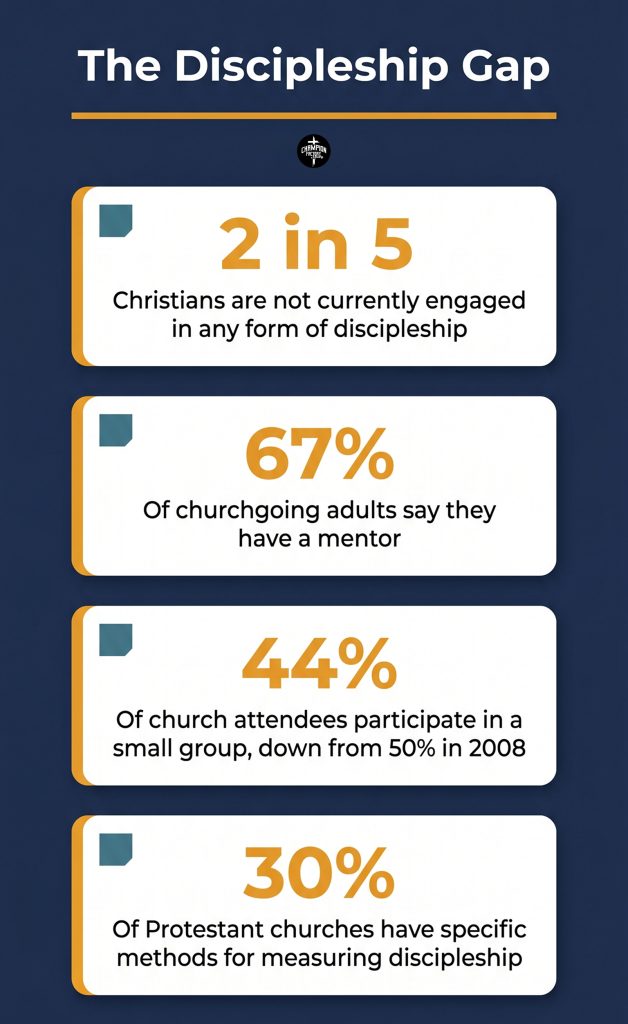
That transformation shows up in ordinary life. People who engage consistently in discipleship tend to develop greater patience, a clearer sense of purpose, and a stronger capacity to care for others. Research from Barna Group found that two in five Christians are not engaged in any form of discipleship, which means many believers are missing a primary environment for growth.
Transformation is not automatic for those who attend church services. It tends to happen in relationships and communities where people are actively learning, practicing, and encouraging one another.
"In our ministry work, we have seen what discipleship does over time. It is not a single moment. Growth is built through consistent relationship, one honest step at a time." Todd Medina, President and Founder, Champion Factory Ministry
The Habits That Support Consistent Growth
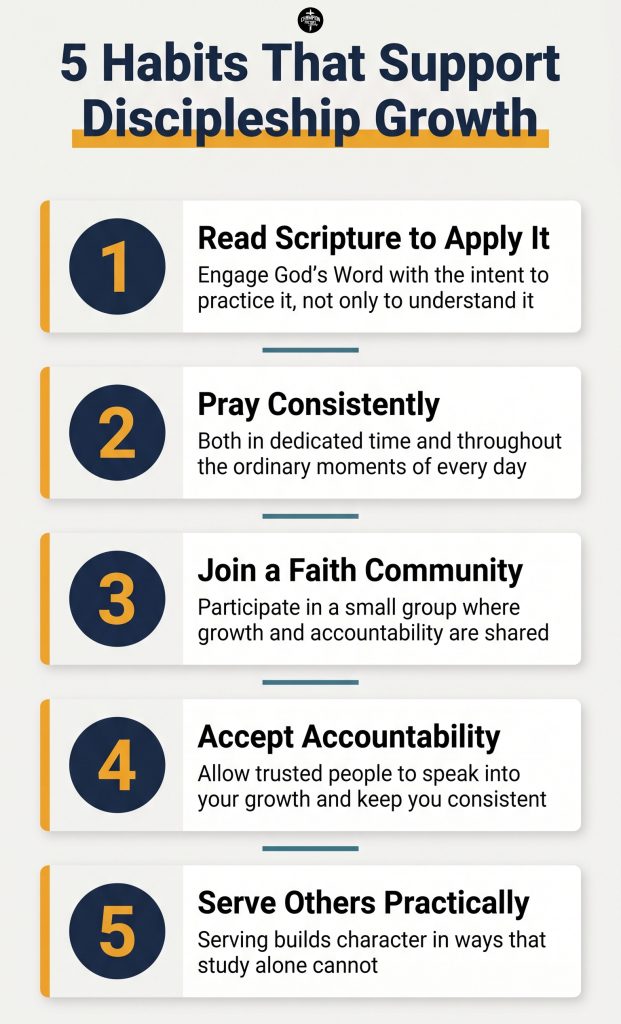
Discipleship develops through regular, practical habits. These practices support it over time:
- Reading Scripture with the intent to apply it, not only to understand it
- Praying consistently, both in dedicated time and throughout ordinary moments of the day
- Participating in a small group or a consistent faith community
- Accepting accountability from people who know you and want you to grow
- Serving others in practical ways, which builds character in ways that study alone cannot
Lifeway Research found that small group participation is a predictive factor of individual discipleship growth. Connection to other believers, whether through a small group, a mentorship relationship, or a consistent faith community, makes a measurable difference in whether lasting growth takes hold.
Why Discipleship Requires Community
Discipleship was never designed to happen in isolation. Jesus called people into a shared life of following, learning, and supporting one another. Growth in faith deepens through honest, consistent relationship with other believers.
John 13:34-35 (NIV) makes this visible: "A new command I give you: Love one another. As I have loved you, so you must love one another. By this everyone will know that you are my disciples, if you love one another." The evidence of discipleship shows up in how people treat each other, not only in what they believe.
Research published in 2024 found that 67 percent of churchgoing adults say they have a mentor, and roughly half report meeting that person through a faith community. Mentorship is not reserved for mature believers. It is how many people begin to grow in the first place.
"When someone walks with another person toward Jesus, that relationship shapes more than their faith. It changes their direction. That is what outreach looks like when discipleship is at its center." Art Montgomery, Global Evangelism Strategy Architect, Champion Factory Ministry
Community provides something that personal discipline alone cannot replace: being known, supported, and encouraged by people who are genuinely committed to your growth.
Discipleship Is for People in Difficult Seasons
Discipleship is not reserved for those whose lives are stable. It is especially meaningful for people walking through hardship, loss, or a season of personal restoration. Growth in faith can begin from any starting point, including the most difficult ones.
Many people first encounter Jesus most deeply during the hardest periods of their lives. Research on spirituality and healing has found that a positive relationship with God is associated with resilience and growth, even in the aftermath of significant difficulty.
"The people I have seen grow the most deeply in faith are often those who felt the least ready when they started. Discipleship does not require a clean beginning. It only requires a willing one." Todd Medina, President and Founder, Champion Factory Ministry
At Champion Factory Ministry, our discipleship program Nourish reflects this belief. People at every stage, including those who are just beginning to find stability, are welcomed into a process of spiritual growth that meets them where they are.
Discipleship does not replace professional counseling, medical care, or legal support. For anyone working through serious mental health challenges, trauma, or crisis situations, professional help is important and appropriate. Spiritual growth works alongside those resources, not instead of them.
2 Corinthians 3:18 (NIV) offers a steady word for those who wonder whether real change is possible for them: "We all, who with unveiled faces contemplate the Lord's glory, are being transformed into his image with ever-increasing glory, which comes from the Lord, who is the Spirit." That transformation is His work. He meets people where they are, not after life gets easier.
Starting Your Next Step in Discipleship
Starting is simpler than most people expect. It does not require a perfect moment or a complete plan.
For some people, the next step is opening a Bible and asking God to speak through it. For others, it is reaching out to someone they trust and asking to meet regularly for prayer or honest conversation. For others, it means finding a small group or a church community where they can grow alongside others.
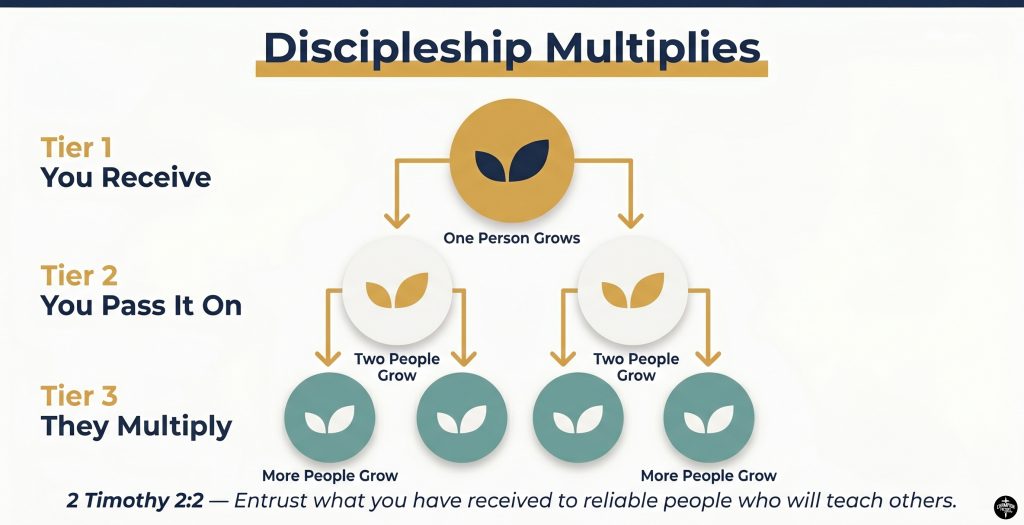
2 Timothy 2:2 (NIV) shows how discipleship extends beyond the individual: "And the things you have heard me say in the presence of many witnesses entrust to reliable people who will also be qualified to teach others." What one person receives, they pass on. That is how discipleship was always designed to work.
The invitation is open, regardless of where you are starting. As theologian Dietrich Bonhoeffer wrote, "Discipleship is not an offer that man makes to Christ." It begins with His call, not your qualifications. The next step is simply to respond.
To learn more about how Champion Factory Ministry walks alongside people in their spiritual growth, explore our programs or find out how to get involved.
Frequently Asked Questions
Is Discipleship Only for People Who Attend Church?
No. Church community is a valuable context for discipleship, but the process begins with your relationship with Jesus. Many people start before they are consistently attending a church, and the invitation is open regardless of church background.
What Is the Difference Between Discipleship and Bible Study?
Bible study is one part of discipleship. Discipleship is broader. It includes community, accountability, service, prayer, and the daily application of faith in ordinary decisions and relationships.
How Long Does Discipleship Take?
Discipleship is lifelong. There is no graduation point. Growth deepens over years of consistent practice, honest relationship, and ongoing commitment to following Jesus.
Can Someone Going Through a Hard Time Still Grow as a Disciple?
Yes. Difficult seasons are not disqualifying. Many people experience their deepest growth in faith during the hardest years of their lives. Discipleship is designed for the full range of human experience. If you are working through a mental health challenge, trauma, or crisis, please reach out to a professional counselor or support service alongside your spiritual community.