





Your child heard about a hurricane or saw wildfire coverage on a screen. Now they are scared and asking questions, including the hardest one: "Why did God let this happen?"
At Champion Factory Ministry, we believe children can hear the truth about a disaster and the truth about God in the same conversation. God does not promise that storms will never reach us, but He promises to be present in them. His people are called to stay with hurting families long after the news moves on. This guide offers words by age, honest faith answers, and signs your child needs help.
What to Say to Kids About a Natural Disaster
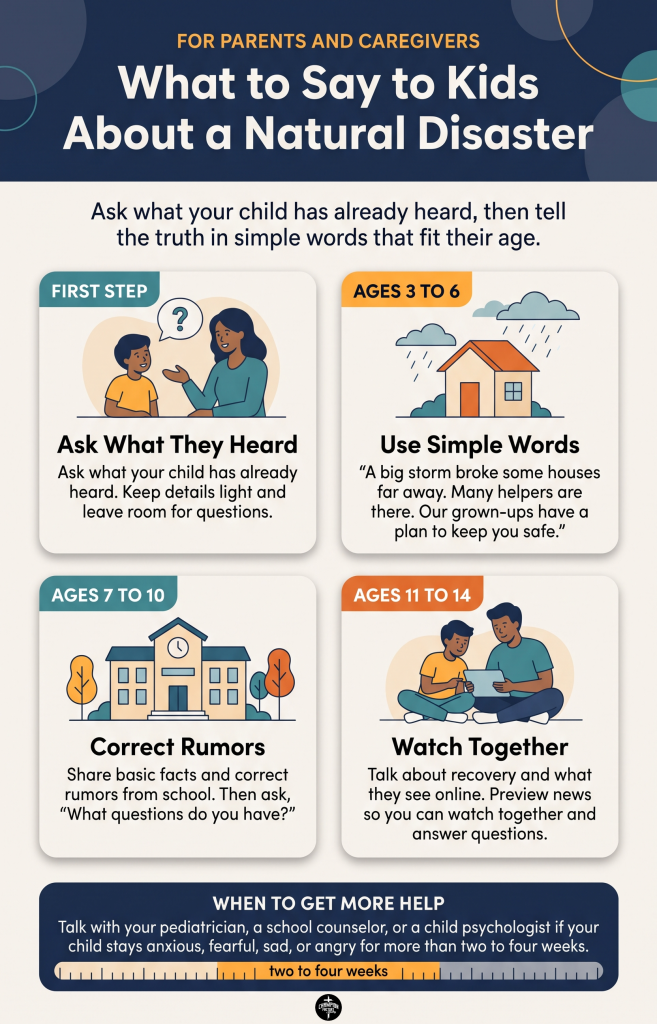
Ask what your child has already heard, then tell the truth in simple words that fit their age. Name what happened, what helpers are doing, and what your family is doing to stay safe. Keep details light and leave room for questions.
Parenting advocate Keesha Scott told HOLA! USA, "Honesty doesn't have to equal fear."
Words to Try at Each Age
- Ages 3 to 6: "A big storm broke some houses far away. Many helpers are there. Our grown-ups have a plan to keep you safe."
- Ages 7 to 10: Share basic facts and correct rumors from school. Then ask, "What questions do you have?"
- Ages 11 to 14: Talk about recovery and what they see online. The American Academy of Pediatrics suggests previewing news so you can watch together and answer questions.
How to Answer "Why Did God Let This Happen?"
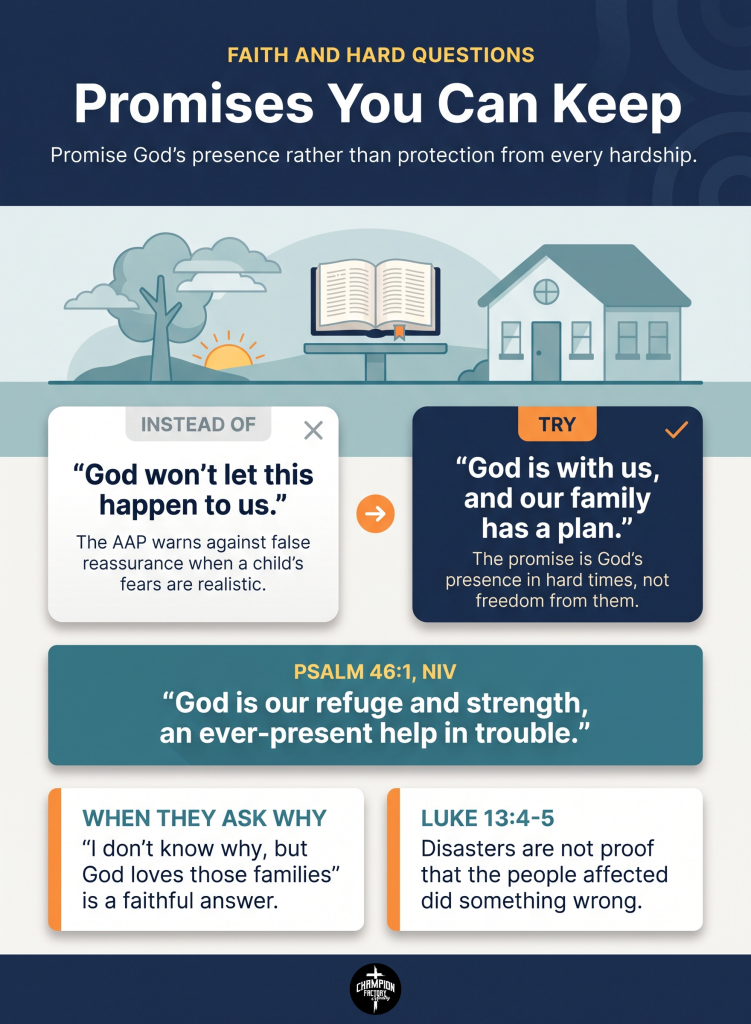
In Luke 13, Jesus spoke about eighteen people who died when a tower fell in Siloam. He said, "Were they the worst sinners in Jerusalem? No," (Luke 13:4-5, NLT). Tell your child the same truth. Disasters are not proof that the people affected did something wrong.
"I don't know why, but God loves those families" is a faithful answer, and the AAP says parents do not need to explain why a disaster happened.
"Kids watch how we handle questions we cannot answer. When we admit what we don't know and keep praying, they learn to trust God too." Todd Medina, President & Founder
A Promise From Psalm 46 You Can Keep
Instead of "God won't let this happen to us," try "God is with us, and our family has a plan." The AAP warns against false reassurance when a child's fears are realistic. Psalm 46 offers a better promise: "God is our refuge and strength, an ever-present help in trouble." (Psalm 46:1, NIV). The next verses picture the earth giving way, so the promise is God's presence in hard times, not freedom from them.
How Faith Helps a Scared or Sad Child
Your child may cry, cling, or go quiet after hearing about a disaster. Faith does not ask them to hide those feelings. Let them be upset, stay close, and bring the feelings to God together in a short prayer.
At Lazarus's tomb, "Jesus wept" (John 11:35, NIV). Psychologist Tamar Kahane told Good Morning America, "It's not your job to pretend that everything is okay when it's not."
A Bedtime Prayer for Worried Hearts
Pray together: "God, I feel scared. Please help the families who lost their homes and give the helpers strength. Thank You for being with us." Then teach: "When I am afraid, I put my trust in you." (Psalm 56:3, NIV)
Signs Your Child Needs More Support
Most children's distress fades over time. Talk with your pediatrician, a school counselor, or a child psychologist if your child stays anxious, fearful, sad, or angry for more than two to four weeks, if problems get worse, or if reactions disrupt school or friendships for a long time.
These guidelines come from the CDC, which notes that disasters are harder on children because they understand less, feel less in control, and may lack words for their fear.
Getting Help Is Part of Caring Well
Prayer and professional care work together. Families who need more support can call or text SAMHSA's Disaster Distress Helpline at 1-800-985-5990. This article offers general guidance and does not replace care from a pediatrician or licensed therapist.
How Kids Can Keep Helping After the News Moves On
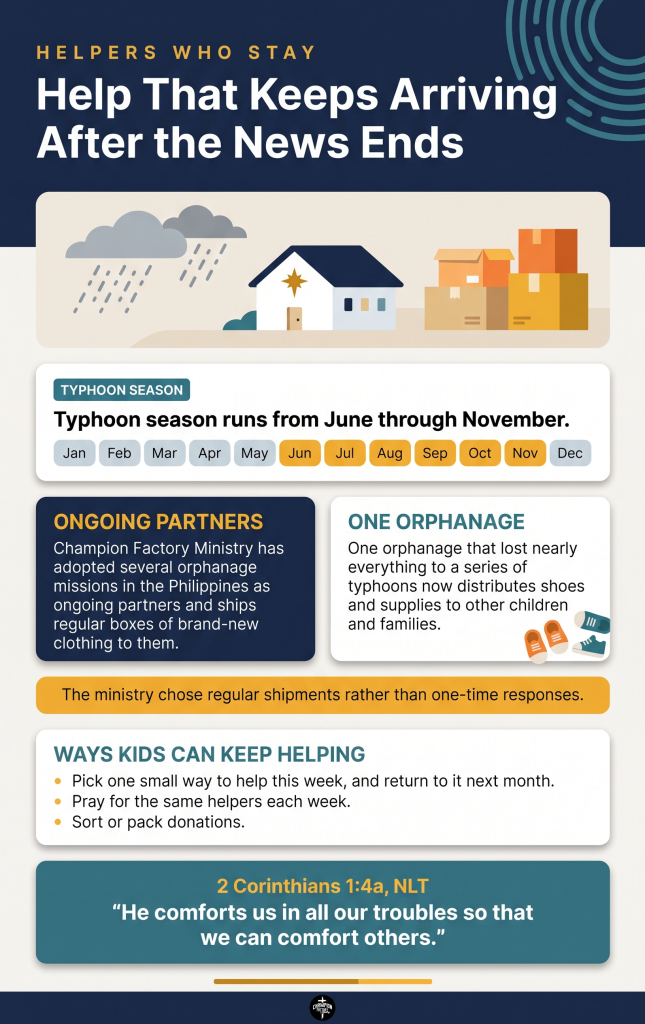
Pick one small way to help this week, and return to it next month. Scripture says, "He comforts us in all our troubles so that we can comfort others." (2 Corinthians 1:4a, NLT). Children who keep helping learn that compassion is steady.
- Pray for the same helpers each week.
- Sort or pack donations through ways to get involved.
Helpers Who Stay Through Typhoon Season
Champion Factory Ministry has adopted several orphanage missions in the Philippines as ongoing partners and ships regular boxes of brand-new clothing to them. Typhoon season runs from June through November, and the ministry chose regular shipments rather than one-time responses. One orphanage that lost nearly everything to a series of typhoons now distributes shoes and supplies to other children and families.
"Children learn compassion when help keeps arriving after the news ends. That steady care shows Christ to the world." Art Montgomery, Global Evangelism Strategy Architect & Board Visionary Luminary
Stay Close, Tell the Truth, and Keep Praying Together
Your child does not need every answer. They need a parent who listens, tells the truth, and points them to a God who stays near. Tonight, ask, "What have you heard?" Then pray together. If you need more help, our Support for Children and Families program offers practical assistance, encouragement, and faith-centered guidance.
FAQ
Is It Normal for My Child to Ask the Same Questions Again?
Yes. Repeating questions helps children process hard news. Give the same calm, short answer each time.
What If the Disaster Is Near Where Relatives Live?
Share what you know without guessing, help your child send a message, and pray for those relatives by name.