



Recovery from human trafficking rarely looks like what movies show. There is no single dramatic rescue scene that fixes everything. Real healing happens slowly, through ordinary days built on safety, consistency, and care.
This article walks through a composite week inside the Rescue and Recovery Program. No names, dates, or details describe a real individual. What follows is a general picture of how a week unfolds, built from the same trauma informed practices used across the field, so you can understand what this work actually involves and why it matters.
What Happens When Someone First Arrives
The first days in a recovery program focus on safety and stability, not deep emotional work. A person needs to feel physically safe and know what to expect before any real healing can begin.
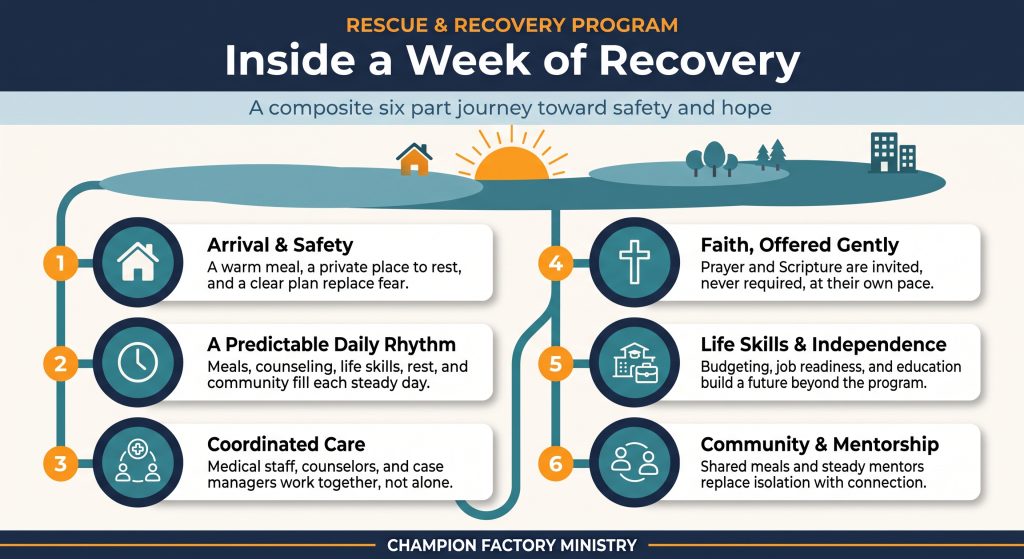
Someone arriving at a recovery program often carries exhaustion, fear, and uncertainty. The first priority is a warm meal, a private place to rest, and a clear explanation of what happens next. There is no conversation about the past until someone is ready for it.
Staff conduct a gentle intake process to understand immediate medical and emotional needs. This is a caring first step toward a personalized plan, not an interrogation.
Common elements of this early stage include:
- A basic health check to address urgent physical needs
- Simple provisions like clothing, hygiene items, and a quiet room
- A plain, honest explanation of the program's structure
- No pressure to share details before someone is ready
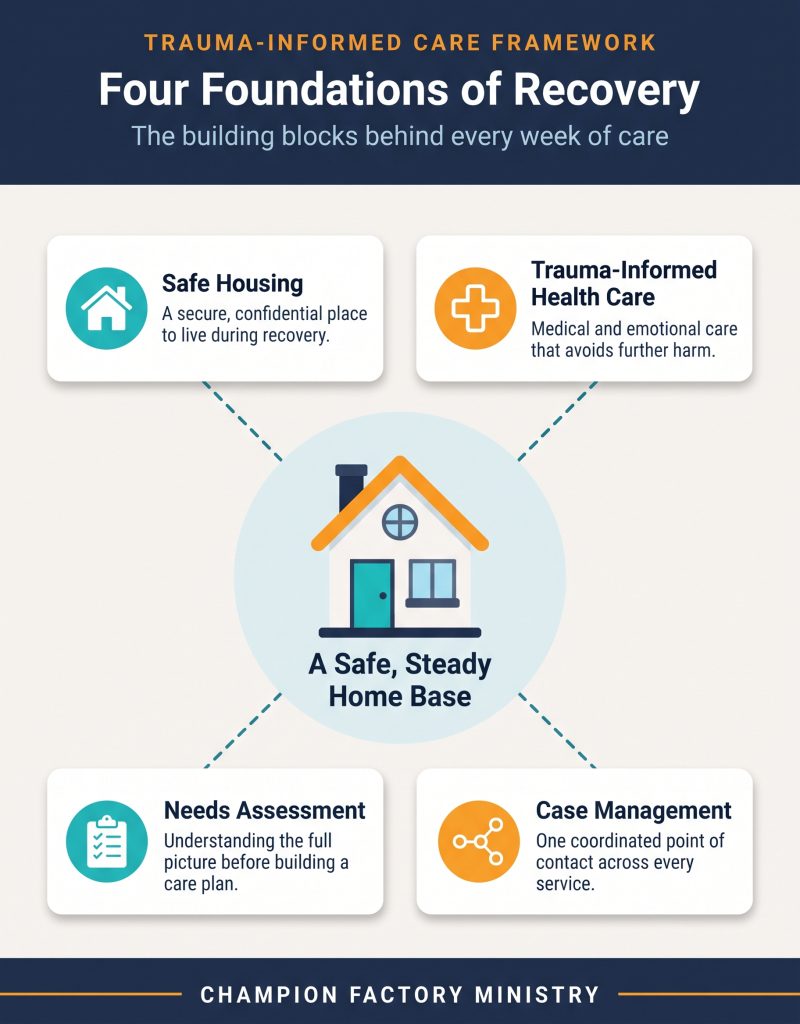
Research published through the National Library of Medicine identifies four core services trafficking survivors need early on, including safe housing and a confidential, trauma informed health care environment. CFM builds its intake process around that same foundation, prioritizing calm and consistency over speed.
"We ask one thing in those first days. Let us carry the weight for a while. Nobody has to prove anything to receive care here." Todd Medina, President & Founder
What This Stage Is Not
This stage is not about extracting a story. It is not about pushing someone toward decisions they are not ready to make. Dignity comes first, always.
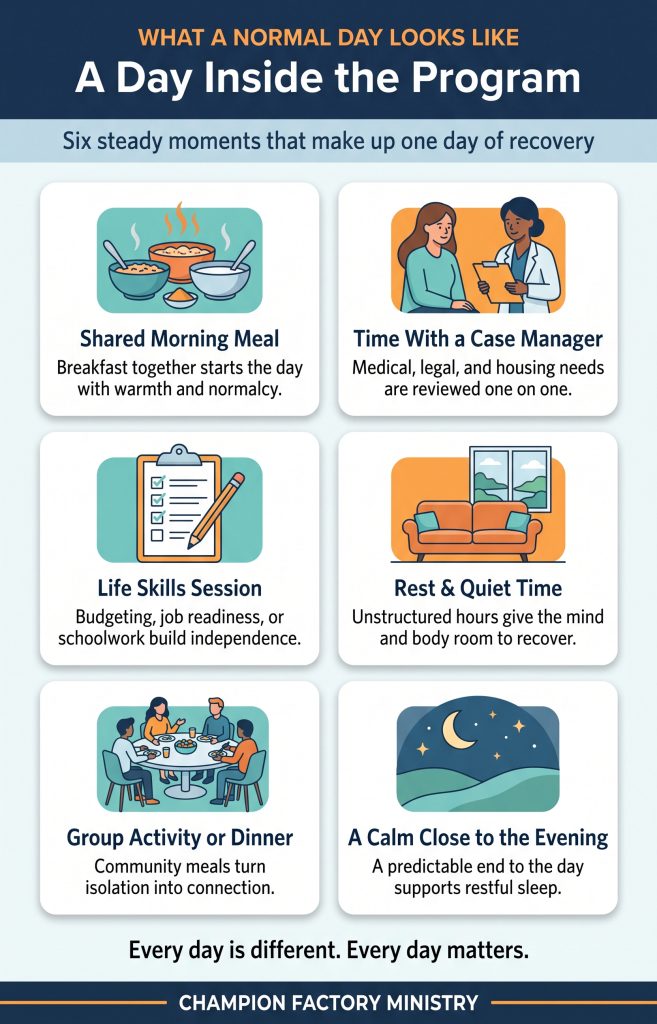
What a Normal Day Looks Like Inside the Program
A normal day inside the program follows a predictable rhythm of meals, care, and structured time. Predictability is not boring. It is one of the most healing things a person can experience after trauma.
Trauma often strips away a person's sense of control. A trafficking situation runs on someone else's rules and timing. Recovery reverses that pattern, one steady day at a time.
A typical day might include:
- A shared meal to start the morning
- Time with a counselor or case manager
- A life skills or education session
- Rest, quiet time, or recreation
- A group activity or shared dinner
- A calm close to the evening
The University of Michigan's Human Trafficking Collaborative describes safety in trauma informed care as physical safety, emotional safety, and predictability, meaning clear routines that reduce anxiety and rebuild a sense of control. The daily structure of a recovery program is part of the treatment itself, not simply a schedule.
Nothing about this daily rhythm is rushed. Healing happens on a timeline the person can actually handle.
Who Provides Care Behind the Scenes
A team of medical staff, counselors, and case managers works together behind every day of the program. No single person carries this work alone, and no single service is enough by itself.
Recovery is not one appointment. It is many people coordinating around one person's needs. A case manager tracks medical, legal, housing, and educational needs so nothing falls through the cracks. Counselors trained in trauma informed methods help someone process what happened at a pace that respects their readiness.
This coordinated approach matters because trauma affects the whole person, not just one area of life. Judge, a clinical psychologist who co-leads Boston's Human Exploitation Advocacy Team, has noted that treating someone in a clinic alone is not enough. Healing requires connected, ongoing support across medical, emotional, and practical needs.
If you or someone you know is working through trauma, abuse, or a mental health crisis, please also reach out to a licensed counselor, medical provider, or crisis line. This program works alongside professional care. It does not replace it.
How Faith Shows Up Without Pressure
Faith is present throughout the week, but no one is required to participate in it to receive care. CFM offers spiritual encouragement as an invitation, never a condition.
For many people healing from deep harm, faith becomes a quiet source of comfort rather than a formal lesson. A staff member might share a short reflection over breakfast. A chapel time might be offered, never mandated. Scripture is used gently, and only when it genuinely fits the moment.
One verse often shared during the early, tender part of recovery is Psalm 34:18, which says the Lord is close to the brokenhearted and saves those who are crushed in spirit. It is not offered as a solution to trauma. It is offered as a reminder that someone is not alone in their pain.
Faith in this program looks like:
- Optional prayer or chapel time
- Staff who model patience and consistency
- Scripture shared naturally, never forced into a conversation
- Respect for wherever someone is in their own faith journey
"We never make faith a condition for care. We simply keep showing up and let people set the pace." Todd Medina, President & Founder
Building Toward Independence One Skill at a Time
Later stages of the week shift toward practical skills that help someone build a stable, independent future. Recovery is not only about healing from the past. It is also about preparing for what comes next.
As stability grows, so does the focus on the future. This might include budgeting basics, resume building, or completing an education program. These are the building blocks of a life that no longer depends on anyone else's control.
Common life skills sessions include:
- Basic financial literacy
- Job readiness and interview practice
- Continuing education or GED support
- Practical skills like cooking or household management
This shift does not happen all at once. It grows naturally out of the stability built during the earlier part of the week.
Why Community and Mentorship Matter
Connection with other people is one of the clearest signs of healing, and CFM builds regular community time into every week. No one moves through recovery in isolation.
Isolation is common after trafficking, since trust in other people has often been broken. Rebuilding that trust takes time and consistent, caring relationships. Group meals, mentorship conversations, and shared activities all create small, safe moments of connection.
Research from the HHS Office of the Assistant Secretary for Planning and Evaluation points to peer support as one of the most important parts of healing, since shame often keeps people isolated, and connecting with others who understand builds trust faster than professional support alone. A mentor who shows up consistently, week after week, often becomes one of the most steady relationships a person has ever had.
"Every mentor relationship we build is part of a much longer story of restoration, one that continues well past a single week." Art Montgomery, Global Evangelism Strategy Architect & Board Visionary Luminary
What a Week Like This Makes Possible
A single week does not undo what happened to someone. But a week built on safety, consistent care, and quiet hope is where real change begins to take root.
2 Corinthians 5:17 describes anyone in Christ as a new creation, with the old life gone and a new one begun. This verse is not a promise about a specific outcome or timeline. It is a picture of hope for what can grow, over time, in a life given room to heal.
The Rescue and Recovery Program exists because this kind of steady, patient care changes lives. If this look at a typical week means something to you, consider learning more about how you can get involved or support this work through a gift. Every dollar and every hour helps build one more steady week for someone rebuilding their life.
FAQ
How long does someone typically stay in a recovery program like this?
Length of stay varies by person and by program. Recovery is not measured by a fixed calendar. It is measured by steady, sustainable progress.
Does someone have to be religious to receive help from CFM?
No. Faith is offered as an invitation, never a requirement. Care and safety come first, regardless of someone's beliefs.
What if I know someone who needs this kind of help?
Reach out to a trusted local organization, a case worker, or a national resource like the National Human Trafficking Hotline. Professional guidance ensures the person gets the right kind of support for their specific situation.