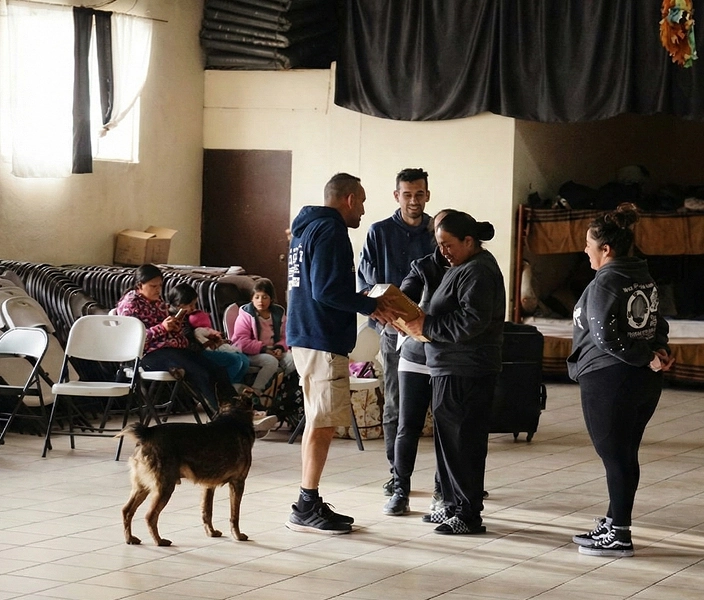






If you have searched for a faith based nonprofit and wondered what it actually is, you are not alone. Many people know these organizations exist but are unsure how they work, who they serve, or whether having a particular faith is required to receive help or get involved.
This article answers those questions clearly. It explains what a faith based nonprofit is, how it differs from a church or secular charity, what kinds of programs it runs, and why the faith element matters to the people both serving and being served.
What Is a Faith Based Nonprofit?
A faith based nonprofit is a charitable organization whose mission and values are grounded in religious belief. It operates as a registered 501(c)(3) entity under IRS guidelines, which means it is accountable to tax-exempt nonprofit standards and reinvests all revenue directly into its programs and mission. It is not a legal category but a widely used term describing organizations that serve others because of their faith convictions.
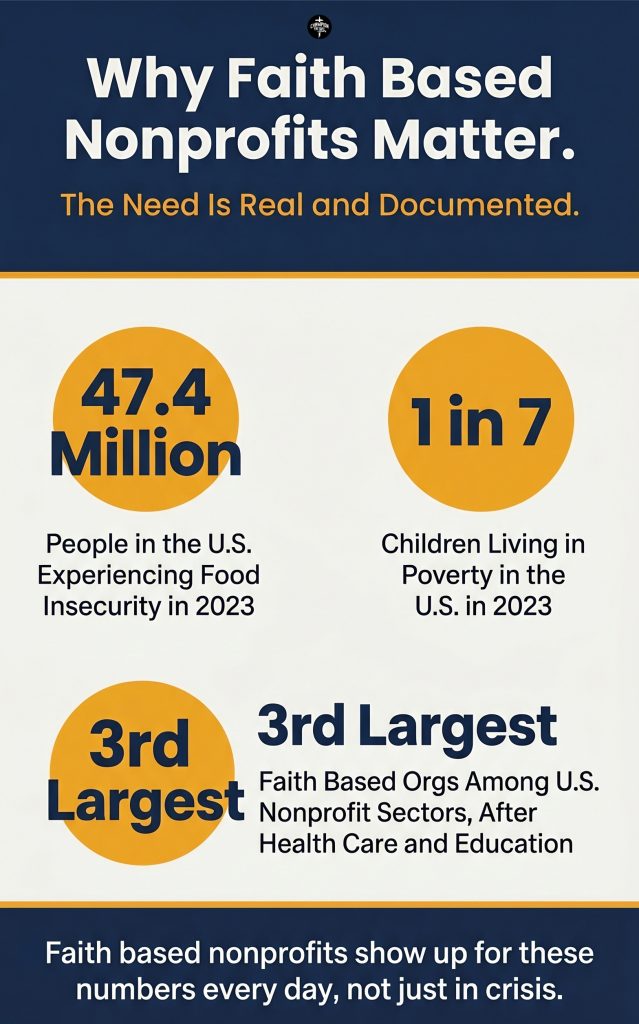
Faith based organizations represent the third largest component of the U.S. nonprofit sector, behind only health care and education, according to research published by the U.S. Department of Housing and Urban Development. As the M.J. Murdock Charitable Trust noted in a 2024 review of the sector, historians of social services observe that nearly all modern social care traces its roots to religious organizations.
This foundation shows up at the program level in practical ways: food access, mentorship, family support, and recovery work, each grounded in the conviction that every person carries dignity and deserves consistent care.
How Is a Faith Based Nonprofit Different From a Church?
A church is primarily a worshipping community. A faith based nonprofit is primarily a service organization. Both may be rooted in faith, but their structures and purposes differ. A church gathers people around worship, teaching, and community life. A faith based nonprofit organizes its work around delivering services to people in need, often well beyond the walls of any single congregation.
Faith based nonprofits frequently partner with local churches, which can provide volunteers, meeting space, and referrals. But the nonprofit operates with its own accountability structure, its own staff and programs, and its own responsibility to the broader community.
Compared to a secular charity, the work looks similar on the surface. The difference is in the foundation. Faith informs why the work is done, how people are treated, and the values that guide every decision, from program design to how someone is greeted at the door.
Who Can Receive Support From a Faith Based Nonprofit?
Most faith based nonprofits serve all people in the community regardless of religious background, personal history, or belief. Receiving support does not require attending church, sharing any particular faith, or meeting a spiritual threshold. The goal is to serve people as they are, with dignity and without conditions.
This matters because many people hesitate before reaching out. They may assume these organizations only help their own members, or that they will face judgment or pressure to adopt a particular faith. That concern is understandable and it deserves a direct answer.
Research from Casey Family Programs, a nationally recognized child welfare organization, notes that faith based organizations often provide peer support that families find less judgmental, particularly when it draws on people with similar lived experience.
"In my work, the first thing people often say when they walk through the door is that they were not sure if they would be welcome. We start there. Making sure every person knows they belong in this space is part of the work." Robert Crouse, Community Liaison
That relational trust is central to how the ministry approaches every person it serves.
What Services Do Faith Based Nonprofits Provide?
Faith based nonprofits provide a wide range of practical services, including food access, mentorship, family support, discipleship, and recovery programs. The specific offerings vary by organization, but the strongest ones focus on long-term presence in the community rather than one-time relief.
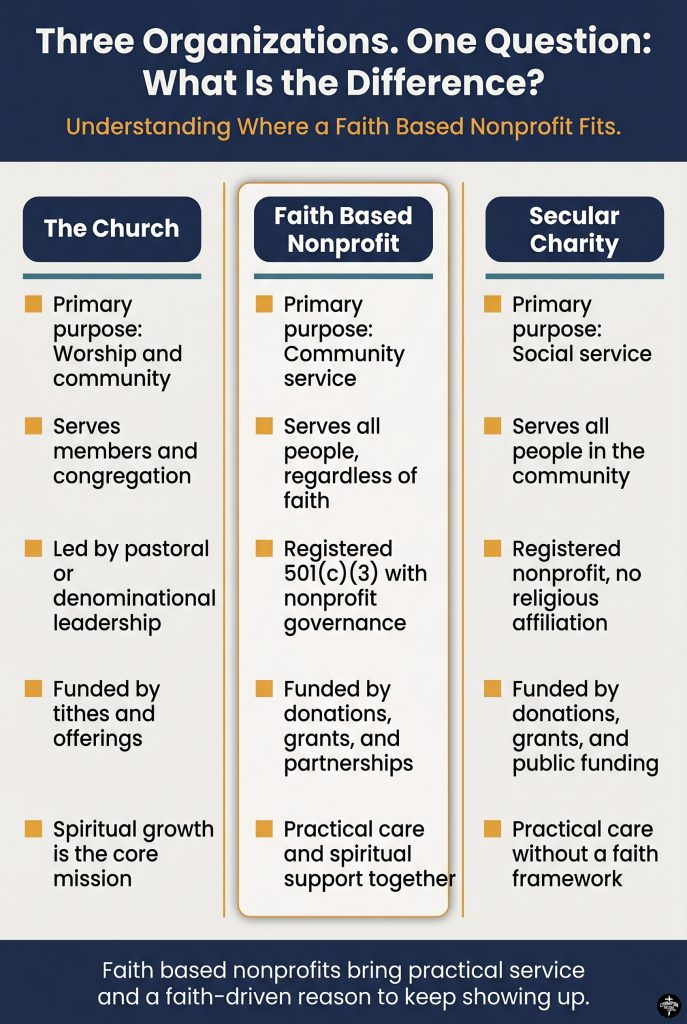
The need is real and documented. In 2023, 47.4 million people in the United States lived in households experiencing food insecurity, according to data from the U.S. Department of Agriculture reported by the Food Research and Action Center. That same year, 1 in 7 children lived in poverty.
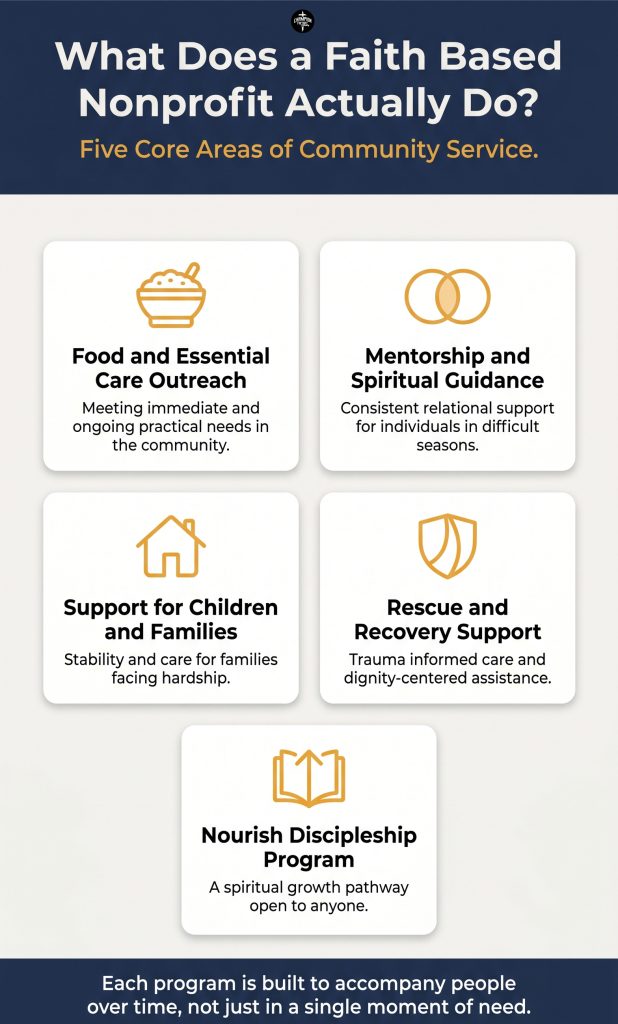
At Champion Factory Ministry, programs are built around five core areas:
- Food and essential care outreach, addressing both immediate and ongoing practical needs in the community
- Mentorship and spiritual guidance, offering consistent relational support for individuals in difficult seasons
- Support for children and families facing hardship or instability
- Assistance for individuals impacted by trafficking, exploitation, or unsafe situations, provided with trauma informed care, full confidentiality, and a focus on dignity and restoration
- The Nourish discipleship program, a spiritual growth pathway open to anyone seeking to grow in their faith
Each program is designed to accompany people over time, not simply respond to a moment of need.
How Does Faith Shape the Way Support Is Delivered?
Faith does not simply provide motivation for the work. It shapes the entire approach. Faith based nonprofits ground their care in the belief that every person carries inherent dignity. That conviction changes how people are welcomed, how needs are understood, and how long the organization stays present.
Micah 6:8 captures this operating principle clearly: "He has shown you, O mortal, what is good. And what does the Lord require of you? To act justly and to love mercy and to walk humbly with your God." (NIV)
For faith based nonprofits, this is not a slogan. It is a framework. Serving with justice and mercy means showing up consistently, treating everyone with respect, and addressing the whole person, not only an immediate practical need.
"The scriptural call to serve is not conditional. It does not ask about background or history. It asks whether we will show up, and keep showing up." Art Montgomery, Global Evangelism Strategy Architect
In Matthew 25, Jesus connected care for people who are hungry, homeless, or in need directly to care offered to him. For Christian nonprofits, service is not a program strategy. It is a calling.
It is also important to be clear: faith based nonprofits do not replace professional support. When someone needs counseling, medical care, or legal services, responsible organizations say so directly and help connect people to those resources. The ministry is committed to that kind of honest, accompanying care.
How Volunteers and Donors Make This Work Possible
Faith based nonprofits depend on volunteers and donors to sustain their programs. Giving to religion in the United States reached $146.54 billion in 2024, according to Giving USA as reported by the Lake Institute on Faith and Giving. Behind that number are individuals and organizations that chose to invest in work they trust. Volunteers extend the reach of every program by bringing time, skills, and consistent presence.
Research published in The Nonprofit Sector: A Research Handbook and cited by the Capital Research Center found that faith based organizations often perform more effectively than secular equivalents in comparable service roles, largely because of the volunteer networks and community infrastructure connected to congregations.
If you are considering getting involved, there are several clear ways to contribute:
- Volunteer in food outreach, mentorship, or program support
- Make a donation to sustain ongoing programs and operational needs
- Partner as a church, business, or community organization
- Share the ministry's work with people in your network who may benefit or want to serve
No prior experience is required. A willingness to show up consistently is the starting point.
Where Faith Meets Action: Finding Your Next Step
A faith based nonprofit is a service organization built on the belief that practical care and spiritual support belong together. The most meaningful help shows up consistently, adjusts to what people need, and does not disappear when circumstances change.
Every program at Champion Factory Ministry reflects the conviction that people deserve consistent care, honest accompaniment, and a real path toward stability and restored hope. As James 1:27 reminds us, the faith that God honors is the faith that looks after those who are struggling.
Whether you are looking for support, considering volunteering, or exploring a partnership, you are welcome to learn more about how we serve or reach out directly. No prior faith commitment is required to take the first step.
FAQ
Is a Faith Based Nonprofit the Same as a Church?
No. A church is a worshipping community. A faith based nonprofit is a service organization. Both may be grounded in faith, but they have different structures, different programs, and different primary purposes. Many faith based nonprofits partner with local churches, but they operate independently.
Do I Have to Be a Christian to Receive Help?
No. Most faith based nonprofits serve all people in the community regardless of religious background or belief. Faith shapes how care is delivered, not who qualifies to receive it. You are welcome as you are.
What Kinds of Programs Do Faith Based Nonprofits Run?
Programs vary by organization. Common areas include food access, mentorship, family support, recovery support, and spiritual growth opportunities. Each of these is built around long-term presence rather than one-time relief.
How Do Faith Based Nonprofits Handle Sensitive Situations Like Abuse or Exploitation?
Responsible faith based nonprofits approach these situations with trauma informed care. This means prioritizing safety, dignity, and confidentiality throughout. They connect people to professional services, including counseling, medical care, and legal support, where needed. The ministry walks alongside people in those moments and does not serve as a replacement for professional help.