





Healing from severe hardship takes time and steady support. Individuals facing difficult seasons often feel isolated, overwhelmed, and unsure of where to find steady ground. Finding an environment that addresses the whole person is critical. True restoration requires both practical stability and deep spiritual hope.
This article explains how faith communities provide essential connection during the recovery process. You will learn the balance between practical care and spiritual encouragement. Whether you are seeking support for yourself, looking to help a loved one, or wanting to understand the impact of ministry work, you will see how safe, trauma-informed environments help people heal and rebuild their lives.
What Does Holistic Recovery Look Like?
Holistic recovery treats the entire person by addressing physical health, safe housing, emotional stability, and spiritual purpose. Faith-based ministries support this process by creating safe environments where individuals can rebuild their lives on a foundation of dignity, practical care, and authentic community connection.
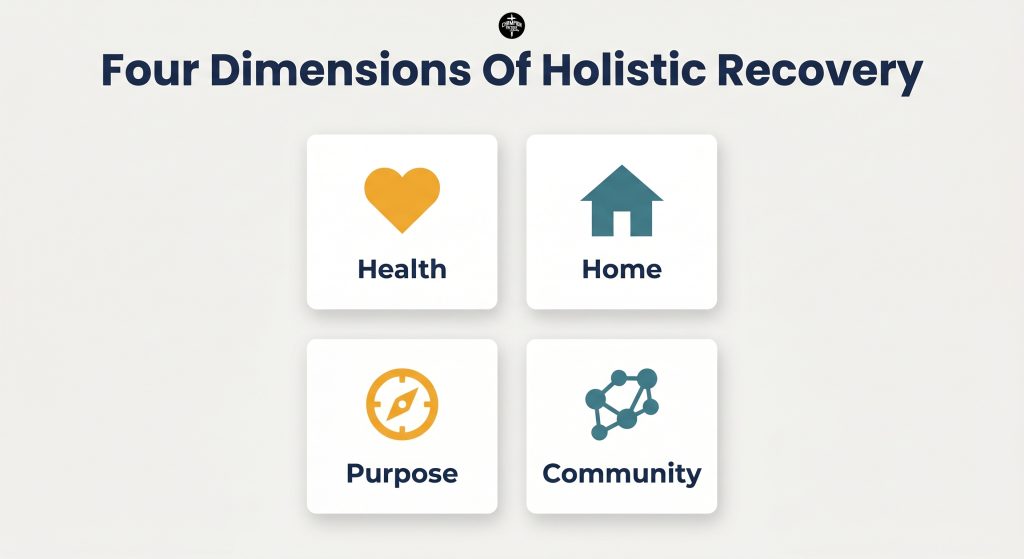
Healing requires a comprehensive approach. The Substance Abuse and Mental Health Services Administration notes that four major dimensions support a life in recovery. These dimensions include health, home, purpose, and community. Ministries provide the crucial community and purpose dimensions while often assisting with health and home through direct outreach.
When a person experiences severe hardship, every part of their life feels the impact. The physical body suffers from stress. The mind struggles with trauma. The spirit feels crushed under the weight of hopelessness. The Bible speaks directly to this deep emotional and physical pain. Psalm 147:3 (NIV) says, "He heals the brokenhearted and binds up their wounds." God cares deeply about emotional pain and physical suffering.
A healthy ministry recognizes this reality. They step into the challenges of daily life alongside the individual to offer steady, practical support.
Key elements of a holistic recovery environment include:
- A welcoming atmosphere that prioritizes respect for every individual.
- Clear boundaries that ensure physical and emotional safety.
- Access to resources that meet immediate daily needs.
- Opportunities for spiritual exploration without intense pressure.
- Connections to broader community support networks.
Why Practical Care Creates A Foundation For Healing
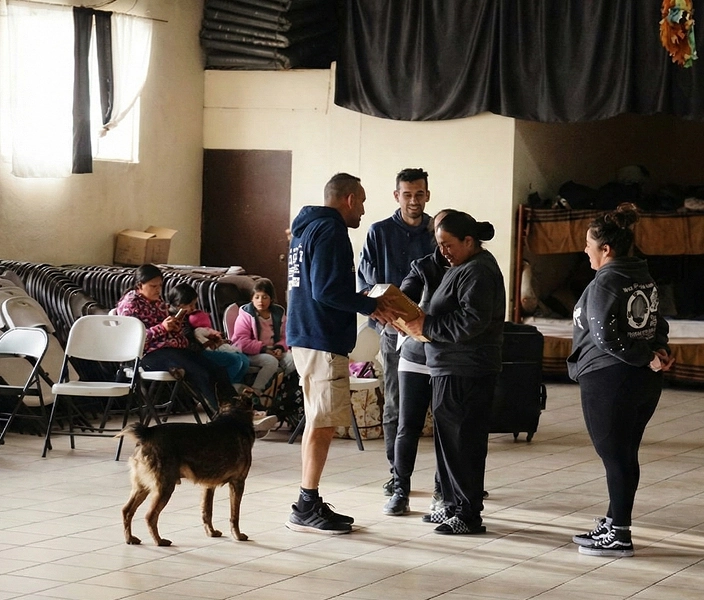
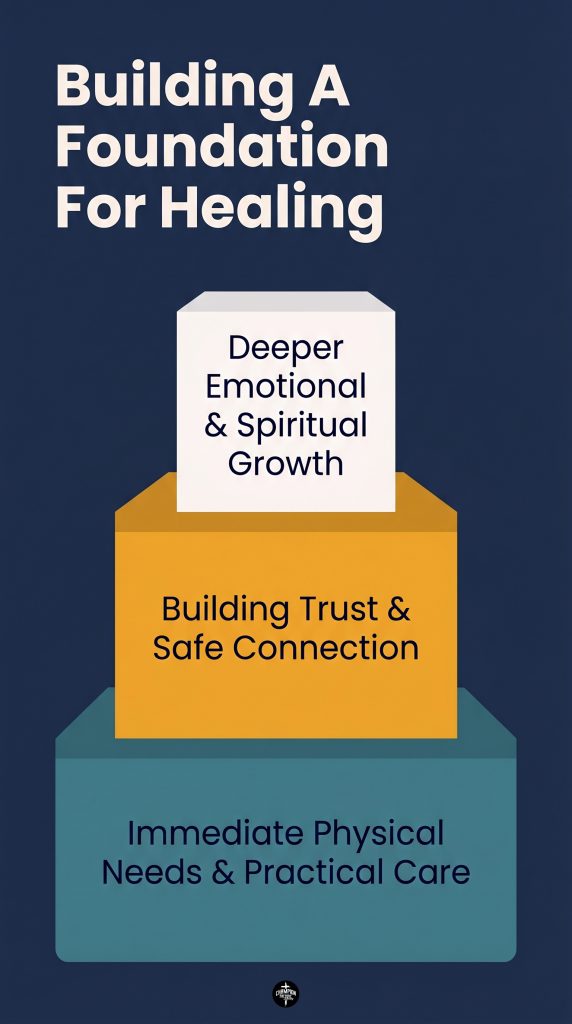
Ministries must address immediate physical needs before expecting individuals to engage in deeper emotional or spiritual healing. Providing a warm meal or safe shelter creates vital stability and builds the necessary trust required for a person to open up about their internal struggles.
Meeting basic needs is the first step in demonstrating genuine love. When someone is worried about where their next meal will come from, they cannot easily focus on spiritual growth or emotional processing. Practical care serves as the starting point for deeper connection.
"Offering a warm meal tells a person they have value today, exactly as they are. That simple act of dignity builds the trust needed for everything that comes next." - Todd Medina, President & Founder
Champion Factory Ministry focuses heavily on food and essential care outreach for this exact reason. Handing someone a bag of groceries or a warm meal communicates dignity. This action reflects the heart of Christ. Once that foundation of trust is established, a person is much more likely to accept an invitation to a discipleship group or a mentorship conversation.
This approach aligns with modern trauma-informed care. The Center for Health Care Strategies explains that trauma-informed care shifts the organizational focus from asking what is wrong with an individual to asking what happened to them. Providing a meal before asking a difficult question is a deeply trauma-informed practice.
Practical steps ministries take to build this foundation:
- Offering regular community meals with no strings attached.
- Distributing essential hygiene and clothing items to preserve dignity.
- Creating warm, comfortable spaces where individuals can rest safely.
- Listening actively without immediately offering unsolicited advice.
The Impact Of Spiritual Hope on Long-Term Healing
Spiritual care provides a deep sense of belonging and meaning that acts as a vital protective factor against returning to past struggles. Hope is the central catalyst of the recovery process. Faith naturally supplies this hope by pointing to restoration in Christ.
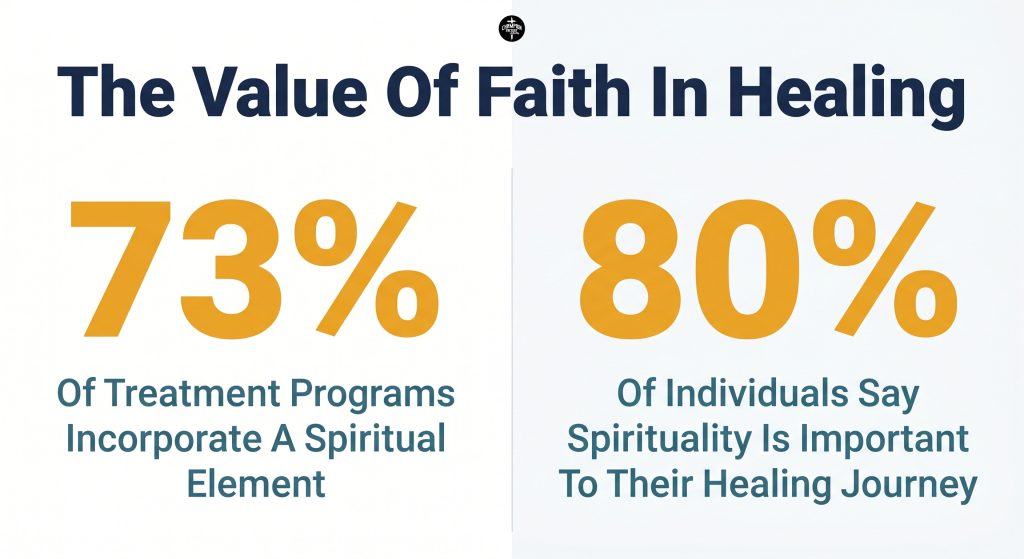
Clinical programs recognize the high value of faith in the healing journey. A study published by the National Institutes of Health indicates that over 73 percent of substance abuse treatment programs incorporate a spiritual or faith-based element. The American Psychiatric Association reports that more than 80 percent of people seeking treatment for mental health or substance use say spirituality is important to their healing journey.
People actively desire faith integration when rebuilding their lives. They want to know that their pain serves a purpose. Faith offers a narrative of redemption. It tells the survivor that their past does not dictate their future.
While clinical therapy teaches essential coping skills, spiritual discipleship answers the deeper questions of identity and purpose. Discipleship helps a person understand that they are unconditionally loved by God. This realization provides steady grounding during difficult days. When the initial energy of early recovery fades, a grounded faith sustains the individual through the quiet work of rebuilding a life.
Benefits of spiritual integration in recovery:
- Replaces shame with an understanding of biblical grace.
- Provides a sense of eternal purpose beyond immediate circumstances.
- Offers a safe framework for forgiving oneself and others.
- Connects individuals to a God who provides unending comfort.
Experiencing Healing Through Trauma-Informed Discipleship
Trauma-informed discipleship prioritizes safety and dignity by recognizing the deep impact of past hardship. Mentors use gentle, respectful language and focus on shared grace rather than judgment. This approach allows survivors to process their journey without feeling shamed or overwhelmed.
Words carry heavy weight. For individuals recovering from exploitation, abuse, or severe crisis, the wrong words can cause further damage. A safe ministry environment pays close attention to the language used in counseling, small groups, and general conversations.
In a trauma-informed setting, a person is never defined by their struggle. Instead of labeling someone by their challenge, mentors recognize them as individuals impacted by hardship. Relapse or setbacks are discussed as a part of the journey requiring grace rather than as a moral failure. This shift in perspective is crucial for preserving human dignity.
When someone shares their story with a ministry mentor, they need to know their vulnerability will be protected. Mentors are trained to listen with compassion. They do not force individuals to share graphic details of their past. Healing happens in safe increments.
Ways ministries ensure trauma-informed safety:
- Training volunteers to recognize the signs of emotional distress.
- Allowing individuals to set their own pace for sharing their story.
- Avoiding aggressive or manipulative spiritual language.
- Focusing on present stability and future hope rather than past mistakes.
The Power Of Peer Support And Faithful Community
Isolation often feeds hardship, while healthy community connections sustain long-term stability. Mentorship and peer support programs significantly increase recovery retention because individuals learn they do not have to walk their healing journey alone. They gain guidance from those who understand.
The Substance Abuse and Mental Health Services Administration notes that peer support programs significantly increase recovery retention and long-term stability. Walking alongside someone who has survived a similar path provides steady encouragement.
"When local communities and ministries work together, we create a strong network of relationships. People heal faster when they know they belong to a community that actually supports them." - Robert Crouse, Community Liaison
This is the biblical model of community. Galatians 6:2 (NLT) instructs believers to, "Share each other’s burdens, and in this way obey the law of Christ."
Through structured discipleship programs, individuals find an environment to grow in their faith while receiving practical life guidance. Mentorship bridges the gap between attending a Sunday service and living out faith on a Tuesday afternoon. A mentor helps work through daily triggers, relationship repairs, and employment challenges with a faith-filled perspective.
Often, the most effective mentors are those who have experienced their own healing. 2 Corinthians 1:3-4 (ESV) captures this beautifully. It praises the God of all comfort, "who comforts us in all our affliction, so that we may be able to comfort those who are in any affliction, with the comfort with which we ourselves are comforted by God."
Healed people help others heal. This cycle of restoration turns a painful past into a helpful tool for community support.
Partnering Spiritual Support With Professional Medical Care
Spiritual support and discipleship complement professional clinical treatment rather than replace it. A healthy ministry environment always encourages individuals to seek licensed medical care, professional therapy, and clinical counseling for severe mental health challenges, crisis situations, and physical addiction recovery.
A responsible faith-based ministry understands its scope of practice. Spiritual guidance, prayer, and community support are essential components of healing. They are not substitutes for medical intervention.
If someone is dealing with severe clinical addiction, major depressive disorders, or complex post-traumatic stress, professional medical help is necessary. Ministries encourage individuals to build a comprehensive support team. A licensed therapist handles clinical trauma processing. A medical doctor manages physical withdrawal or chemical imbalances. The ministry team provides spiritual discipleship, essential daily care, and steady community connection.
This collaborative approach respects the whole person. It ensures the individual receives the safest and most effective care possible.
If you or a loved one is experiencing a severe mental health crisis, please reach out to a licensed professional, a medical facility, or a dedicated crisis hotline immediately. Your safety is the highest priority.
Walking Forward Together In Restoration
The path to rebuilding a life requires courage, support, and steady hope. Holistic recovery is possible when practical needs are met with dignity and spiritual questions are answered with grace. Through food outreach, trauma-informed mentorship, and discipleship programs, faith communities stand ready to walk alongside those facing difficult seasons. You do not have to face your journey alone.
If you are seeking support, consider reaching out to a local faith community or exploring the mentorship programs available at Champion Factory Ministry. If you want to help, your support as a donor or volunteer helps provide the meals and safe spaces where true healing begins. Step forward today in hope, knowing that restoration is always within reach.
FAQ
Does spiritual support replace going to a counselor or rehab facility?
No. Spiritual support and discipleship complement professional medical and psychological care. A healthy ministry will encourage you to seek licensed professional help for clinical therapy and medical treatment while providing the community and spiritual guidance you need alongside it.
How does a ministry community help someone stay on track?
A ministry community provides healthy relationships and peer mentorship. Isolation is a major driver of hardship. By connecting you with people who understand your journey, a ministry provides accountability, encouragement, and a safe place to process daily challenges.
Is it safe to share my story with a ministry mentor?
Yes. Responsible ministries prioritize trauma informed care. This means mentors are trained to listen with respect and compassion. You control the pace of what you share, and your dignity is always protected without the pressure of judgment.
Why do ministries provide meals before offering mentorship?
Meeting immediate physical needs creates vital stability. It is difficult to focus on spiritual growth when you are hungry or lacking safe shelter. Providing a warm meal builds trust and shows unconditional love, which opens the door for deeper conversations when the person is ready.