




Recovering from human trafficking requires time and dedicated support. Survivors face specific barriers when trying to rebuild their lives. They need more than a temporary safe space. They require a continuum of care that addresses physical, emotional, and spiritual needs over the long term.
This article explains how faith-based programs offer holistic support to trafficking survivors. You will learn how ministries combine standard best practices with genuine community love. We cover the importance of meeting basic needs first, the power of trauma-informed care, and the unique role that spiritual discipleship plays in lasting restoration.
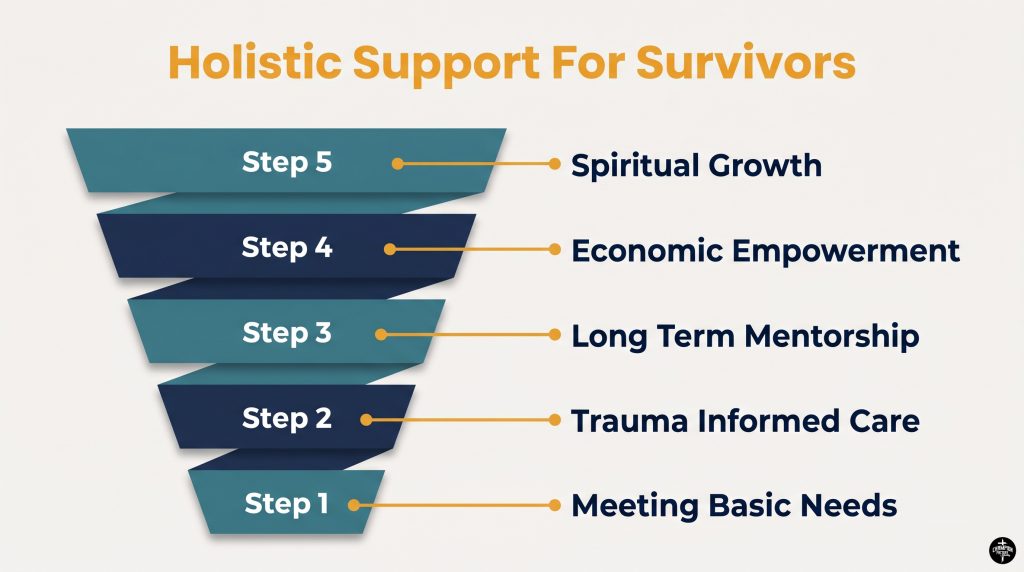
Meeting Basic Needs as the Foundation for Healing
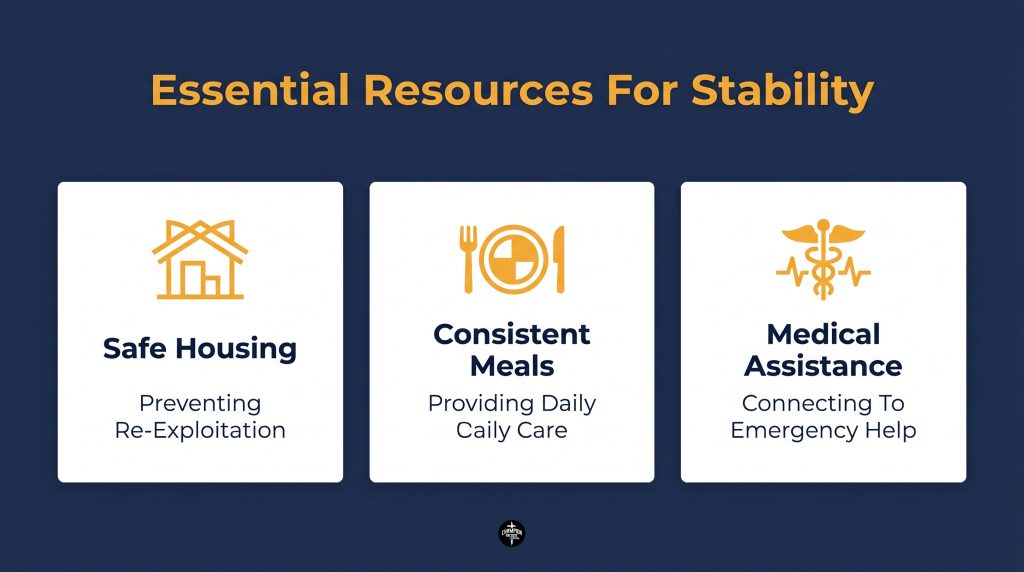
Faith-based programs recognize that spiritual growth is difficult when an individual lacks basic safety. Ministries prioritize immediate physical needs by ensuring survivors have access to safe housing, food, and essential medical care. Providing this stability removes vulnerabilities and creates a secure foundation where healing begins.
Traffickers exploit vulnerabilities such as poverty and unstable housing. When a survivor exits an unsafe situation, their most urgent need is stability. The Office for Victims of Crime notes that comprehensive services, including housing and medical care, are essential for long-term recovery. Before addressing deeper emotional wounds, ministries focus on the practical outreach required to stabilize a life.
Faith-based programs actively provide and coordinate essential resources:
- Securing affordable and safe housing to prevent re-exploitation.
- Providing consistent meals and essential daily care items.
- Connecting individuals with emergency medical and legal assistance.
"We always start by making sure someone has a safe place to sleep and a warm meal. You cannot focus on the future if you are worried about surviving today." Robert Crouse, Community Liaison
Delivering Trauma-Informed Care with Compassion
Effective recovery ministries use trauma-informed care to interact safely with vulnerable individuals. This approach acknowledges the deep impact of trauma and prioritizes dignity, respect, and safety in every interaction. Staff and volunteers focus on understanding what happened to a person rather than asking what is wrong with them.
Healing requires a collaborative process. According to guidelines from the Substance Abuse and Mental Health Services Administration, recovery demands safety, trustworthiness, and empowerment. Ministries ensure their environments do not unintentionally cause further harm. Programs train their teams to listen well and offer choices. This restores a sense of agency to the survivor.
Isaiah 1:17 (NIV) says, "Learn to do right, seek justice. Defend the oppressed. Take up the cause of the fatherless, plead the case of the widow." This biblical mandate drives ministries to provide safe and dignified care that defends the vulnerable without rushing the healing process.
Providing Long-Term Mentorship and Community
Isolation is a primary tool used in exploitation. Faith-based recovery programs counter this isolation by inviting survivors into a healthy, loving community. Through dedicated mentorship and ongoing relational support, ministries walk alongside individuals for years to help them rebuild trust and establish safe social connections.
Complex trauma requires long-term interventions rather than short-term fixes. The Centers for Disease Control and Prevention identify healthy social support systems as key protective factors against future harm. A supportive ministry environment acts as a buffer and a safe healing space.
Community partners and volunteers play a vital role in this continuum of care. Galatians 6:2 (NLT) reminds believers to "Share each other's burdens, and in this way obey the law of Christ." By sharing the daily burdens of rebuilding a life, mentors help survivors find lasting stability.
Building Independence Through Economic Empowerment
Financial instability often forces individuals back into unsafe environments. Recovery ministries break this cycle by offering life skills training and economic empowerment. Teaching practical skills like budgeting, job readiness, and household management equips survivors to build independent, self-sustaining lives.
Empowerment is a core component of restoration. According to the National Institute of Justice, economic empowerment significantly reduces the risk of returning to exploitative situations. Mentorship goes beyond emotional support. It involves practical guidance for everyday living.
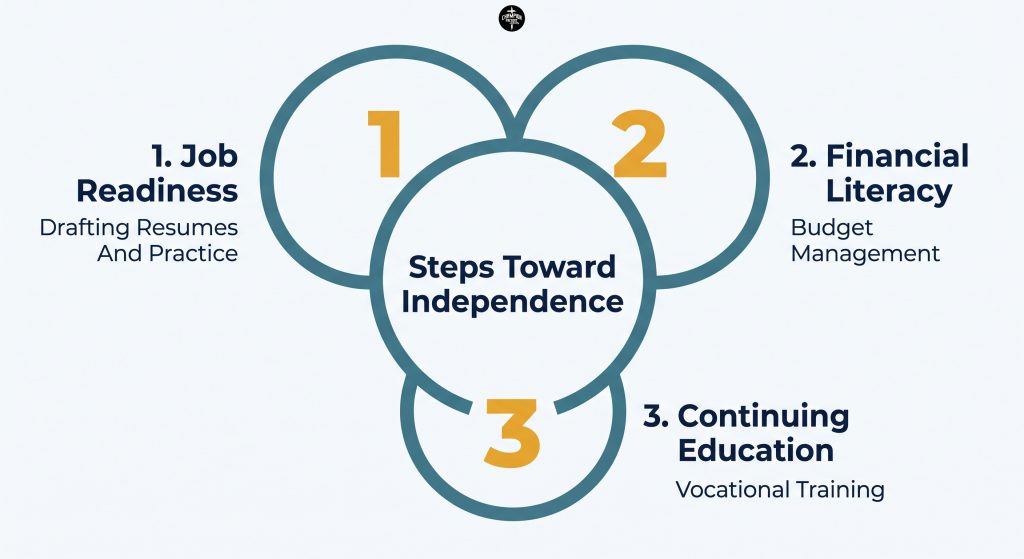
Ministries provide clear steps toward independence:
- Helping individuals draft resumes and practice for job interviews.
- Teaching fundamental financial literacy and budget management.
- Connecting survivors with continuing education or vocational training.
Fostering Spiritual Growth and Renewed Hope
While professional therapy addresses psychological trauma, faith-based programs uniquely offer spiritual restoration. Discipleship programs help survivors understand their identity and purpose. This spiritual encouragement provides deep comfort and a renewed sense of hope that sustains them through the difficult phases of their recovery journey.
At Champion Factory Ministry, programs like Nourish provide discipleship and spiritual guidance once basic needs are met. Spiritual growth happens gradually. It offers survivors a safe place to ask hard questions and experience unconditional love.
Psalm 147:3 (ESV) promises, "He heals the brokenhearted and binds up their wounds." Ministries hold on to this promise and trust that deep emotional and spiritual restoration is possible. A faith community helps individuals reclaim their personal value and inherent dignity.
"True restoration involves the whole person. We walk with individuals as they heal emotionally and physically, and we also guide them as they understand God's unending love for them." Todd Medina, President & Founder
Partnering with Professionals for Comprehensive Care
Responsible ministries understand their specific role and recognize when specialized help is required. Faith-based programs actively partner with licensed counselors, medical professionals, and specialized agencies. This collaboration ensures survivors receive the comprehensive clinical therapy they need alongside spiritual and practical community support.
Ministries provide essential mentorship and discipleship but do not replace licensed medical or psychological therapy. True recovery is a holistic effort that requires a network of dedicated professionals.
If you or someone you know is experiencing a mental health crisis or dealing with the effects of severe trauma, please seek support from a licensed professional or medical provider. Ministries actively help connect survivors to these critical clinical resources.
Walking Together Toward Lasting Restoration
Recovery from human trafficking is a lifelong journey of rebuilding. It requires a dedicated community willing to provide steady support over time. Faith-based programs bridge the gap between crisis intervention and long-term stability. They offer practical resources, trauma-informed care, and deep spiritual encouragement.
You can play a role in this vital work. Whether you are seeking support, looking to volunteer in the community, or wanting to partner financially, your involvement makes a real difference. Reach out to Champion Factory Ministry today to learn more about our recovery support programs and learn how you can help bring lasting hope to vulnerable individuals.
FAQ
What is trauma-informed care in a ministry setting?
Trauma-informed care is an approach that recognizes the deep impact of trauma on a person's life. In a ministry setting, this means prioritizing physical and emotional safety, respecting personal boundaries, and using language that honors the individual's dignity and choices.
How do faith programs differ from secular recovery programs?
Both programs often use standard best practices like providing housing and medical connections. Faith-based programs also offer spiritual discipleship, a focus on finding God-given purpose, and integration into a loving church community for long-term relational support.
Do faith-based programs provide actual housing and food?
Yes. Reputable ministries recognize that basic physical needs must be met first. Many programs provide direct essential care outreach, food assistance, and connections to safe and affordable housing to stabilize individuals before focusing on deeper emotional or spiritual growth.
How long does the recovery process take?
Recovery from complex trauma is not a linear process and varies for every individual. It often requires years of ongoing support. Faith-based programs focus on long-term mentorship rather than quick fixes to ensure survivors have the enduring support they need to thrive.