





Community leaders and pastors often face heavy burdens when trying to serve their neighborhoods. Working in isolation can quickly lead to exhaustion, stretched budgets, and a feeling that local needs are simply too great for one organization to handle. When groups operate independently, they frequently end up duplicating services while missing opportunities to address the deeper systemic challenges that families face.
There is a better, more sustainable way to serve the community. By forming strategic impact partnerships, local churches and specialized ministries can combine their unique strengths. Churches offer incredible volunteer networks and welcoming spaces. Specialized ministries bring specific expertise in areas like recovery, mentorship, and family support. This article provides practical steps to build healthy, faith-grounded collaborations that honor the dignity of every person served and create lasting stability.
The Value Of Collaborative Action In Ministry
Strategic collaboration allows local organizations to focus on their specific strengths while relying on trusted partners for complementary services. This united approach reduces volunteer burnout, maximizes limited funding, and ensures individuals receive comprehensive support rather than fragmented care. By working together, churches and ministries can achieve a collective impact that changes their local communities.
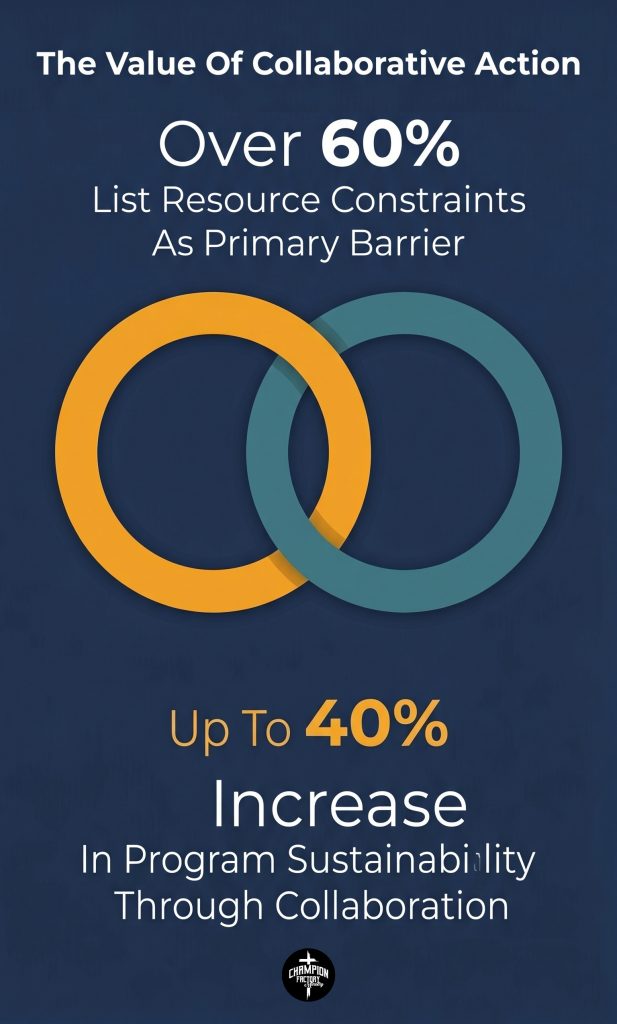
When ministries and churches operate in silos, they often compete for the same volunteer hours and philanthropic funding. A report from the Stanford Social Innovation Review shows that cross-sector collaboration increases the sustainability of local community programs by up to 40 percent. Data from the Independent Sector reveals that volunteer retention increases significantly when participants see measurable, united community impact. People want to give their time to efforts that create genuine change.
Scripture grounds this practical wisdom in deep spiritual truth. Ecclesiastes 4:9-10 (NIV) says, "Two are better than one, because they have a good return for their labor: If either of them falls down, one can help the other up. But pity anyone who falls and has no one to help them up."
Partnership is a form of spiritual stewardship. A local church might have an empty building throughout the week. A local ministry might desperately need office space to counsel families. By sharing facilities, the church empowers the ministry to redirect funds from rent toward actual community programs. This collaborative spirit amplifies the work of the entire body of Christ.
"True evangelism happens when the community sees different parts of the church working together in seamless unity." Art Montgomery, Global Evangelism Strategy Architect & Board Visionary Luminary
How Resource Mapping Prevents Duplication Of Services
Resource mapping involves identifying the existing assets, programs, and services available in a local area before starting a new initiative. This vital step prevents organizations from wasting time and money building programs that already exist. It allows leaders to direct their energy toward filling actual gaps in community care.
Over 60 percent of local community organizations list resource constraints as their primary barrier to impact, according to the Urban Institute. Despite this lack of resources, well-meaning churches often start new initiatives without checking what already exists. The Bridgespan Group notes that the duplication of community services can waste up to 30 percent of local philanthropic funding.
Instead of launching a new food pantry when a highly effective one operates just a mile away, a church might partner with the existing pantry. The church can provide reliable volunteers or host targeted clothing drives to support the existing infrastructure. According to Partners for Sacred Places, congregations contribute hundreds of billions in socio-economic value to the US economy annually through shared space and community programs.
"We frequently see churches exhausted from running a food bank while a specialized ministry down the street lacks volunteers. Connecting the two solves both problems instantly." Robert Crouse, Community Liaison
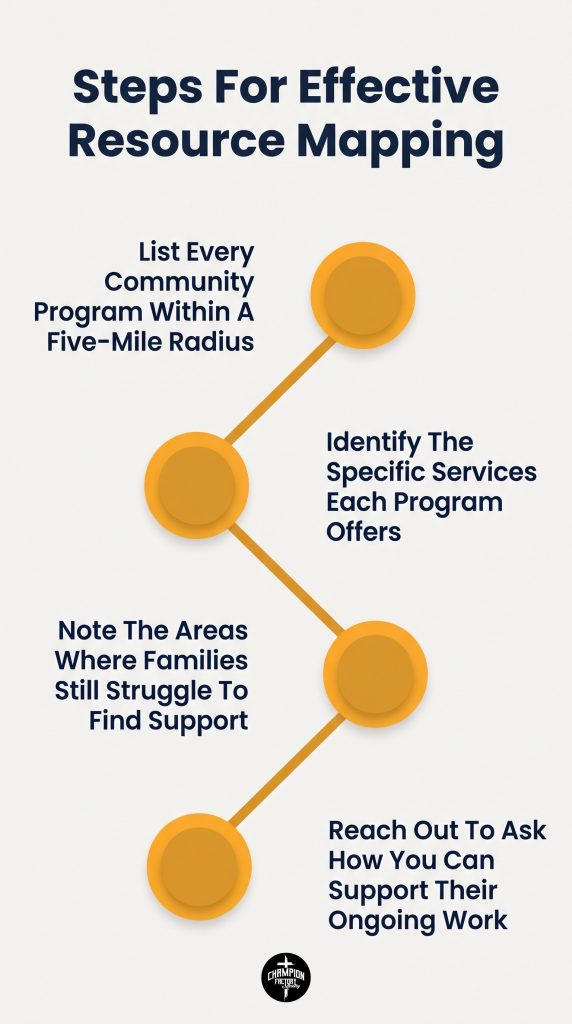
Steps for effective resource mapping:
- List every community program currently operating within a five-mile radius of your church or ministry.
- Identify the specific services each program offers to the community.
- Note the areas where local families still struggle to find reliable support.
- Reach out to existing programs to ask how your organization can support their ongoing work.
This strategic approach honors the principle found in 1 Corinthians 12:12 (ESV): "For just as the body is one and has many members, and all the members of the body, though many, are one body, so it is with Christ." Let the church be the hands. Let specialized ministries be the feet.
Establishing Clear Partnership Agreements And Boundaries
Healthy partnerships require clear, documented agreements that outline the responsibilities, financial commitments, and boundaries of each organization. Establishing these essential details upfront prevents misunderstandings and protects leadership relationships. Clear boundaries ensure a safe and seamless experience for the individuals receiving community support.
A shared vision is a beautiful starting point. Good intentions cannot replace clear communication. The National Council of Nonprofits advises organizations to define their operational roles early. A specialized ministry might handle complex case management and family assessments. The partner church provides a welcoming, dignified space for community meals and relationship building.
When a pastor and a ministry director meet for the first time, they should bring a clear agenda to build trust and alignment. Honest conversations about capacity prevent frustration later on.
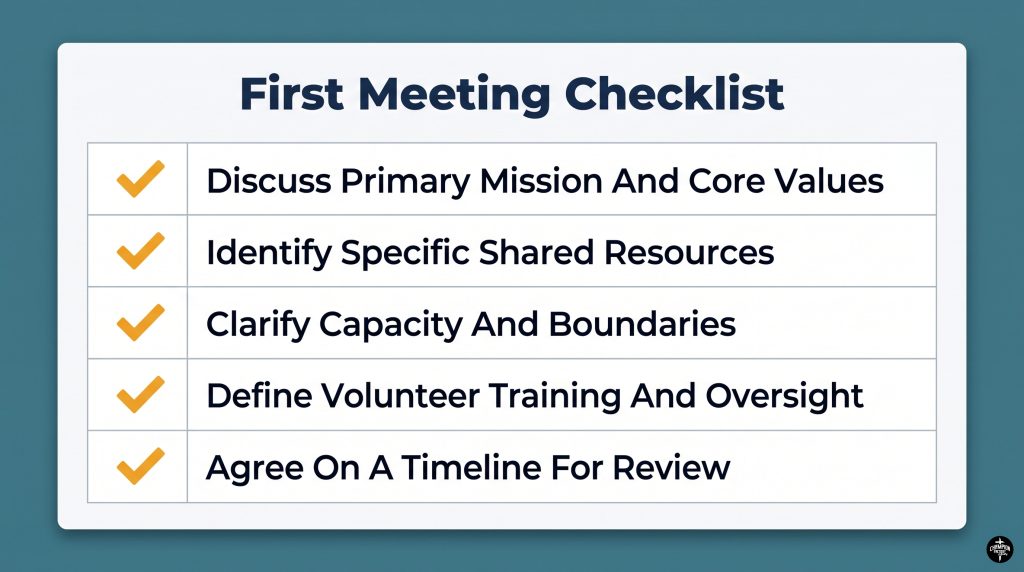
First meeting checklist for organizational leaders:
- Discuss the primary mission, statement of faith, and core values of both organizations.
- Identify the specific resources each group brings to the partnership.
- Clarify what each organization cannot do or does not have the capacity to handle.
- Define how the partnership will manage volunteer training, background checks, and oversight.
- Agree on a clear timeline for reviewing the partnership and measuring its effectiveness.
Implementing Trauma-Informed Care In Volunteer Settings
Community partnerships must prioritize trauma-informed care to ensure that volunteer efforts support true healing. Volunteers need specialized training to understand the systemic challenges families face and to maintain appropriate emotional boundaries. This preparation protects the dignity of the people served and prevents unintentional harm during outreach.
When church volunteers step into roles involving recovery support or crisis intervention, passion must be paired with careful preparation. Serving individuals impacted by exploitation, abuse, or deep systemic hardship requires a delicate and dignified approach. Volunteers must understand that recovery is a complex journey. It is never a quick fix.
Guidelines for safe and compassionate community care:
- Focus on listening and building safe, reliable relationships rather than offering quick advice.
- Avoid asking probing questions about an individual's past experiences.
- Respect privacy completely and never share identifying details of those you serve.
- Understand that the goal is empowerment and dignity, avoiding dependency.
Ministry support acts as a bridge to professional counseling, legal advocacy, and medical care. It is not a replacement for them. Ministries and churches must always encourage individuals to seek licensed professional help when facing severe mental health challenges or active crisis situations. Building clear referral systems to trusted local professionals protects both the vulnerable individual and the volunteer.
Measuring Long-Term Restoration Over Short-Term Relief
Effective community partnerships measure success by tracking long-term family stability and relational growth rather than just counting the number of meals served. Shifting the focus to sustainable outcomes ensures that collaborative efforts actually break cycles of hardship and provide individuals with lasting hope.
One-time financial relief solves an immediate problem. It rarely addresses the root causes of instability. Programs focused on consistent mentorship show a much higher success rate in building family stability. This long-term focus aligns directly with the mission of Champion Factory Ministry. Programs like Nourish provide ongoing discipleship, practical guidance, and deep spiritual growth.
To track meaningful impact, partners should evaluate their ability to offer wraparound services. Wraparound services provide comprehensive support that addresses multiple needs at once. A successful partnership might pair weekly food outreach with job readiness training, financial literacy classes, and ongoing spiritual mentorship.
Indicators of long-term collaborative impact:
- Increased retention of volunteers who see the tangible, lasting results of their dedicated work.
- Families moving safely from emergency support systems into consistent mentorship programs.
- Individuals finding a supportive faith community that walks alongside them through every season of life.
- Joint initiatives improving overall local wellness metrics faster than isolated programs.
Building A Unified Front For Lasting Community Impact
Working together is the most faithful and effective way to serve a community in need. When churches and local ministries set aside competition to share their unique strengths, they create a strong safety net that honors the dignity of every individual. This collaborative approach preserves valuable resources, protects leaders from chronic burnout, and offers a practical witness of unity to the surrounding neighborhood.
Hebrews 10:24 (NLT) reminds us, "Let us think of ways to motivate one another to acts of love and good works." Take time this week to identify one local organization doing incredible work in your area. Reach out to their leadership. Ask how your church or group can support their mission and begin the conversation about building a meaningful partnership.
FAQ
How do we find local ministries to partner with?
Start by asking your congregation where they currently volunteer their time. You can also contact your local city council, community foundation, or regional nonprofit association for a directory of active, vetted organizations serving your specific area.
Do we need a formal contract to share church space with a ministry?
Yes. A written facility use agreement clarifies liability, scheduling, and property expectations. This legally protects both the church and the partnering organization while keeping the relationship healthy, professional, and focused on service.
How do we handle volunteers who want to help but lack training?
Require all volunteers to attend a foundational orientation before they serve. Partnering ministries can often provide this training, teaching church members the basics of trauma-informed care, healthy boundaries, and privacy protection.