





Many people look at an overflowing closet and feel the urge to declutter. We often want our unused items to go to a good home. It can be hard to know if dropping off a bag of sweaters actually makes a difference for someone in need.
Giving clothes to a local ministry serves a clear and direct purpose. When you donate clean and quality items, you provide immediate practical care to your community. This guide explains how your donations directly support families in hardship, protect the environment, and express neighborly love.
Providing Dignity Through Gently Used Clothing
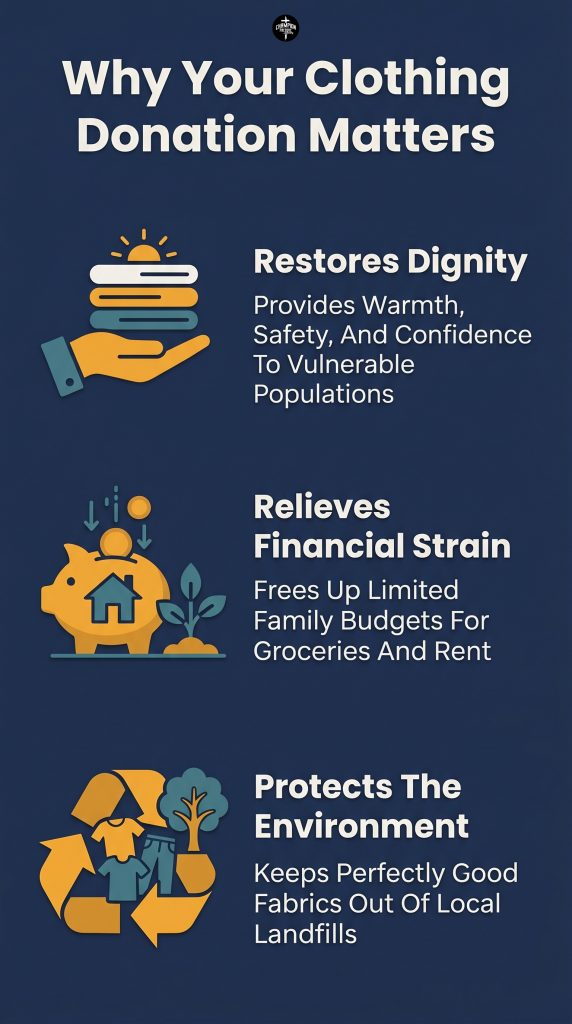
When people face a crisis, receiving high quality clothing restores a sense of dignity and respect. Clothes offer warmth, safety, and confidence. By donating items you would proudly wear yourself, you communicate value to vulnerable populations and support their journey toward stability and growth.
Providing physical resources is a proven first step in trauma informed community care. When individuals in recovery receive clean and proper fitting clothes, they feel seen and supported. A stained or torn shirt can make someone feel discarded. A clean and well kept jacket reminds them that they matter.
"When we hand a clean, warm coat to a child or parent, we see their posture change immediately. It tells them they are seen and valued by their community." Patty Villa, Mexico Community Outreach & Educational Intervention Director.
Jesus connects providing clothes directly to serving Him. Matthew 25:36 (NLT) says, "I was naked, and you gave me clothing. I was sick, and you cared for me. I was in prison, and you visited me."
Follow these standards to ensure your donation promotes dignity:
- Wash all items before giving them away.
- Check for stains, tears, or missing buttons.
- Ensure zippers and fasteners work properly.
- Only donate items you would feel comfortable handing to a friend.
Relieving Financial Strain for Local Families
A simple clothing donation frees up limited budgets for families struggling to afford basic needs. Many households spend most of their income on rent and groceries, leaving very little for apparel. Free clothing ensures parents and children have what they need without sacrificing food or housing.
More than 37 million people in the United States live in poverty, according to the United States Census Bureau. The Bureau of Labor Statistics confirms that low income families spend a significant portion of their income on housing and food. When families receive free winter coats and school outfits, they experience significantly less daily stress.
"A reliable pair of work boots or a professional shirt often bridges the gap between a missed opportunity and a steady job for someone working hard to rebuild." Robert Crouse, Community Liaison.
Appropriate work attire impacts job interview success and employment retention, according to research from the National Bureau of Economic Research. A donated suit or a pair of work boots can help a local resident secure steady employment. Your gift of clothing can become the starting point for financial independence.
Proverbs 22:9 (ESV) reminds us, "Whoever has a bountiful eye will be blessed, for he shares his bread with the poor." Generosity provides tangible relief to those carrying a heavy financial burden.
Reducing Textile Waste and Protecting the Environment
Donating clothes prevents perfectly good fabrics from polluting local landfills. The United States generates millions of tons of textile waste every year. Giving your unused garments to a ministry extends their life, reduces your carbon footprint, and promotes healthy environmental stewardship in your community.
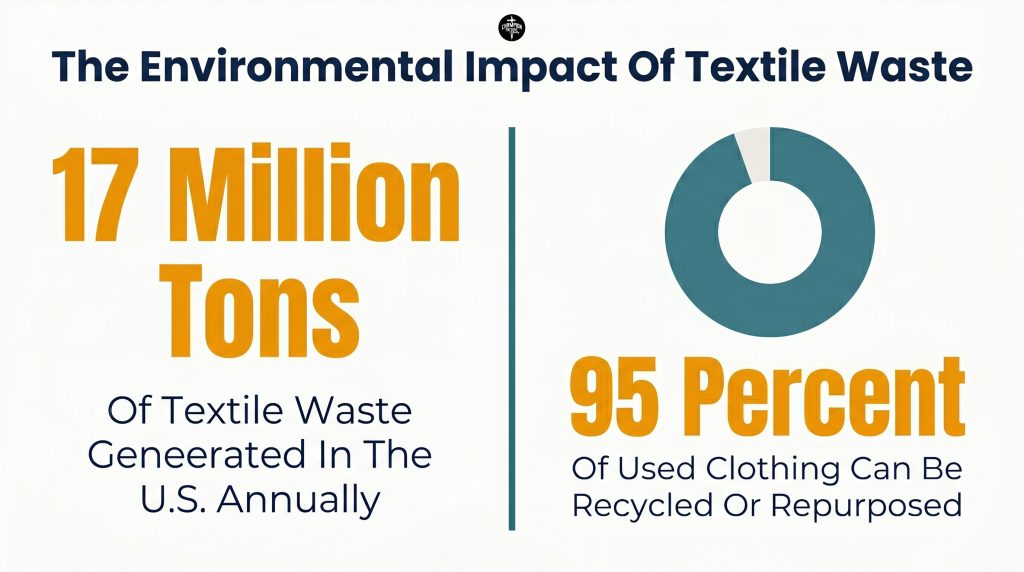
The Environmental Protection Agency reports that the country produces over 17 million tons of textile waste annually. At the same time, the Ellen MacArthur Foundation notes that global clothing production has doubled while the amount of time we wear each garment has decreased. We are buying more and throwing it away faster.
Thankfully, nearly 95 percent of used clothing and textiles can be recycled or repurposed, according to the Secondary Materials and Recycled Textiles Association. Passing on items you rarely wear to someone who needs them daily is a highly effective way to care for the earth. Extending the life of clothing by nine months reduces carbon and waste footprints significantly.
Understanding What Local Ministries Need Most
Ministries require specific clothing items based on the season and the people they serve. While all gently used donations hold value, practical everyday wear meets the most urgent needs. Checking with your local organization ensures your donation matches the current demands of the community.
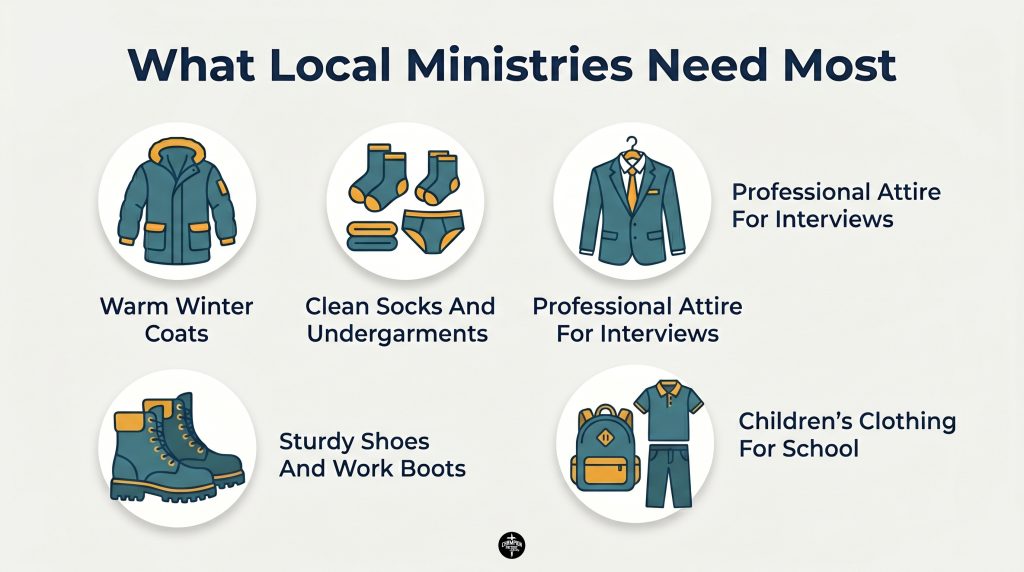
Seasonal weather changes create spikes in community needs. Cold weather brings a high demand for warmth, while the start of a new school year requires specific sizes for children. If you want to get involved with a clothing drive, look for these high demand items:
- Warm winter coats and waterproof jackets.
- Clean, new socks and undergarments.
- Sturdy shoes and work boots.
- Professional attire for job interviews.
- Children's clothing for school.
John the Baptist offered a very practical standard for giving in Luke 3:11 (NIV). He said, "Anyone who has two shirts should share with the one who has none, and anyone who has food should do the same." Sharing our excess is a direct act of faith.
The Local Distribution Process
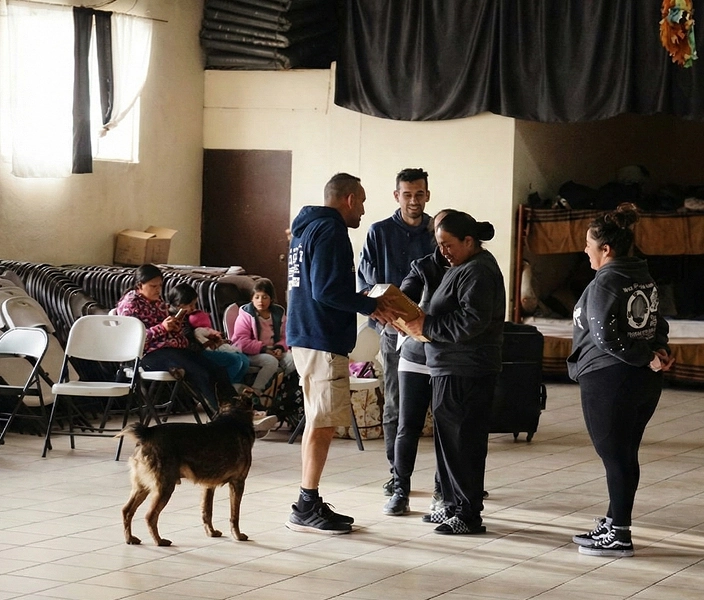
Transparent ministries distribute donated clothes directly to individuals facing hardship through structured outreach programs. Items are sorted for quality, organized by size, and given away freely. This process ensures that your donations stay local and provide immediate practical care to people who need it most.
When you partner with Champion Factory Ministry programs, the focus remains on long term support and restoration. Giving away clothes is one part of a broader approach to discipleship and mentorship. By combining practical care with spiritual encouragement, the ministry helps people move toward stability. A new outfit might be the first positive interaction someone has with an organization that will walk alongside them for years.
"Getting resources directly into the hands of local families builds trust. It opens the door for ongoing mentorship and long term community support." Robert Crouse, Community Liaison.
Please remember that providing resources is one step in a larger journey. If you or someone you know is facing a severe mental health crisis or dangerous situation, please reach out to local professional services, counselors, or medical providers for immediate help.
Passing on a Blessing to Your Neighbors
Donating clothes is an act of neighborly love. It turns an everyday chore into an opportunity to provide dignity, warmth, and hope to someone else. Your generosity makes a very real impact on families living in your area.
Take a moment this week to look through your closet. Find items in good condition that you no longer wear. You can donate those pieces to support the practical needs of your local community.
FAQ
Does the condition of my donated clothes matter?
Yes. Clothing must be clean and free of holes or stains to ensure the person receiving it feels respected and valued.
How does donating clothes help the environment?
It keeps usable textiles out of landfills and reduces the water and carbon footprints associated with manufacturing new garments.
Do my clothes stay in the local community?
Reputable local ministries distribute items directly to individuals and families in their own area through dedicated outreach events and care centers.