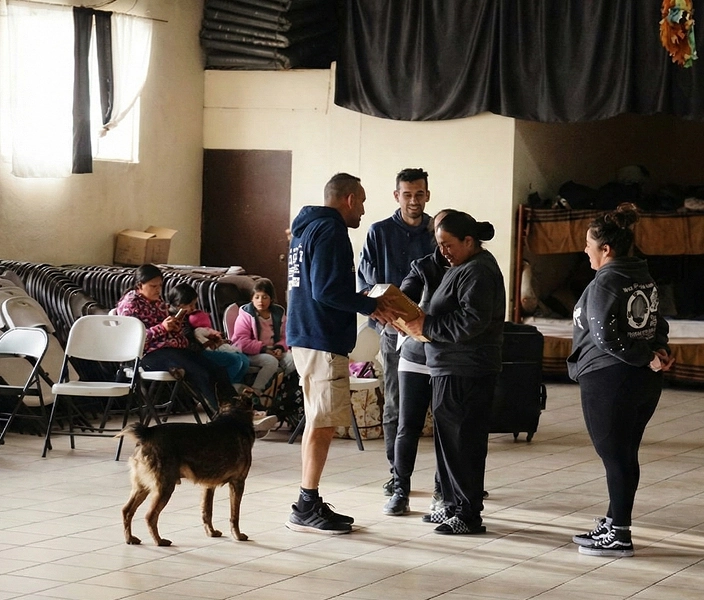






When a family faces hardship, a simple bag of groceries represents relief, safety, and the comforting knowledge that their community cares. People want to help their neighbors but feel unsure how to provide support that restores dignity and promotes long-term stability.
This article explains how modern community food programs operate and why adding a relational, faith-driven approach creates lasting impact. You will learn the difference between temporary relief and holistic care, giving you the clarity needed to support local families effectively.
Understanding the Reality of Local Food Insecurity
Food insecurity is a complex challenge that involves lacking consistent access to enough nutritious food for an active and healthy life. It involves chronic stress about how to feed a family. Recognizing this reality is the first step toward providing meaningful, long-term community support.
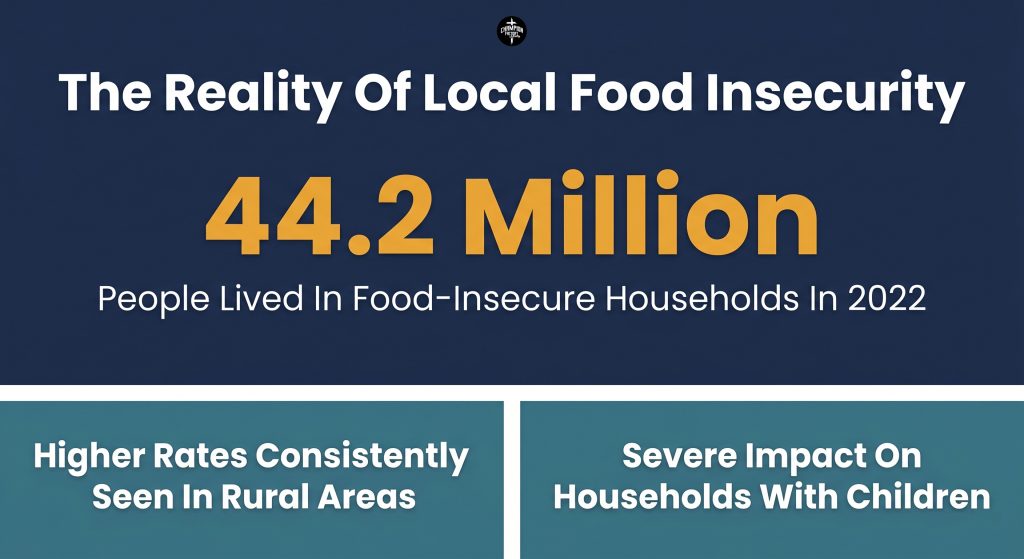
The scale of this challenge is significant across the country. Recent data from the United States Department of Agriculture indicates that 44.2 million people lived in food-insecure households in 2022. This statistic highlights a profound need in local neighborhoods. Rural areas consistently see higher rates of food insecurity compared to urban centers.
Households with children experience these hardships at significantly higher rates. This specific vulnerability emphasizes the critical need for family support programs. When federal or state systems are overwhelmed, community-level interventions act as a primary defense against sudden food access shocks. Local, grassroots outreach models step into the gap to provide immediate and accessible care.
"When we bring resources directly to families in their neighborhoods, we see the immediate relief on a parent's face. Providing food first builds the trust needed to support the whole family later." - Patty Villa, Mexico Community Outreach & Educational Intervention Director
The Emotional and Physical Impact of Consistent Nutrition
Consistent access to healthy food stabilizes physical health and emotional well-being. When families do not have to worry about their next meal, cognitive stress drops significantly. This immediate practical care provides the essential foundation needed for individuals to focus on broader recovery and personal growth.
Physical hunger takes a severe toll on the human body. Good nutrition plays a direct role in improving immune function and overall physical recovery, according to the World Health Organization. When people experiencing food insecurity receive healthy options, their bodies gain the strength needed to handle daily challenges.
The emotional toll is equally heavy. Adults facing hardship report higher levels of psychological distress when they cannot secure enough food. Relieving this burden through practical care brings immediate emotional stabilization. For children, the stakes are high. Identifying food insecurity early and connecting families to resources mitigates negative health effects. Research from the American Academy of Pediatrics shows that food insecurity is linked to delayed development, chronic illness, and behavioral problems in children.
Please note that community food outreach provides vital emotional relief, but it is not a substitute for comprehensive medical or psychological care. We always encourage individuals facing severe distress to seek support from licensed medical and mental health professionals.
Protecting Dignity Through the Client Choice Model
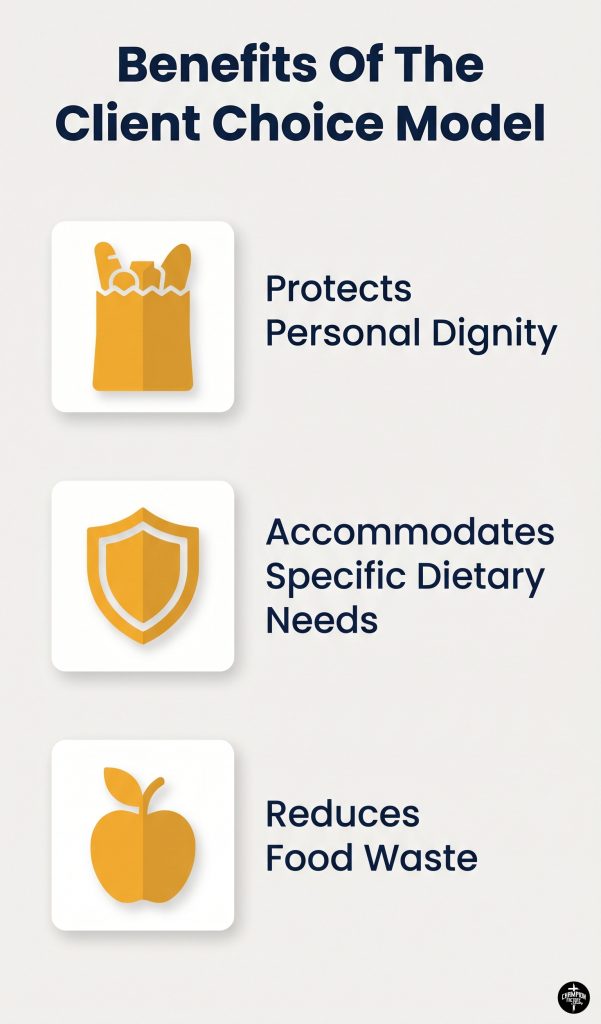
The client choice pantry model allows individuals to select their own groceries instead of receiving pre-packed boxes. This approach protects personal dignity, accommodates specific dietary needs, and reduces food waste. Prioritizing respect in distribution builds vital trust between community organizations and the people they serve.
Traditional food distribution often involves handing a standard box of items to a family in need. While this provides calories, it removes agency. The client choice model changes this dynamic entirely. It mimics a traditional grocery store experience. Families walk through aisles and select the foods that fit their cultural preferences and health requirements.
This model removes the stigma often associated with seeking assistance. It honors the individual. True compassion requires us to view people facing hardship as neighbors to serve. The Bible emphasizes this kind of tangible, respectful love.
- Scripture reference: 1 John 3:18
- Translation: NLT
- Text: Dear children, let us not love with words or speech but with actions and in truth.
Providing choices is a practical action. It communicates respect and truth. When a faith-based program adopts dignity first guidelines, the community responds with deeper trust.
Moving From Immediate Relief to Relational Connection
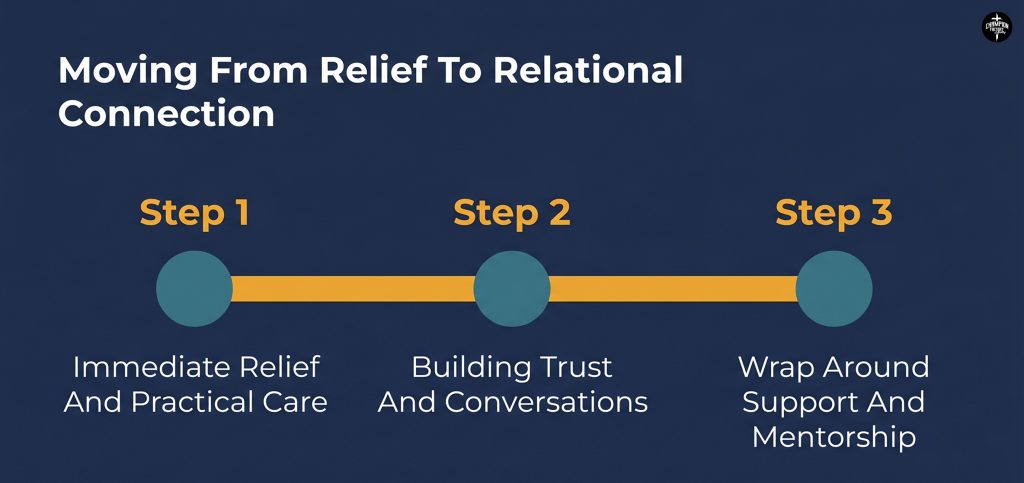
True community transformation happens when practical food assistance serves as an entry point for deeper relationships. Providing a meal meets an urgent need, but connecting that family to wrap-around support and mentorship helps them move toward lasting stability and restored hope.
Food insecurity rarely exists in isolation. Low-income families often face multiple, overlapping issues like lack of affordable housing, social isolation, and chronic health challenges. Handing out a bag of groceries solves the immediate hunger, but it does not fix the root causes of the hardship.
This is where faith-based outreach excels. Community-based organizations build trust uniquely and reach populations that larger systems sometimes miss. When families come for practical care, they find a welcoming environment. Volunteers learn their names. Conversations begin. Over time, that initial visit for groceries becomes a pathway to comprehensive wrap-around support.
At Champion Factory Ministry, food and essential care outreach links directly to long-term discipleship and spiritual growth programs like Nourish. The physical provision creates the safety required to address spiritual and emotional needs.
"Food distribution is never just a transaction. It is an opportunity to look someone in the eye, listen to their story, and connect them with the exact resources they need to move forward." - Robert Crouse, Community Liaison
- Scripture reference: Isaiah 58:10
- Translation: ESV
- Text: If you pour yourself out for the hungry and satisfy the desire of the afflicted, then shall your light rise in the darkness and your gloom be as the noonday.
This verse captures the dual nature of relief. Pouring yourself out involves physical sustenance and emotional presence.
Why Faith Matters in Community Outreach
Faith-driven programs view food distribution as an act of compassion and a reflection of divine love. While physical food sustains the body, the addition of spiritual encouragement sustains the soul. This dual approach ensures that individuals feel seen, valued, and supported on every level.
Secular programs do excellent work in logistics and supply chain management. They move massive amounts of food to areas of need. Faith-based programs add a crucial relational layer. They view the person holistically. A person needs calories to survive, and they need hope to heal.
The motivation behind faith-based outreach stems from a clear biblical mandate to care for the vulnerable. It is considered a direct act of worship.
- Scripture reference: Matthew 25:35
- Translation: NIV
- Text: For I was hungry and you gave me something to eat, I was thirsty and you gave me something to drink, I was a stranger and you invited me in.
Volunteers experience profound spiritual growth when they serve in this capacity. The food line transforms into a space for connection, prayer, and mutual encouragement. By treating every individual with divine worth, faith-based programs help break the cycle of isolation that often accompanies poverty.
Partnering for Lasting Hope and Stability
Supporting families through hardship requires a dedicated and compassionate community. Providing practical care builds the necessary foundation for long-term recovery, discipleship, and restored dignity. When you support faith-based hunger relief, you fill a pantry and open a door for relationships that change lives.
We invite you to get involved with the ongoing work in your community. Whether you choose to volunteer your time, donate to essential care outreach, or pray for the families seeking support, your actions make a tangible difference. Together, we can provide the physical relief and spiritual encouragement that our neighbors need to find lasting stability.
FAQ
What does food insecurity actually mean in my neighborhood?
Food insecurity means a person or family lacks consistent access to enough nutritious food to maintain an active, healthy life. It involves chronic stress about affording groceries and balancing food costs against other basic living expenses.
How do modern food pantries protect the dignity of families?
Modern pantries often use a client choice model. This allows families to walk through aisles and select their own groceries based on their dietary needs and preferences. This approach respects their agency and removes the stigma of seeking help.
What happens after someone gets groceries from a community program?
In a holistic, faith-based program, receiving groceries is the first step. The interaction builds trust. Families are often invited into mentorship, recovery support, or discipleship programs to help them achieve long-term stability.