





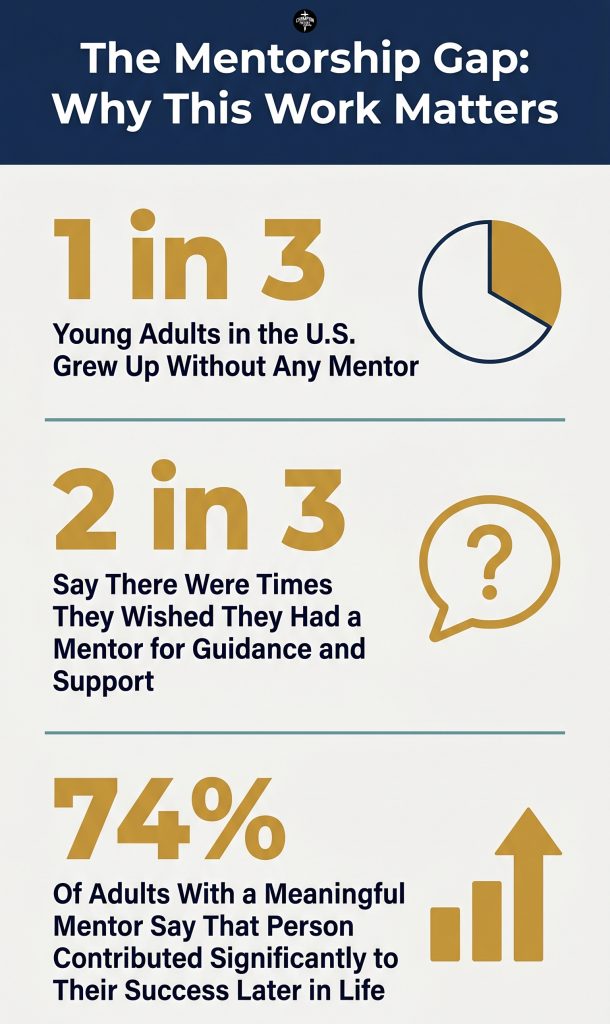
More than 1 in 3 young adults in the United States say they grew up without the support of any mentor, according to a national study reported by the Annie E. Casey Foundation. Two-thirds say there were times they wished they had someone to guide them. That gap is real, and it affects more people than most realize.
Christian mentorship programs work to close that gap. They bring a framework grounded in scripture, sustained by real commitment, and built on the belief that consistent presence matters. This article looks at what biblical mentorship means, how structured programs carry it out, and how it supports children, families, and individuals in difficult circumstances. Whether you are looking for mentorship, considering offering it, or wondering how to support this work, what follows is a clear picture of what this kind of care looks like.
What Makes Mentorship Christian?
Christian mentorship is a committed, consistent relationship where a more experienced believer walks alongside someone to support their faith, their growth, and their daily life. It is rooted in the example Jesus set, grounded in scripture, and designed to produce lasting change in both people involved. It is less about having all the answers and more about showing up faithfully, over and over again.
What separates Christian mentorship from other forms of support is its foundation. The Great Commission calls believers to "go and make disciples of all nations...teaching them to obey everything I have commanded you" (Matthew 28:19-20, NIV). That is not a one-time act. It is an ongoing, relational investment made by ordinary people who take seriously what it means to follow Jesus alongside others.
Christian mentorship is also distinct from professional counseling and clinical services. Mentors offer presence, encouragement, and faith-based guidance. They are not therapists or social workers. For individuals facing mental health challenges, trauma, or crisis situations, professional support is important and appropriate. Mentorship works well alongside that care, not as a substitute for it.
What the Bible Shows Us About Mentorship
The Bible does not use the word mentorship, but it shows the practice clearly and consistently. From the Old Testament to the New, scripture is full of more experienced believers investing deliberately in someone younger or less prepared. These were not casual connections. They were marked by time, presence, and real commitment to the other person's growth and calling.
The relationship between Paul and Timothy stands out as one of the clearest examples. Paul called Timothy "my true son in the faith" (1 Timothy 1:2, NIV) and invested deeply in his character, his calling, and his confidence. In 2 Timothy 2:2, Paul made the purpose of that investment explicit: "The things you have heard me say in the presence of many witnesses entrust to reliable people who will also be qualified to teach others" (NIV). The goal was multiplication. What Paul gave Timothy, Timothy was meant to pass on.
In the Old Testament, Elijah's relationship with Elisha offers a similar picture. When Elijah called Elisha to follow him in 1 Kings 19:19-21, Elisha left his livelihood, committed fully, and spent years learning at Elijah's side. When Elijah was taken up, Elisha carried the work forward and went further than his mentor had. That is what a sustained, committed investment in another person produces.
Titus 2:3-5 extends this expectation to the wider faith community, calling older believers to invest in younger ones through lived experience and faithful example. Mentorship is not a spiritual luxury. It is part of how the body of Christ grows.
How Christian Mentorship Programs Put These Principles Into Practice
Structured Christian mentorship programs take the biblical model and build a consistent framework around it. Mentors and mentees meet regularly, working through scripture, personal goals, practical guidance, and prayer. Programs provide training for mentors, establish clear expectations, and sustain relationships across months or years. That structure is what makes lasting impact possible.
This matters because relationships without structure tend to fade when life gets busy. A 2023 review of 26 peer-reviewed studies on youth mentoring, published by the Chronicle of Evidence-Based Mentoring, found that longer, more consistent relationships produce better outcomes. It also found that giving people a voice in shaping their own mentoring goals improves both the quality and durability of those relationships.
What a structured Christian mentorship program typically looks like in practice:
- Mentors and mentees meet on a consistent schedule, often weekly or every two weeks.
- Sessions include honest conversation, prayer, scripture where appropriate, and practical guidance on the mentee's specific situation.
- Mentors receive training before they are matched and ongoing support throughout.
- Matches are made thoughtfully, with attention to fit, season of life, and areas of need.
"What we see in our programs is that consistency is everything. A mentor who shows up every week does something that no single conversation can do on its own. Trust builds over time, and that trust is where real growth happens." Troy Rallings, Global Sports and Physical Education Director, Champion Factory Ministry
Hebrews 10:24 captures the spirit of this well: "Let us consider how we may spur one another on toward love and good deeds" (NIV). That kind of intentional encouragement does not happen by accident. It is built, carefully and on purpose.
Why Mentorship Matters Most for Children and Families Facing Hardship
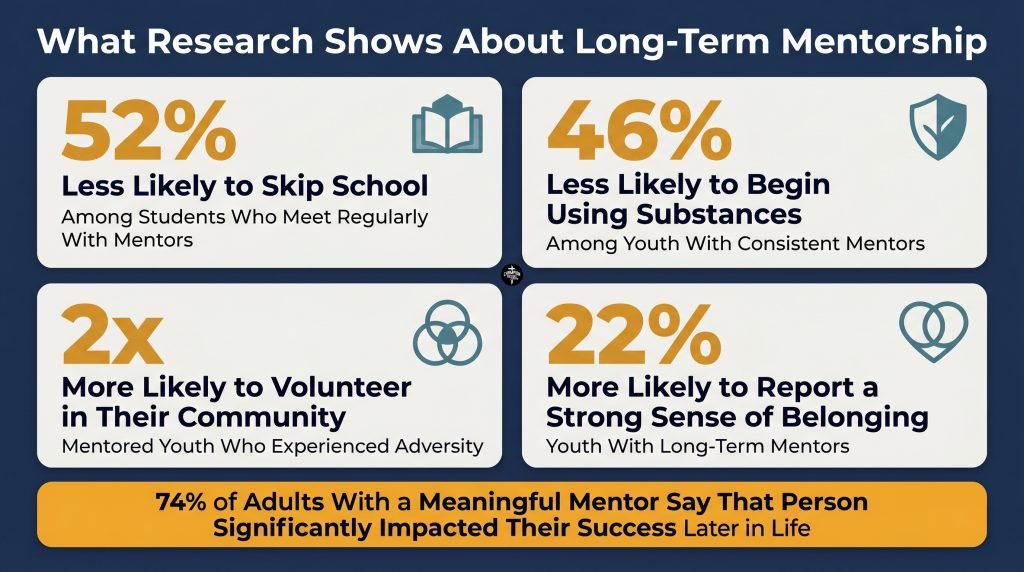
For children and families facing hardship, a consistent adult presence is often one of the most stabilizing things they can have. According to research from MENTOR: The National Mentoring Partnership, mentored young people who experienced adversity were more than twice as likely to volunteer in their communities and hold leadership roles compared to peers without mentors. The effect of a single invested relationship reaches further than most people expect.
Many children grow up without a stable, trusted adult to look to. Families in crisis often face isolation alongside everything else they are managing. A faith-based mentorship program does not solve every problem, but it offers something that research and scripture both affirm: a person who knows you, stays with you, and believes in what God is building in your life.
Students who met regularly with mentors were 52% less likely to skip school and 46% less likely to begin using substances, according to data compiled by MENTOR: The National Mentoring Partnership. These outcomes reflect something bigger than the numbers. They reflect what happens when a person feels genuinely seen and consistently supported.
"When a child does not have a stable adult presence at home, they carry that absence into every other part of life. What mentorship provides is not just guidance. It is a living picture of what it looks like to be known and valued by someone who shows up." Todd Medina, President and Founder, Champion Factory Ministry
Champion Factory Ministry's mentorship and discipleship programs serve children and families with this kind of structured, long-term care. To learn more about how this work happens, visit our programs page.
For those in serious situations, including trauma or crisis, mentorship works best alongside professional care. We encourage anyone in a difficult situation to connect with trained counselors and appropriate support services in addition to faith-based support.
What Makes a Mentoring Relationship Work Over Time
The most effective mentoring relationships are built on consistency, honesty, and a willingness to stay committed when it gets hard. Research and scripture both reach the same conclusion: short or shallow relationships produce limited results. Long-term, committed relationships change lives. The mentor who keeps showing up is the one who makes the difference.
Proverbs 27:17 puts it clearly: "As iron sharpens iron, so one person sharpens another" (NIV). Sharpening takes time. It takes returning to the same work more than once. No mentor grows the person they invest in through a single conversation or a brief season of good intentions.
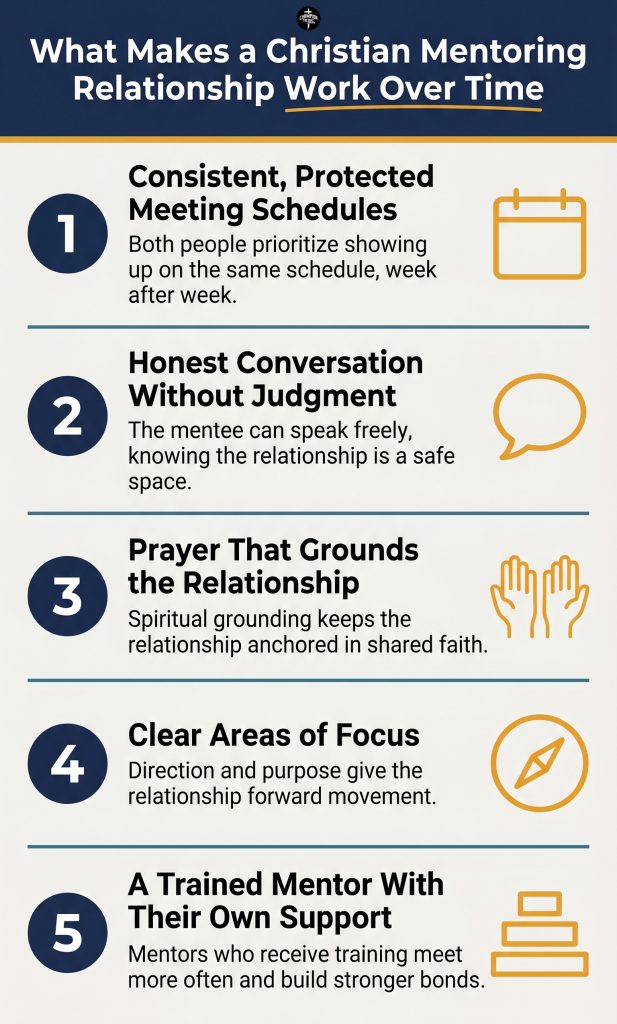
What sustains a mentoring relationship over time:
- Consistent, protected meeting schedules that both people treat as a priority.
- Honest conversation where the mentee can speak freely without fear of judgment.
- Prayer that keeps the relationship spiritually grounded.
- Clear areas of focus so the relationship has direction and forward movement.
- A mentor who has received training and has their own source of support and accountability.
Research confirms that mentors who receive structured training at the start of a match meet more frequently and build longer-lasting relationships with the people they mentor. Programs that invest well in their mentors produce stronger outcomes for everyone involved.
How You Can Be Part of This Work
You do not need a seminary degree or a perfect background to mentor someone. You need a growing faith, a willingness to commit, and enough life experience to offer guidance in areas that matter. The biblical examples of mentorship were ordinary people who said yes to showing up consistently for someone else.
There are practical ways to get involved:
- Volunteer as a mentor through a structured program that provides training and ongoing support.
- Give financially to help fund mentor training, program staffing, and program resources.
- Pray specifically for mentors and mentees, and for the programs that connect them.
- Partner as a church or organization to expand access to mentorship in your community.
If you are ready to take a step, you can get involved with our ministry or support this work through a gift. Every role contributes to what this work makes possible.
Faithful Presence Is How This Work Gets Done
Biblical mentorship is not a recent trend or a modern concept dressed in scripture. It is a pattern woven through the Bible from beginning to end. Elijah showed up for Elisha. Paul invested in Timothy. Jesus walked with his disciples through failure, growth, and everything that followed.
The people served by mentorship programs today need the same thing those relationships provided: someone who knows them, stays with them, and reflects the steady care of God in how they show up. That kind of presence gives a person a clearer sense of who they are and what they are capable of.
Research compiled by MENTOR found that 74% of adults who had a meaningful mentor say that person contributed significantly to their success later in life. A single committed relationship can carry lasting weight in someone's story.
If you are looking for ways to give, serve, or partner in this work, we invite you to connect with us and take that next step.
Frequently Asked Questions
What Is the Difference Between Christian Mentorship and Discipleship?
Discipleship focuses on helping someone grow in their knowledge of and relationship with Jesus. Christian mentorship is often broader, including spiritual formation alongside practical guidance, encouragement, and personal support. The two overlap significantly, and in many programs they work side by side.
How Long Does a Christian Mentoring Relationship Last?
Research consistently shows that longer relationships produce stronger outcomes. Most structured programs ask for a minimum commitment of one year. Many mentoring relationships continue well beyond that, and some become lifelong.
Is Christian Mentorship a Substitute for Professional Counseling or Support Services?
No. Christian mentorship is a relational and faith-based form of support, not a clinical service. For individuals facing trauma, mental health challenges, or crisis situations, professional counseling and support services are important and appropriate. Mentorship works well alongside professional care.
How Are Mentors Prepared for the People They Serve?
Quality programs provide training before mentors are matched and ongoing support throughout the relationship. This preparation helps mentors build trust, handle difficult conversations responsibly, and sustain their commitment over time. Trained mentors consistently build stronger, longer-lasting relationships.
Can Anyone Become a Christian Mentor?
Anyone with a growing faith, life experience, and a genuine willingness to commit to someone else's growth can become a mentor. Programs typically have an application and screening process to ensure good matches and safe environments for everyone involved.