





Every community has individuals and families who face unexpected hardships. When people encounter job loss, food insecurity, or a personal crisis, they need a stable support system that treats them with dignity. Faith-based organizations step into this gap by offering resources that address immediate physical needs alongside long-term spiritual growth.
Understanding how these initiatives function helps you see their tangible impact in your neighborhood. This article explains the daily operations of local outreach programs. You will learn how they distribute essential care, build supportive relationships through mentorship, and provide safe spaces for recovery. By exploring these practical steps, you will see how faith and action work together.
The Foundation of Faith-Based Community Support
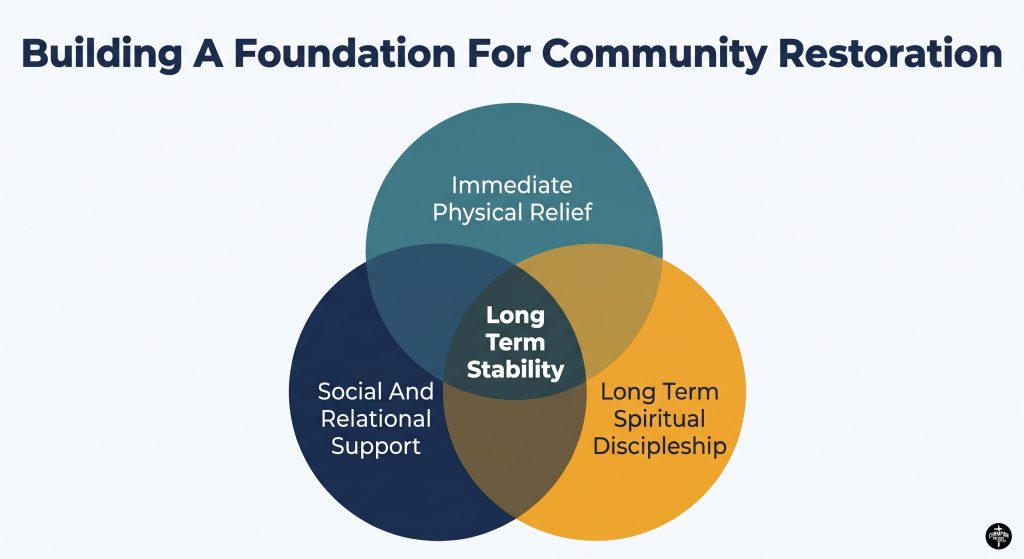
Christian outreach programs are structured community efforts that address physical, emotional, and spiritual needs. They function as a local safety net by offering essential resources alongside relational support. The primary goal is to help individuals move from crisis to long-term stability while honoring their God-given dignity.
True Christian outreach is an active and practical effort. It requires stepping into difficult situations and offering tangible help. The motivation behind this work is found in 1 John 3:18 (NIV), which says, "Dear children, let us not love with words or speech but with actions and in truth." Faith-based programs take this command seriously by building initiatives that solve real community problems.
Secular research validates this holistic approach to community care. The United States Department of Housing and Urban Development reports that wraparound services drastically improve housing stability for vulnerable families. Wraparound services combine physical resources with social and emotional support at the same time. Christian programs mirror this model by pairing practical relief with long-term discipleship.
"Effective outreach requires us to see the whole person. We address the immediate physical need first, and then we build a relationship that supports their spiritual and emotional growth." Art Montgomery, Global Evangelism Strategy Architect
A successful outreach program invites people into a supportive community. The people served receive respect and compassion before any program mechanics begin. This perspective changes a clinical discussion about poverty into a hopeful journey toward community restoration.
Providing Food and Essential Care to Families in Need
Local outreach programs combat food insecurity by distributing groceries, hot meals, and daily essentials directly to neighborhoods. These initiatives work by establishing local distribution hubs, gathering donations, and organizing volunteers to ensure families receive consistent and reliable support during difficult seasons.
Food distribution is often the most visible form of community outreach. According to the United States Department of Agriculture, more than 44 million people in the United States face food insecurity. This statistic highlights the pressing need for local action. Faith-based groups step up by creating food pantries, mobile distribution units, and community meals.
The foundation for combining physical care with spiritual compassion comes directly from the teachings of Jesus. Matthew 25:35-36 (ESV) states, "For I was hungry and you gave me food, I was thirsty and you gave me drink, I was a stranger and you welcomed me, I was naked and you clothed me, I was sick and you visited me, I was in prison and you came to me."
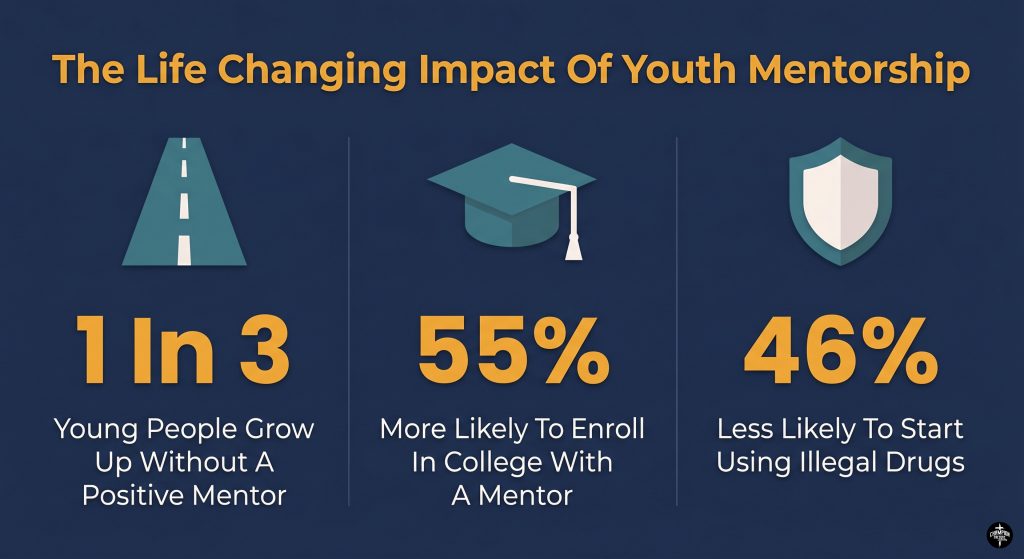
Food outreach works through a well-organized logistical process. Programs partner with national networks, local grocery stores, and generous donors to secure supplies.
- Volunteers sort the donated items.
- Teams pack grocery boxes for families.
- Leaders manage local distribution days.
When families arrive to receive help, they meet a warm greeting rather than a rigid bureaucratic process. This warm approach ensures that parents can provide for their children without feeling shame or embarrassment.
"Food distribution is often the first point of contact. When we meet a family's immediate need for a meal, we build the trust required to offer deeper, long-term support." Robert Crouse, Community Liaison
Mentorship and Discipleship for Vulnerable Youth
Faith-based mentorship programs connect at-risk youth with trained adult volunteers who provide consistent guidance and spiritual encouragement. These programs work by pairing practical life skills training with biblical discipleship to help young people build confidence, make safe choices, and face challenges successfully.
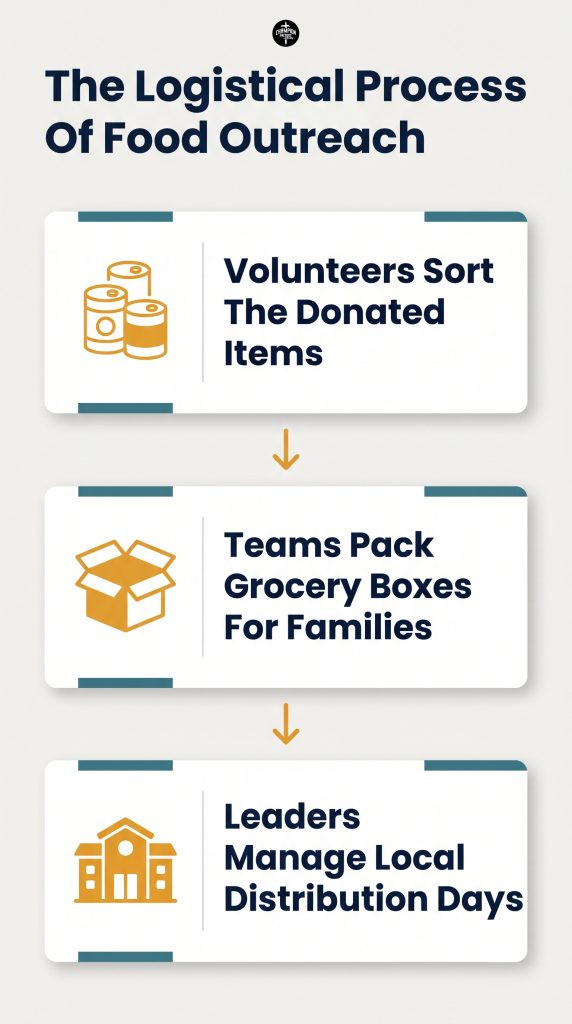
Long-term support prevents future crises and builds stable communities. Sadly, many children grow up without a reliable guide. Data from MENTOR The National Mentoring Partnership reveals that approximately 1 in 3 young people will grow up without a positive role model or mentor outside of their family. Outreach programs fill this critical void.
Mentorship changes the trajectory of a child's life. Youth who have a mentor are 55 percent more likely to enroll in college and 46 percent less likely to start using illegal drugs. David Shapiro, former CEO of MENTOR, notes that mentoring is a proven strategy for positive youth development.
Christian organizations take mentorship a step further by integrating discipleship. Programs like Nourish at Champion Factory Ministry focus on guiding someone in their spiritual growth while teaching practical life skills. Volunteers spend time helping students with homework, teaching them how to resolve conflicts, and listening to their struggles. This consistent presence shows vulnerable youth that they are valued and loved. When a child knows they have a community standing behind them, they are much better equipped to break cycles of hardship.
Supporting Long-Term Recovery and Stability
Recovery outreach provides a safe and supportive community for individuals healing from substance use or personal crisis. These programs work by offering social connection, accountability, and spiritual encouragement to walk alongside people as they stabilize their lives and rebuild their futures.
Rebuilding a life after a severe crisis requires immense support. The Substance Abuse and Mental Health Services Administration defines recovery as a process of change through which individuals improve their health and wellness, live a self-directed life, and strive to reach their full potential. They also note that social support and community engagement are key pillars in successful long-term substance use recovery.
Faith-based recovery programs provide this crucial social connection. They create environments where individuals can share their struggles without fear of judgment. The biblical model for this shared partnership is found in Galatians 6:2 (NLT), which instructs, "Share each other's burdens, and in this way obey the law of Christ." Recovery is a shared journey of healing.
Organizations prioritizing trauma-informed care handle these sensitive situations responsibly. They focus on the resilience of human trafficking survivors and use person-first language for those in substance use recovery. It is important to note that faith-based programs serve as a vital companion to medical care. They do not replace professional services. Individuals facing complex trauma or clinical addiction should always seek support from licensed medical and psychological professionals.
The Essential Role of Volunteers and Funding
Community outreach relies on trained volunteers and donor funding to deliver consistent care safely and effectively. Volunteers actively serve by mentoring youth, sorting donations, and building relationships, while financial contributions provide the necessary supplies to keep these community safety nets operating locally.
No outreach program can survive without the dedication of local community members. Volunteers are the core team that operates daily programs. The Independent Sector estimates the national value of each volunteer hour is 31.80 dollars. This economic impact proves that volunteers bring immense worth to a local neighborhood.
Beyond the economic value, volunteers provide a life-saving connection. The Centers for Disease Control and Prevention reports that strong social connectedness greatly reduces the risk of mental health struggles and physical illness. Outreach programs provide physical items and meaningful relationships.
To protect vulnerable populations, reputable organizations implement strict training and safety standards. Volunteers receive background checks and learn how to interact safely with individuals facing trauma. This training ensures that the ministry operates with professional standards.
Funding is the other critical component. Donors who want to fund meaningful impact make this work possible. Financial resources allow organizations to purchase food, maintain safe facilities, and expand mentorship opportunities. The Urban Institute highlights that community-based organizations are often the first responders in times of crisis and the primary safety net for vulnerable families. Consistent funding keeps that safety net strong.
Restoring Hope and Building Stronger Communities
True Christian outreach goes beyond passing out resources. It means stepping into difficult situations, offering a steady hand, and pointing people toward lasting hope. By combining practical relief with spiritual discipleship, local programs help individuals move from isolation to stability. Whether through a bag of groceries, a listening ear, or a structured recovery group, these initiatives remind every person that they hold immense value.
If you want to see your neighborhood thrive, consider how you can be part of the solution. You might have the capacity to mentor a young person, sort donations at a local pantry, or provide financial support to keep a vital program running. Every act of service strengthens the community safety net. Take time to explore the volunteer opportunities or donation needs at Champion Factory Ministry to start making a tangible difference today.
FAQ
How do local outreach programs help families facing food insecurity?
Local programs establish distribution hubs to provide groceries, hot meals, and daily essentials. They partner with food banks and community donors to ensure families have reliable access to nutritious food during financial hardships.
What role do volunteers play in mentoring children?
Volunteers act as consistent, positive role models for at-risk youth. They help with practical needs like homework and life skills while offering emotional support and spiritual encouragement through regular discipleship.
Can an outreach program help someone rebuild their life after a crisis?
Yes. Outreach programs provide the social support, accountability, and community connection necessary for long-term stability. They offer a safe environment for healing, though they also encourage individuals to seek professional medical or psychological help for clinical needs.
Do volunteers receive training before working with vulnerable individuals?
Reputable faith-based organizations require background checks and specific training for volunteers. This training covers trauma-informed care, safety protocols, and healthy boundaries to ensure the physical and emotional safety of everyone involved.