






If you are reading this because you have been wondering whether pride is quietly shaping your attitudes or choices, you are not alone. Taking an honest look at your own heart takes courage, and it is a normal, healthy part of spiritual growth rather than something to feel ashamed of.
This article explains what the Bible actually means by pride, how it differs from healthy confidence, and why it matters so much to your relationships and your faith. Then it moves into practical, doable steps you can use this week to guard against pride and grow in humility.
What Does The Bible Say About Pride?
Biblical pride is an inflated view of yourself that puts your will above God's and your own interests above the needs of others. It is more than confidence or self-respect. It is a heart attitude that says you do not need God's guidance or grace, and it often shows up as resistance to correction or a need to always be right.
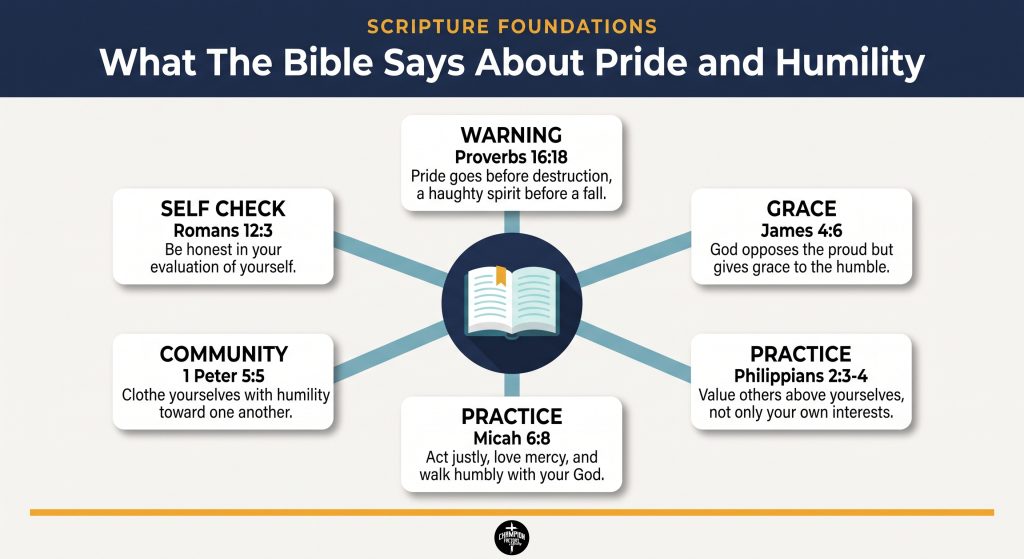
Scripture treats pride as a serious spiritual issue, not a minor personality flaw. Proverbs 16:18 puts it plainly. "Pride goes before destruction, a haughty spirit before a fall" (Proverbs 16:18, NIV). This is not a threat. It is a wisdom principle. Pride tends to isolate a person from correction, from community, and ultimately from God, which is why scripture returns to this theme so often.
This pattern shows up throughout the Bible, from the earliest stories of people trusting themselves over God to the wisdom literature and the New Testament letters. The message stays consistent. Pride convinces you that you can handle life on your own terms. Scripture consistently shows that this leads to a fall, not lasting strength.
Common Misconceptions About Pride
- Pride is not the same as feeling proud of a job well done.
- Pride is not always visible to others. It can hide behind confidence, achievement, or even self-criticism.
- Pride is not a topic reserved for people who seem arrogant. Everyone wrestles with it in some form.
Is All Pride Sinful? Understanding The Difference Between Confidence And Pride
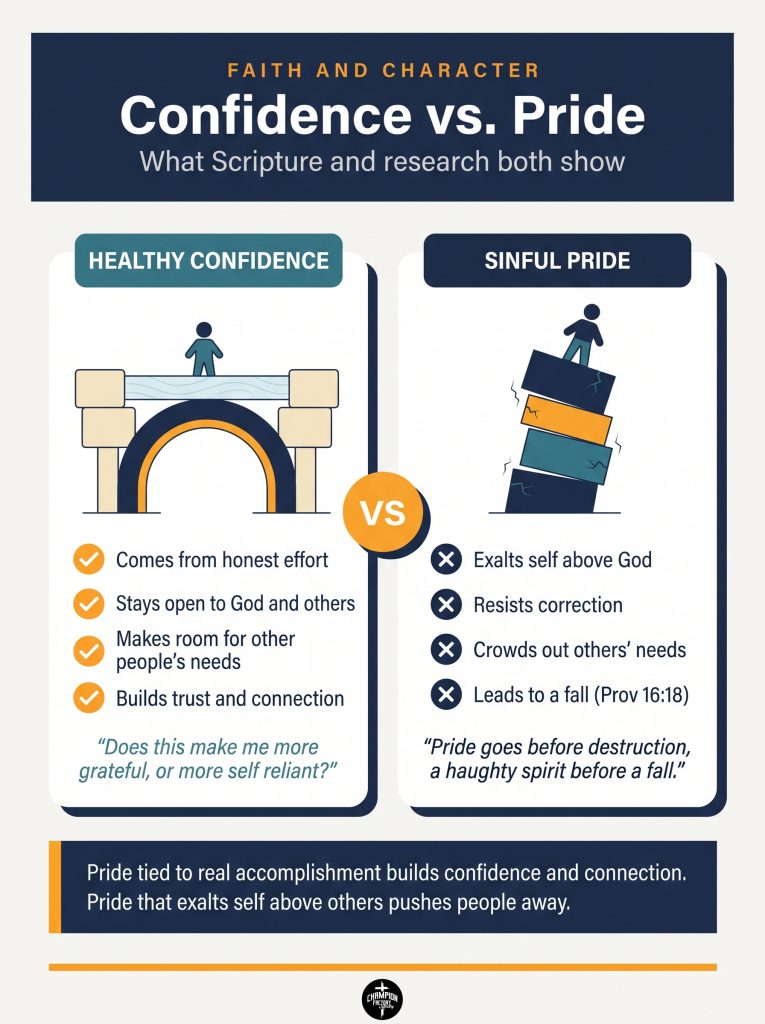
No, not all pride is sinful. Scripture and behavioral research both point to a real difference between healthy confidence and sinful pride. Confidence tied to honest effort and gratitude is not the same as pride that exalts you above God and others. The difference lies in whether your heart stays open to God and others or closes them out.
Feeling good about your work, your growth, or your effort is not automatically sinful. The concern in scripture is with pride that becomes self-exalting and self-sufficient, the kind that leaves no room for God or for other people's needs.
Research on this distinction lines up closely with the biblical picture. A study cited in Personality and Social Psychology Bulletin found that pride tied to genuine accomplishment is associated with confidence and positive attitudes toward others, while arrogant, self aggrandizing pride is linked to prejudice and discrimination. The type of pride matters. One builds people up. The other pushes them away.
A helpful question to ask yourself is this. Does this feeling make me more grateful and more aware of others, or does it make me feel like I do not need anyone, including God.
Why Does Pride Matter So Much In Scripture?
Pride matters so much in scripture because it directly opposes the posture God asks of his people. James 4:6 says that "God opposes the proud but gives grace to the humble" (James 4:6, ESV). Pride is not one sin among many. Scripture describes it as a root attitude that makes other sins easier to justify, because it centers your life on yourself instead of God.
When pride takes over, it becomes harder to receive correction, harder to admit fault, and harder to accept help. This is part of why scripture treats it so seriously. God is not eager to oppose people. Pride itself blocks the very grace a person needs.
This is also good news. If pride blocks grace, humility allows a person to receive it. The goal is not to fear pride but to recognize it honestly so grace has room to work.
How Does Pride Affect Relationships And Community?
Pride often shows up first in relationships, not in private thoughts. It can look like refusing to apologize, needing to be right, or struggling to celebrate someone else's success. Scripture calls believers to "clothe yourselves, all of you, with humility toward one another" (1 Peter 5:5, NIV), which points to humility as something a whole community practices together.
Research supports this call to humility as well. A set of studies published in the Journal of Positive Psychology found that more humble people were consistently more helpful to others than less humble people, across three separate studies. Humility tends to produce action, not just good intentions.
Similar patterns show up in professional settings. A study on trainees in therapy and pastoral counseling found that more humble trainees showed greater willingness to understand cultures different from their own, which suggests humility helps people connect across real differences rather than staying comfortable and closed off.
"Teams that listen well across cultures accomplish more than teams that insist on being right." Art Montgomery, Global Evangelism Strategy Architect
Even at a group level, the pattern holds. Research from the University of California, Davis found that groups who express pride through humility and by crediting each other's effort tend to earn more respect than groups who boast. Community, whether a family, a friendship, or a church, tends to grow stronger through humility and weaker through pride.
What Does Humility Look Like In Everyday Life?
Humility looks like valuing others as much as yourself, staying teachable, and depending on God rather than only on your own strength. Philippians 2:3-4 describes it directly. "Do nothing out of selfish ambition or vain conceit. Rather, in humility value others above yourselves, not looking to your own interests but each of you to the interests of the others" (Philippians 2:3-4, NIV).
Humility is not thinking less of yourself. It is thinking of yourself less often. In practice, that might look like:
- Listening fully before responding in a disagreement
- Asking for input instead of assuming you already know the answer
- Giving credit to others instead of taking it for yourself
- Accepting correction without becoming defensive
"In discipleship, the first sign of growth is often a willingness to be corrected." Todd Medina, President and Founder
Micah 6:8 sums up this posture well. "He has shown you, O mortal, what is good. And what does the Lord require of you? To act justly and to love mercy and to walk humbly with your God" (Micah 6:8, NIV). Humility is not a single moment of self-denial. It is a daily walk.
Practical Ways To Guard Against Pride Each Day
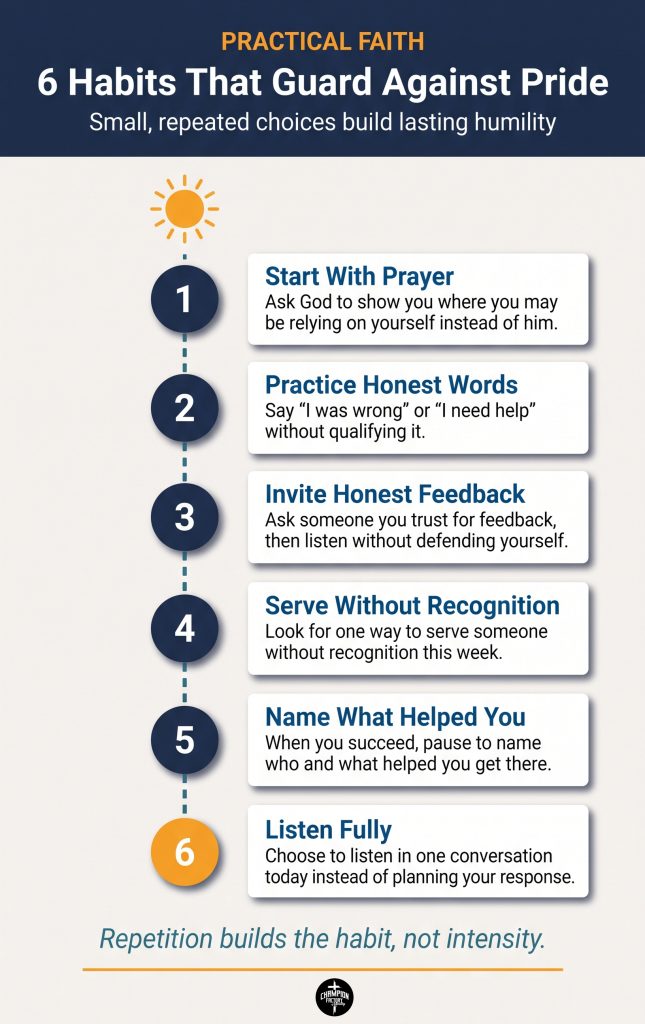
You can guard against pride through small, repeatable habits rather than one dramatic change. Guarding against pride works best as a daily practice, since pride tends to creep back in quietly. Consistent, small choices build humility more effectively than occasional big gestures.
Try building one or two of these habits into your week.
- Start the day by asking God to show you where you may be relying on yourself instead of him.
- Practice saying "I was wrong" or "I need help" without qualifying it.
- Ask someone you trust for honest feedback, then listen without defending yourself.
- Look for one way to serve someone without recognition this week.
- When you succeed at something, pause to name who and what helped you get there.
- Choose to listen fully in one conversation today instead of planning your response.
"Small, consistent habits shape a child's character more than any single lesson." Todd Medina, President and Founder
None of these steps require a dramatic life change. Repetition builds the habit, not intensity.
How Do You Examine Your Heart Without Shame?
You can examine your heart for pride honestly without falling into shame by focusing on growth instead of failure. Romans 12:3 encourages honest self-evaluation, not harsh self-judgment. "Don't think you are better than you really are. Be honest in your evaluation of yourselves, measuring yourselves by the faith God has given us" (Romans 12:3, NLT).
It helps to remember that pride can also show up as harsh self-criticism, not just boasting. If you find yourself constantly tearing yourself down, that is not humility either. It is pride turned inward.
If self-examination regularly turns into shame or self-condemnation rather than growth, that pattern is worth talking through with a pastor, counselor, or trusted mentor. Spiritual growth should lead you toward hope, not toward a harder version of self-judgment.
Champion Factory Ministry's approach to discipleship, including the Nourish program, is built on this same idea. Growth happens gradually, in community, and without shame.
Choosing Humility One Small Step At A Time
Pride is easy to recognize in others and hard to recognize in yourself. That is exactly why this kind of honest reflection matters. The goal is not to eliminate every trace of pride overnight. It is to notice it, name it honestly before God, and take small, steady steps toward humility instead.
"Long-term ministry impact depends on humility being practiced daily, not just discussed occasionally." Art Montgomery, Global Evangelism Strategy Architect
Start with one habit from this article. Ask God to show you one place this week where you can choose humility over self-reliance. If you want ongoing encouragement and community as you grow, consider connecting with others through Champion Factory Ministry's get involved page. Growth happens more steadily with support from others than in isolation.
FAQ
Is it a sin to feel proud of my accomplishments?
No. Feeling satisfaction in honest effort is different from sinful pride. The concern is pride that excludes God and others, not ordinary confidence.
How can I tell if I am struggling with pride?
Look at how you respond to correction, mistakes, and other people's success. Resistance to feedback or a constant need to be right are common signs.
What is the biblical opposite of pride?
Humility. Scripture consistently pairs pride with humility as the healthier, God-honoring alternative.
Can pride affect my faith community, not just me personally?
Yes. Pride often shows up first in relationships, through defensiveness or difficulty apologizing, which is why scripture calls believers to practice humility together.