



Some people worry that a faith-based recovery program will feel like pressure. Others have never heard the term "trauma-informed." The Substance Abuse and Mental Health Services Administration (SAMHSA), the federal behavioral health agency, describes a trauma-informed approach as one that realizes how common trauma is, recognizes its signs, responds with safe practices, and resists causing more harm.
Champion Factory Ministry offers practical care, mentorship, and faith-centered support. It is not a clinical provider and does not replace counseling, medical care, or legal support. This article explains what trauma-informed care means, how it shapes daily practice, and how faith fits with choice and respect. You will also find questions to ask any recovery program.
What Does Trauma-Informed Care Mean?
Trauma-informed care is an approach that assumes a person may have experienced hardship that still affects them, then builds safety into every interaction. It is different from trauma therapy. Licensed professionals deliver therapy to treat trauma. A trauma-informed approach shapes the setting, the rules, and the way people treat each other.
SAMHSA defines trauma as an event or set of circumstances that a person experiences as harmful and that has lasting effects. Those effects can touch mental, physical, social, emotional, or spiritual well-being. Because the federal definition includes the spiritual side, faith-centered programs have a role in recovery support.
Trauma is common. CDC survey data from 25 states, collected from 2011 to 2020, found that 63.9 percent of adults reported at least one adverse childhood experience. SAMHSA also notes that many people who face hard events do not have lasting problems, and each person responds in their own way. A program should stay aware of trauma without labeling anyone.
Common Misconceptions
These points clear up common confusion:
- Trauma-informed care is not a diagnosis or a treatment plan.
- It does not ask people to retell painful events.
- It does not label anyone as damaged.
Why Does Trauma Matter in Recovery?
Trauma and substance use often overlap. A research article indexed by the National Library of Medicine estimates that roughly 30 to 60 percent of people seeking treatment for substance use disorders also meet criteria for PTSD. Having trauma does not mean a person will develop a substance use disorder. Programs that understand trauma can avoid causing harm and support people more safely.
The same article reports that people with both conditions often have more severe symptoms. Estimates vary by study, so treat any single number with care.
Programs can also check how their own rules feel to someone with a hard history. For example:
- A required group share can feel unsafe to someone who has been silenced.
- A surprise room check can feel like a threat.
- A raised voice can cause fear, even when no harm is meant.
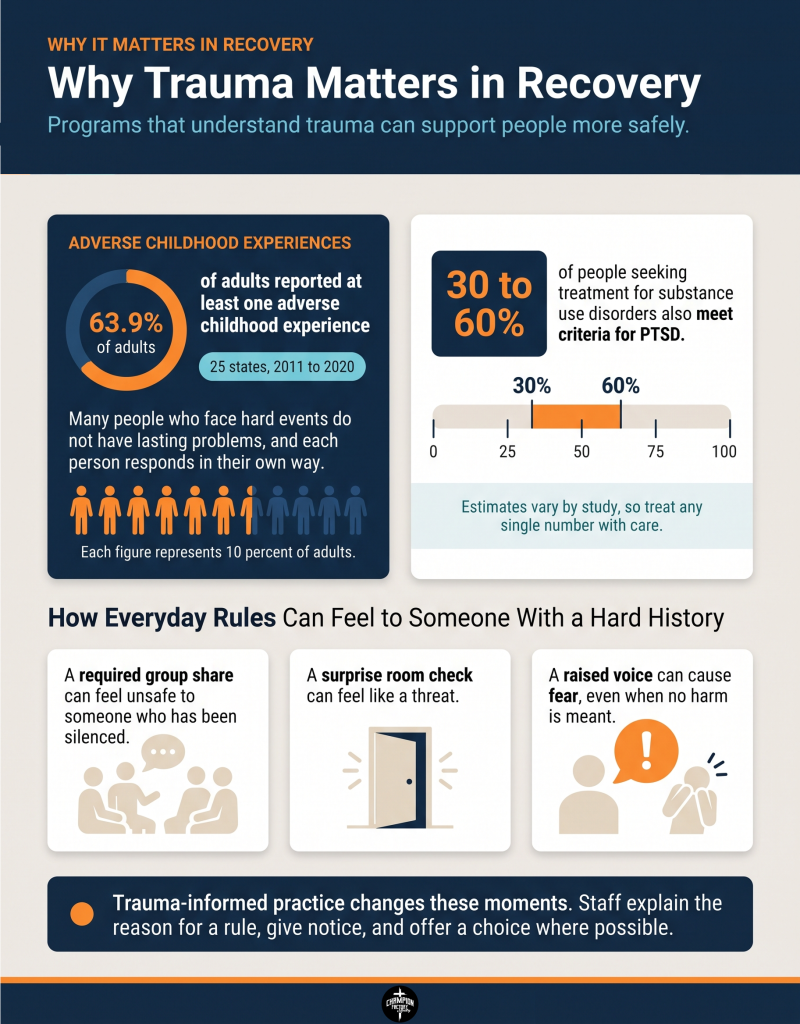
Trauma-informed practice changes these moments. Staff explain the reason for a rule, give notice, and offer a choice where possible. Intake can change too. Short, respectful questions work better than long forms about painful events.
What Do the Six Principles Look Like in a Faith-Centered Program?
SAMHSA names six principles: safety, trustworthiness, peer support, collaboration, empowerment with choice, and cultural awareness. In a Christ-centered program, each one becomes a daily practice, from how people are greeted to how prayer is offered. These practices help people feel respected before any spiritual or practical conversation begins.
- Safety: Post schedules in plain language and give notice before changes. Greet people by name. "The LORD is close to the brokenhearted and saves those who are crushed in spirit" (Psalm 34:18, NIV).
- Trust and transparency: Say what will happen and why. A volunteer can start with, "Here is what to expect today." Keep promises. With permission, share needed information inside the team so no one repeats a hard story to each new volunteer.
- Peer support: Connect people with mentors and a caring community. Psychiatrist Judith Herman wrote that recovery "can take place only within the context of relationships". Scripture adds, "Carry each other's burdens, and in this way you will fulfill the law of Christ" (Galatians 6:2, NIV).
- Collaboration: Make plans with each person, not for them.
- Empowerment, voice, and choice: Ask before acting. Jesus asked a blind man who called out for mercy, "What do you want me to do for you?" (Mark 10:51, NIV).
- Cultural, historical, and gender awareness: Respect each person's background, language, and story, and offer support that fits.
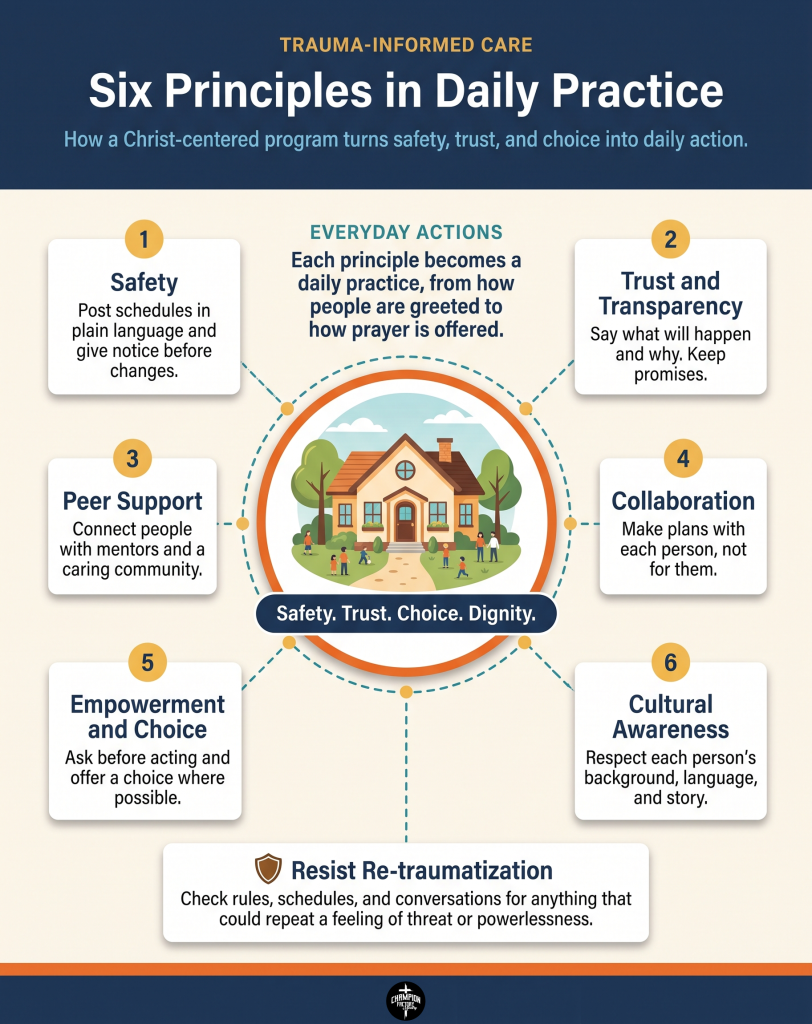
SAMHSA also asks programs to resist re-traumatization. Check rules, schedules, and conversations for anything that could repeat a feeling of threat or powerlessness.
How Can Faith Be Offered Without Pressure?
Faith can be offered as an invitation that a person may accept, decline, or revisit later. Prayer, scripture, and worship can bring comfort. After harm in a spiritual setting, they can also feel unsafe. A trauma-informed program explains what is available, asks permission, and respects every answer without penalty.
Jesus said, "Come to me, all you who are weary and burdened, and I will give you rest" (Matthew 11:28, NIV). That is an invitation, not a demand. A trauma-informed program offers faith in the same spirit:
- Use invitation language, such as "Would you like to pray together?"
- Make prayer, worship, and Bible study optional, with no effect on care.
- Never require a personal story or testimony.
- Let people choose the timing. Quiet presence is also care.
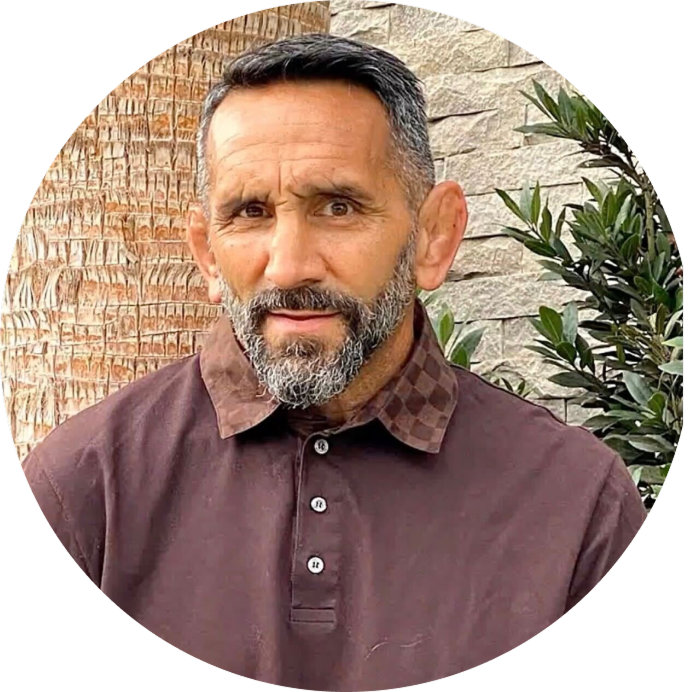
"Prayer is always an invitation. A person can say yes, no, or not yet, and their care stays the same." Todd Medina, President & Founder
Faith does not replace professional care. Research on faith in recovery is promising but limited. A 2019 meta-analysis of randomized trials found small positive effects, mostly in studies of 12-step programs, and called for more research. No program can promise a result.
The ministry's Nourish program supports growth in faith, purpose, and truth. Programs like it fit trauma-informed practice when participation is a choice.
Where Does Ministry Care End and Professional Care Begin?
A ministry offers practical care, mentorship, encouragement, and faith-centered support. Licensed counselors, doctors, and legal advocates provide clinical, medical, and legal help. A trauma-informed ministry knows the difference, says it clearly, and helps people reach professional support when they need it. Each person and their licensed providers decide the pace of trauma treatment.
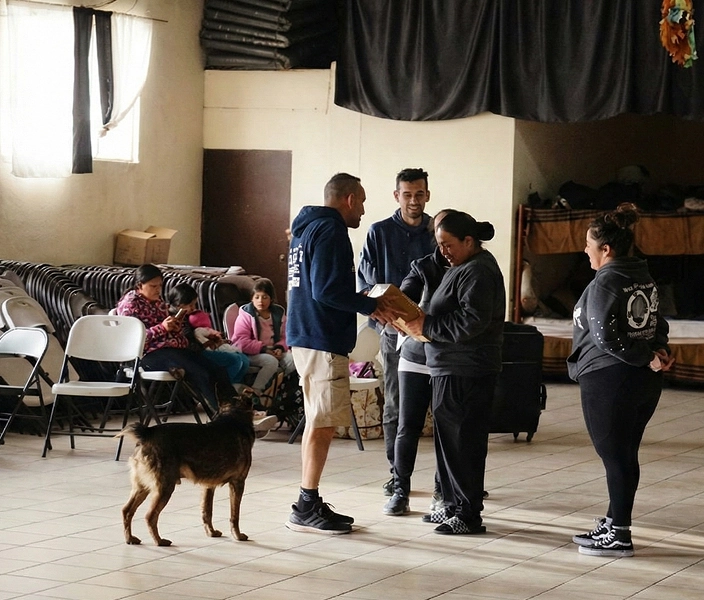
Champion Factory Ministry's Rescue and Recovery program supports people who have experienced trafficking, exploitation, abuse, or unsafe living situations. Care may include help with immediate needs, safe transitions, mentorship, encouragement, and faith-centered guidance. The work happens in partnership with appropriate organizations.
"From a governance view, clear limits protect the people we serve. We offer practical care, mentorship, and faith-centered support, and we refer people to licensed professionals for clinical, medical, and legal help." Art Montgomery, Global Evangelism Strategy Architect & Board Visionary Luminary
The U.S. Department of Justice's Office for Victims of Crime says trauma-informed care aims to restore a survivor's feelings of safety, choice, and control. To see how the program runs, read a typical week in Rescue and Recovery.
When a need goes beyond the ministry's role, a trauma-informed team explains why, offers options, and asks permission before making a connection. This keeps the person in control.
If you or someone you know needs help with trauma symptoms, substance use, or safety, contact a licensed professional or one of these services:
- Emergency: Call 911.
- Crisis: Call or text 988.
- Substance use and mental health: Call the SAMHSA National Helpline at 1-800-662-4357.
- Trafficking: Call the National Human Trafficking Hotline at 1-888-373-7888 or text 233733.
Questions to Ask Any Recovery Program
- How do you explain rules and schedules before they apply?
- How do you protect privacy?
- Are spiritual activities optional?
- How do you work with licensed professionals?
What Language Respects Dignity?
Respectful language describes experiences, not defects. It avoids labels, shame, and graphic detail. A trauma-informed program says "person in recovery" instead of "addict" and "person who experienced trafficking" instead of a label that defines a whole life. Words can add to shame or support restoration.
| Instead Of | Try |
|---|---|
| Addict | Person with a substance use disorder |
| Relapse | Return to use or setback |
| Broken | Has been through hard experiences |
| Noncompliant | Not ready for this step yet |
Christian teaching holds that every person has God-given worth, and language should reflect it. Name hard experiences plainly and briefly, and leave out graphic detail about trafficking, abuse, or crisis. When you are unsure, ask a person how they want to be described.
What Does Long-Term Restoration Look Like?
Long-term restoration means support that continues after the first weeks. SAMHSA describes four dimensions that support recovery: health, home, purpose, and community. A ministry can support these through steady mentorship, practical care, safe connections, and spiritual encouragement, while licensed professionals provide clinical care. No program can guarantee an outcome, and recovery looks different for each person.
- Health: Encourage people to connect with medical and counseling care.
- Home: Support safe, stable living and careful transitions.
- Purpose: Support meaningful activity, such as school, work, volunteering, or family care.
- Community: Offer relationships that bring support, friendship, and hope.
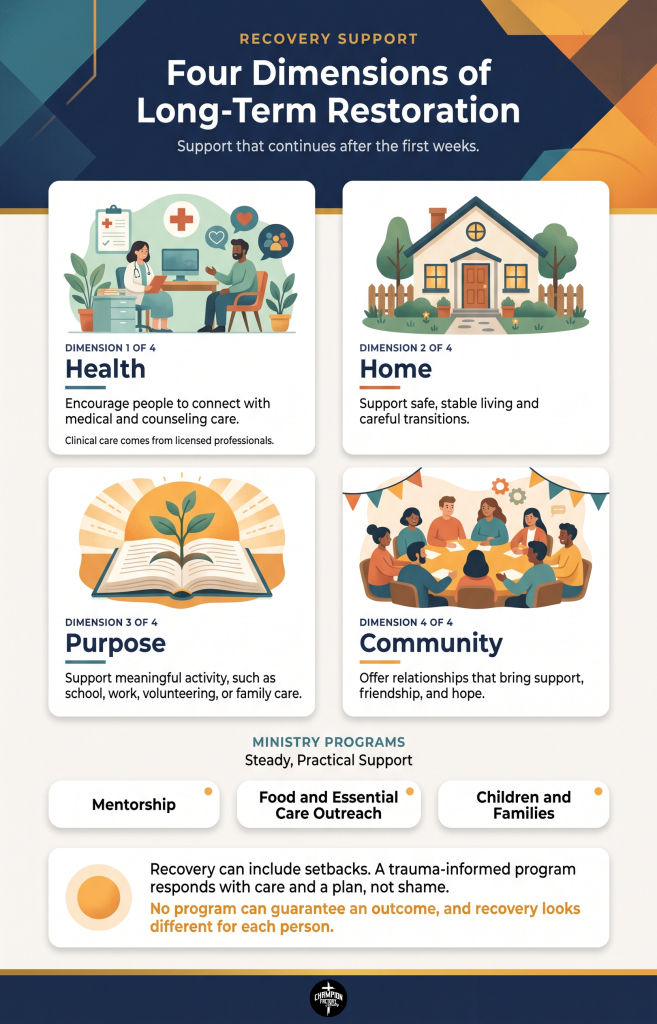
The ministry's mentorship, food and essential care outreach, and children and families programs focus on steady, practical support.
"Support does not have to stop after the first weeks. Mentorship and practical care can continue as a person's needs change." Todd Medina, President & Founder
Jesus told a parable about a Samaritan who bandaged a stranger's wounds, then "brought him to an inn and took care of him" (Luke 10:34, NIV). The story shows immediate help followed by continued care. Recovery can include setbacks. A trauma-informed program responds with care and a plan, not shame.
Take a Next Step Toward Safe and Dignified Support
Trauma-informed care makes a Christ-centered recovery program safer and more respectful. Safety, trust, choice, and dignity shape how people are greeted, how rules are explained, and how faith is offered. You can take one small step today, such as reflecting, praying, or reaching out for support.
Choose one step that fits you:
- Reflect. Think of one way you can ask before acting and offer a choice.
- Pray. Take a quiet moment to pray for people rebuilding after hardship and for wisdom to serve with care.
- Connect. If you need support, contact the ministry or reach a licensed professional. If you want to help, get involved or give.
You can also read stories of hope from the ministry's programs.
FAQ
What Is Trauma-Informed Care?
It is an approach that assumes people may have experienced hardship and builds safety, trust, and choice into every interaction. It differs from trauma therapy, which licensed professionals provide.
Is Trauma-Informed Care the Same as Counseling?
No. Counseling and trauma therapy treat symptoms and come from licensed professionals. Trauma-informed care shapes how a program runs so its rules and settings do not cause more harm.
Will I Be Pushed to Pray or Share My Story?
In a trauma-informed program, no. Faith is offered by invitation. You can say yes, no, or not yet. You do not need to share your story to receive care.
Does a Christ-Centered Program Replace Therapy?
No. A ministry supports recovery through practical care, mentorship, and faith-centered encouragement. It points people to licensed counselors, doctors, and legal advocates when needed.