





Leaving a crisis rarely feels like relief at first. Someone stepping away from addiction, trafficking, abuse, or an unsafe home often arrives exhausted, unsure who to trust, and worried about what comes next. Most guides describe withdrawal symptoms and little else.
At Champion Factory Ministry, we see the first 30 days as a season for building stability, not proving a transformation. Safety, basic needs, rest, and steady relationships come first. Faith is offered as present hope, not a test to pass. This article explains what stability means, how to handle setbacks, and how others can help. Faith-based support works alongside medical and professional care, never in place of it.
What Does Stability Mean in the First Month of Recovery?
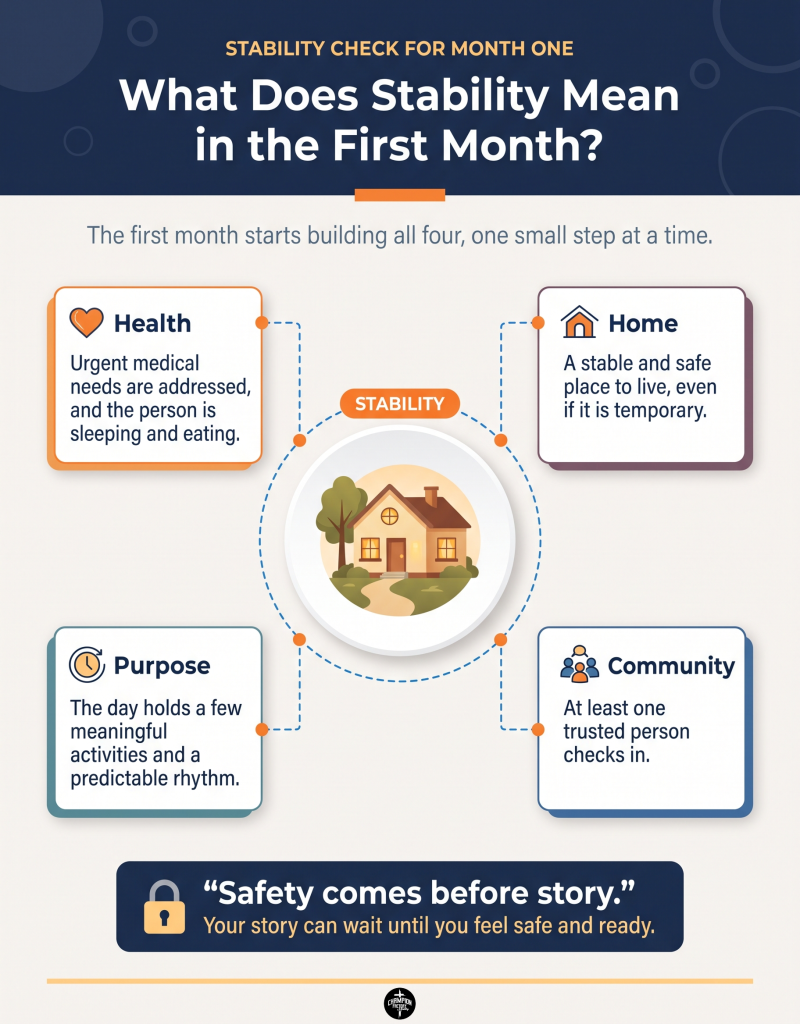
The first 30 days of recovery are about stability, not a finished change. Stability means a person is safe, their basic needs are met, and they are no longer facing the crisis alone. SAMHSA describes four supports for a life in recovery: health, home, purpose, and community. The first month starts building all four, one small step at a time.
SAMHSA's working definition of recovery calls it "A process of change through which individuals improve their health and wellness, live a self-directed life, and strive to reach their full potential." Notice the word process. You are not expected to finish in a month.
A Simple Stability Check for Month One
- Health: urgent medical needs are addressed, and the person is sleeping and eating.
- Home: there is "a stable and safe place to live," even if it is temporary.
- Purpose: the day holds a few meaningful activities and a predictable rhythm.
- Community: at least one trusted person checks in.
You Do Not Have to Tell Your Story to Get Help
Many people fear they must explain everything first. They do not. Psychiatrist Judith Herman writes in Trauma and Recovery, "The central task of the first stage is the establishment of safety." Your story can wait until you feel safe and ready.
What Do the First Days and Weeks Often Look Like?
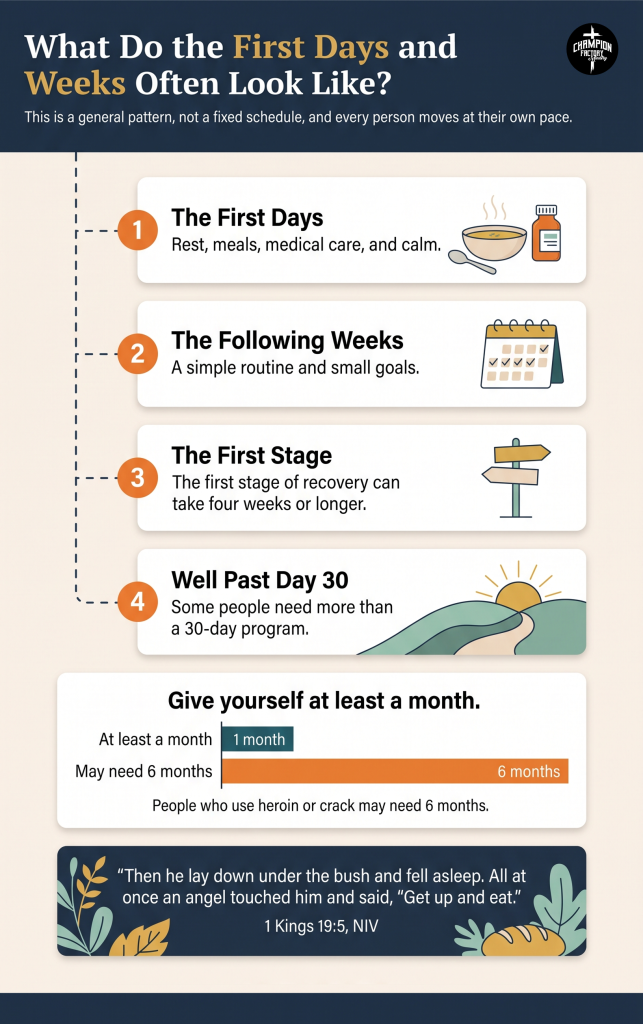
In 1 Kings 19, an exhausted Elijah is ready to give up, and God's first answer is sleep and food. The early days of recovery often look the same: rest, meals, medical care, and calm. The following weeks add a simple routine and small goals. This is a general pattern, not a fixed schedule, and every person moves at their own pace.
SAMHSA's guide for people leaving detox says the first stage of recovery "can take four weeks or longer." It advises, "Give yourself at least a month. People who use heroin or crack may need 6 months."
For example, a mother leaving an unsafe home might spend her first week sleeping, getting her children settled, and learning the names of the people helping her. That is real progress.
Why God Started With Bread and Sleep
Then he lay down under the bush and fell asleep. All at once an angel touched him and said, "Get up and eat." (1 Kings 19:5, NIV)
God did not lecture Elijah or rush him. He met his body's needs first and spoke to his fears later in the chapter. Care in the first month follows that same order.
Get Medical and Crisis Help When You Need It
Stopping some substances suddenly can be dangerous, so seek medical guidance before or during withdrawal. NIDA notes that detoxification alone without subsequent treatment generally leads to a return to drug use. Trauma often needs a licensed counselor too.
If you need help now:
- Immediate danger: call 911
- Crisis or thoughts of suicide: call or text 988
- Trafficking: call the National Human Trafficking Hotline at 1-888-373-7888 or text 233733
- Substance use: call the SAMHSA National Helpline at 1-800-662-4357
How Does Faith Help in Early Recovery Without Pressure?
Many people worry that a faith-based program will require belief before it offers help. In healthy faith-based care, it does not. Faith is offered as an invitation through prayer, scripture, and worship for those who want it. Care, safety, and dignity never depend on a person's response.
Matthew 12:20 (NIV) says, "A bruised reed he will not break, and a smoldering wick he will not snuff out, till he has brought justice through to victory." Matthew applies these words to the way Jesus healed and served quietly. Early recovery calls for that same patience.
"Prayer is often the last thing someone asks for in the first week, and that is okay. We keep the invitation open and trust God's timing more than our own." Todd Medina, President & Founder
Questions to Ask Any Program in the First Month
- Is care offered whether or not a person shares the program's faith?
- Are medical and counseling needs referred to licensed professionals?
- Does anyone promise instant healing or a guaranteed outcome? If so, be cautious.
SAMHSA's trauma-informed approach centers on six principles, including safety, trustworthiness and transparency, and empowerment, voice, and choice. Ask how a program practices them.
What If Someone Has a Setback in the First 30 Days?
A setback in the first month does not mean recovery has failed. SAMHSA calls setbacks "a natural, though not inevitable, part of the recovery process." NIDA notes that relapse does not mean treatment has failed. A slip is a signal to adjust support, return to care, and keep going with people who will not walk away.
"Good partnership is tested after a setback. Our role is to stay in the relationship, keep accountability steady, and make it easy for someone to come back." Art Montgomery, Global Evangelism Strategy Architect & Board Visionary Luminary
What the Ministry Has Learned From Recovery Work in Mexico
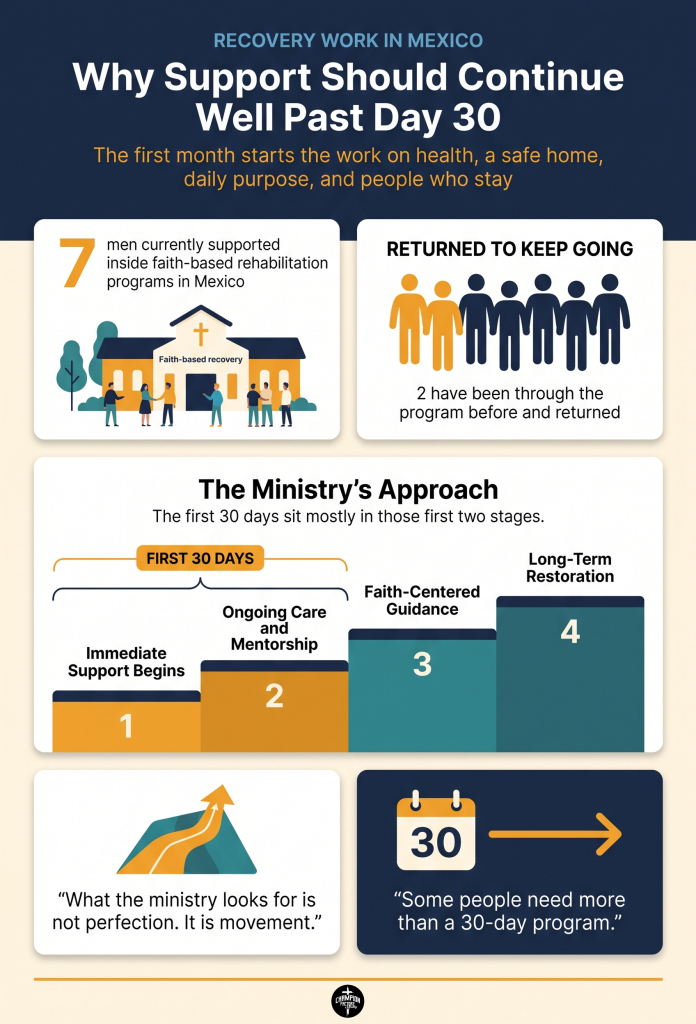
Champion Factory Ministry "currently supports seven men inside faith-based rehabilitation programs in Mexico." These structured, Christ-centered programs are "operated by the ministry's partners in Mexico." "Two of those men have been through the program before and have returned in their continued fight for freedom." The ministry is honest that change "does not happen in every case, and it does not happen on a fixed timeline." "What the ministry looks for is not perfection. It is movement."
Readiness cannot be forced. Ministry outreach shows that "people must want help for help to truly work."
How Can Families, Mentors, and Churches Help in the First Month?
Start by asking one simple question: "What do you need today?" In the first month, the most helpful support is practical and steady. Bring a meal, offer a ride to an appointment, sit with someone through a hard evening, and keep showing up. Leave questions about the past for later, and let the person set the pace.
SAMHSA's guide says, "Going it alone is the most difficult way to stay away from drugs and alcohol." Galatians 6:2 (NIV) says, "Carry each other's burdens, and in this way you will fulfill the law of Christ."
Simple Ways to Help at Home
- Keep the home calm and predictable.
- Say clearly that a slip will not end your support.
- Get support for yourself too, such as a counselor or support group.
How Churches and Partners Can Support Recovery
A family the ministry supported through a crisis shows a helpful order. The ministry helped "stabilize the family's circumstances, connecting them with protective support, and providing practical aid." The family was then placed "in a safe, protected environment with ongoing support." Your church can follow the same order through meals, rides, mentoring, and prayer. You can also volunteer or give.
Why Support Should Continue Well Past Day 30
The first month starts the work on health, a safe home, daily purpose, and people who stay. The ministry's approach moves from "Immediate Support Begins" to "Ongoing Care and Mentorship," "Faith-Centered Guidance," and "Long-Term Restoration." The first 30 days sit mostly in those first two stages. As the Mexico story puts it, "Some people need more than a 30-day program."
If you or someone you love is starting over, choose one need to meet today and one person to call. You can also contact the ministry to learn about Rescue and Recovery support. Then pray for patience.
FAQ
Does Faith-Based Recovery Replace Detox or Counseling?
No. Faith-based support works alongside medical and clinical care. The ministry's Rescue and Recovery work happens "in partnership with appropriate organizations and resources that help ensure safety and stability."
What If My Crisis Was Not Addiction?
The same priorities apply. People leaving trafficking, exploitation, abuse, or an unsafe home also need safety, basic care, rest, and trusted people first. Rescue and Recovery care "may include assistance with immediate needs, safe transitions, mentorship, encouragement, and faith-centered guidance."
What Kind of Support Comes After the First Month?
Plan for continuing care well beyond day 30. That can include counseling, a steady mentor, and discipleship through Nourish.