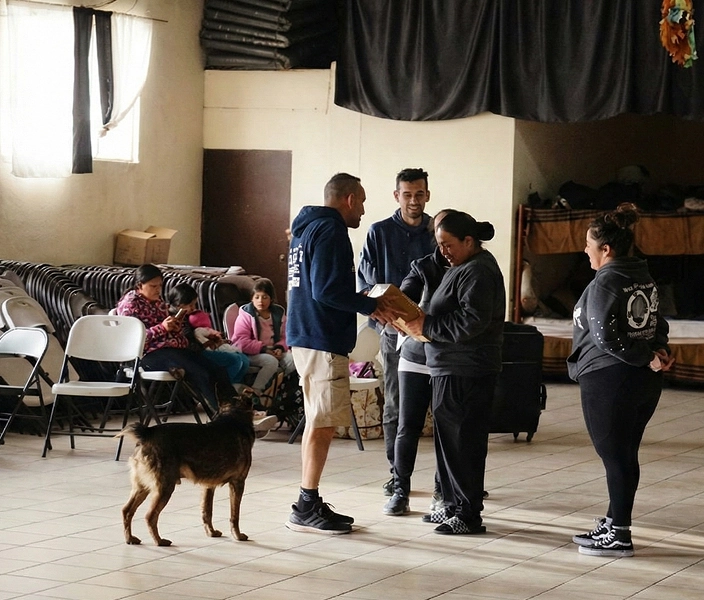






When a family you know loses a job, a home, or a loved one, you want to help. But you may feel unsure what scripture asks, how to help without embarrassing anyone, or how long to stay.
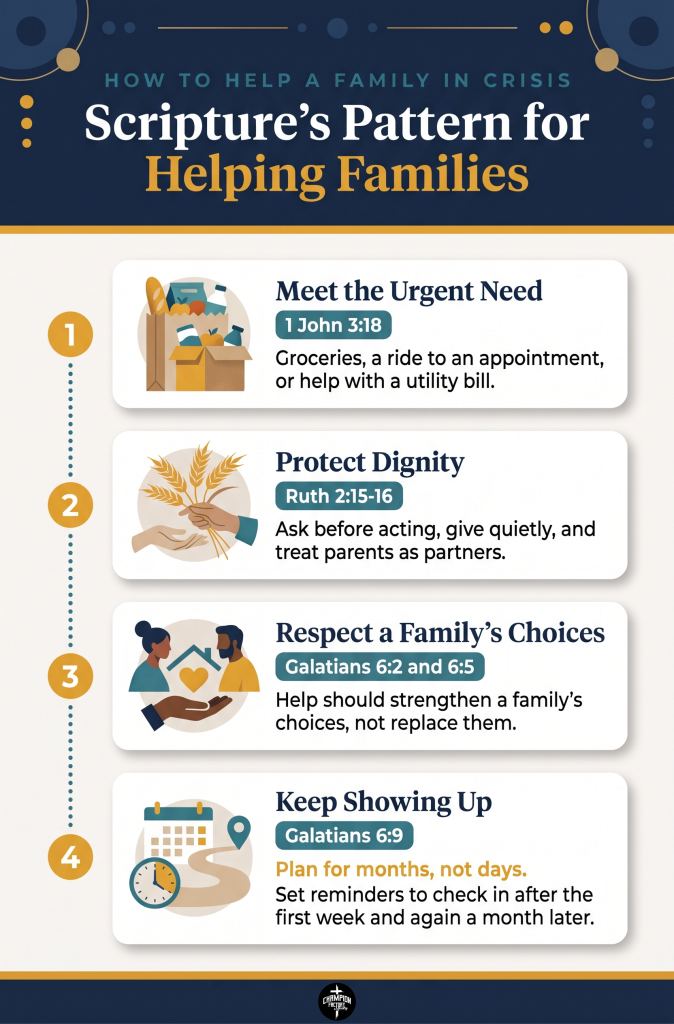
At Champion Factory Ministry, we read scripture as treating a family's crisis as a shared responsibility. God's people carry it with the family, not for them. That means meeting urgent needs quickly, protecting dignity, and staying long enough for stability to return. Below are the passages that show how.
What Does the Bible Say About Helping Families in Crisis?
James 1:27 (NIV) answers this plainly: "Religion that God our Father accepts as pure and faultless is this: to look after orphans and widows in their distress and to keep oneself from being polluted by the world." In James's day, widows and orphans were among the households most exposed to hardship. Caring for families in crisis is central to genuine faith.
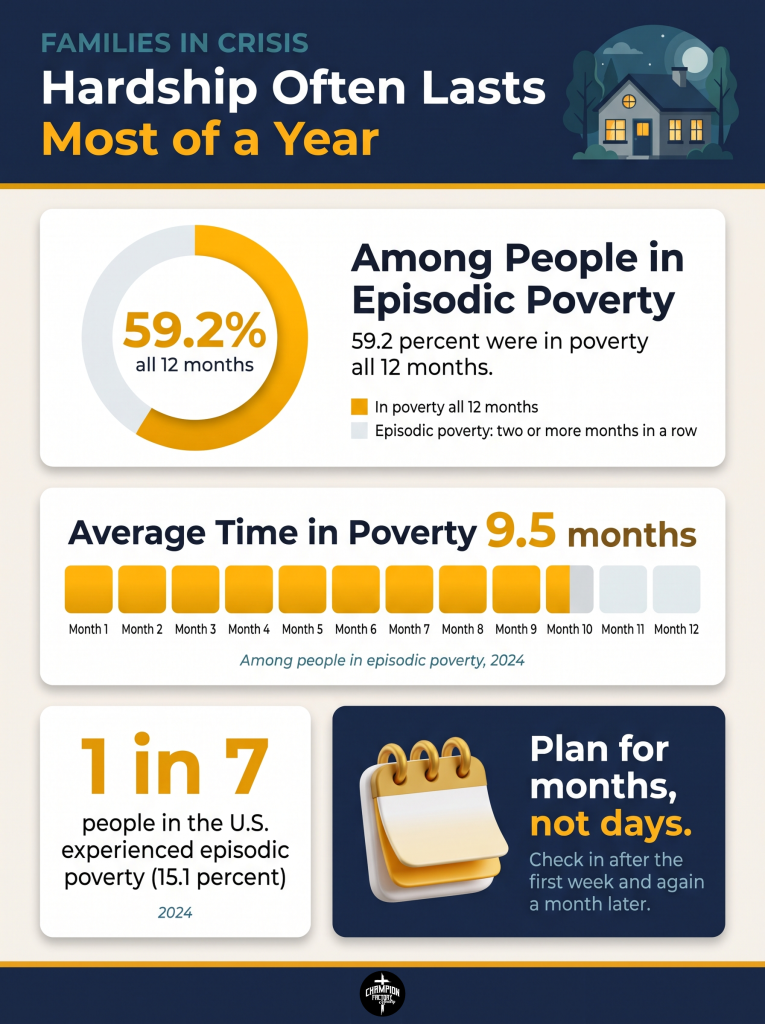
In 2024, about 1 in 7 people in the U.S. (15.1 percent) experienced episodic poverty, meaning two or more consecutive months in poverty, according to the U.S. Census Bureau.
Love That Goes Beyond Kind Words
Prayer matters, but 1 John 3:18 (NIV) asks for more than words: "Dear children, let us not love with words or speech but with actions and in truth." That might mean groceries, a ride to an appointment, or help with a utility bill.
How Can You Help a Family Without Hurting Their Dignity?
You may hold back because you fear your help will embarrass a family that is already hurting. The answer is to meet the real need while leaving the family's honor and choices in place. Ask before acting, give quietly, and treat parents as partners.
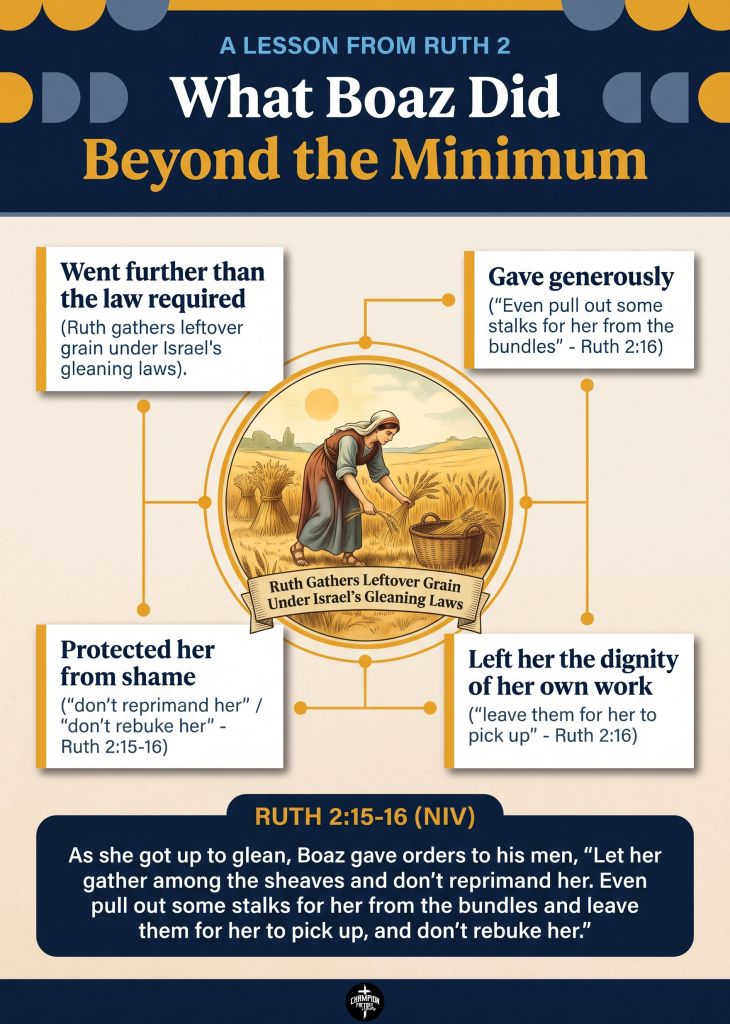
In the book of Ruth, famine and the deaths of their husbands leave Naomi and Ruth in need. Ruth gathers leftover grain under Israel's gleaning laws.
What Boaz Did Beyond the Minimum
Boaz went further than the law required, as Ruth 2:15-16 (NIV) shows: "As she got up to glean, Boaz gave orders to his men, 'Let her gather among the sheaves and don't reprimand her. Even pull out some stalks for her from the bundles and leave them for her to pick up, and don't rebuke her.'"
He gave generously, protected her from shame, and left her the dignity of her own work.
What Is the Difference Between Carrying a Burden and Taking Over?
Carrying a burden means helping with what a family cannot manage alone. Taking over means making their decisions for them. Galatians 6:2 (NIV) says, "Carry each other's burdens, and in this way you will fulfill the law of Christ." Verse 5 adds, "for each one should carry their own load." Good help holds both.
Verse 5 does not blame anyone for hardship. Help should strengthen a family's choices, not replace them.
"You cannot force someone to change. But you can show up without judgment and give them a door to walk through." Todd Medina, President & Founder
A Gas Station Stop in Mexico
During a stop at a gas station in Mexico, a team met a mother and her children in need. They bought food, prayed with the family, and contacted a trusted ministry associate to help assess what support was appropriate and safe. Then they connected the family with information about resources for longer-term support. The ministry's takeaway: "Compassion and wisdom are not opposites."
How Long Should You Keep Helping a Family in Crisis?
Plan for months, not days. Set reminders to check in after the first week and again a month later. Galatians 6:9 (NIV) speaks to tired helpers: "Let us not become weary in doing good, for at the proper time we will reap a harvest if we do not give up."
The same Census report found that people in episodic poverty spent an average of 9.5 months in poverty, and 59.2 percent were in poverty all 12 months.
"The first visit matters, but families learn to trust the people who are still calling months later." Art Montgomery, Global Evangelism Strategy Architect & Board Visionary Luminary
How Long-Term Partnerships Build Trust
Several years ago, the ministry began delivering food to one of the larger orphanages in Mexico. Its model is simple: "build the relationship first, let the relationship open doors that provision alone never could."
Helping Families With Dignity, Wisdom, and Patience
Scripture's pattern is clear: meet the urgent need, protect dignity, respect a family's choices, and keep showing up. This week, pray for one family by name and ask what would help most. To serve with others, explore Support for Children and Families or ways to get involved.
FAQ
Does the Bible Say Family Should Help Family First?
Isaiah 58:7 (NLT) says, "do not hide from relatives who need your help." Relatives have a clear role, and the wider church steps in when family cannot meet the need alone.
When Should a Family Be Connected to Professional Help?
When a crisis involves abuse, addiction, or mental health needs, connect the family with trained professionals. Churches support this care but do not replace it. Call 911 for immediate danger, call or text 988 for a mental health crisis, and dial 211 for local services.