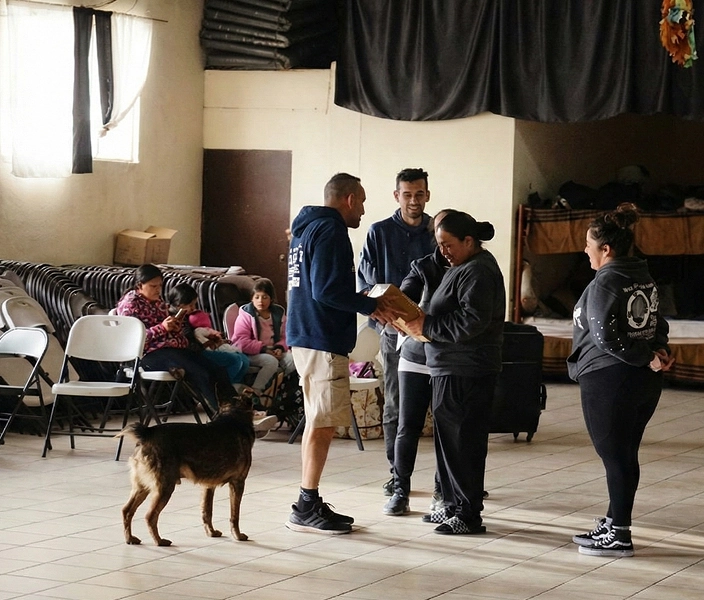






A worship leader might close a service with words like these from Numbers 6:24-26 (NLT): "May the LORD bless you and protect you. May the LORD smile on you and be gracious to you. May the LORD show you his favor and give you his peace." That moment is called a benediction. You may hear it every week, or only now and then, and still wonder what it means.
This article explains what a benediction is, where it appears in Scripture, and how it differs from a closing prayer. You will also see why churches include it and what it can offer you when you leave worship. No church background is needed.
What Does Benediction Mean in a Church Service?
A benediction is a short blessing spoken over a congregation, usually at the end of Christian worship. The word comes from Latin and means to speak well. A pastor, priest, or worship leader often says it. The words ask for or announce God's care for the people who gathered, then send them back into their daily lives.
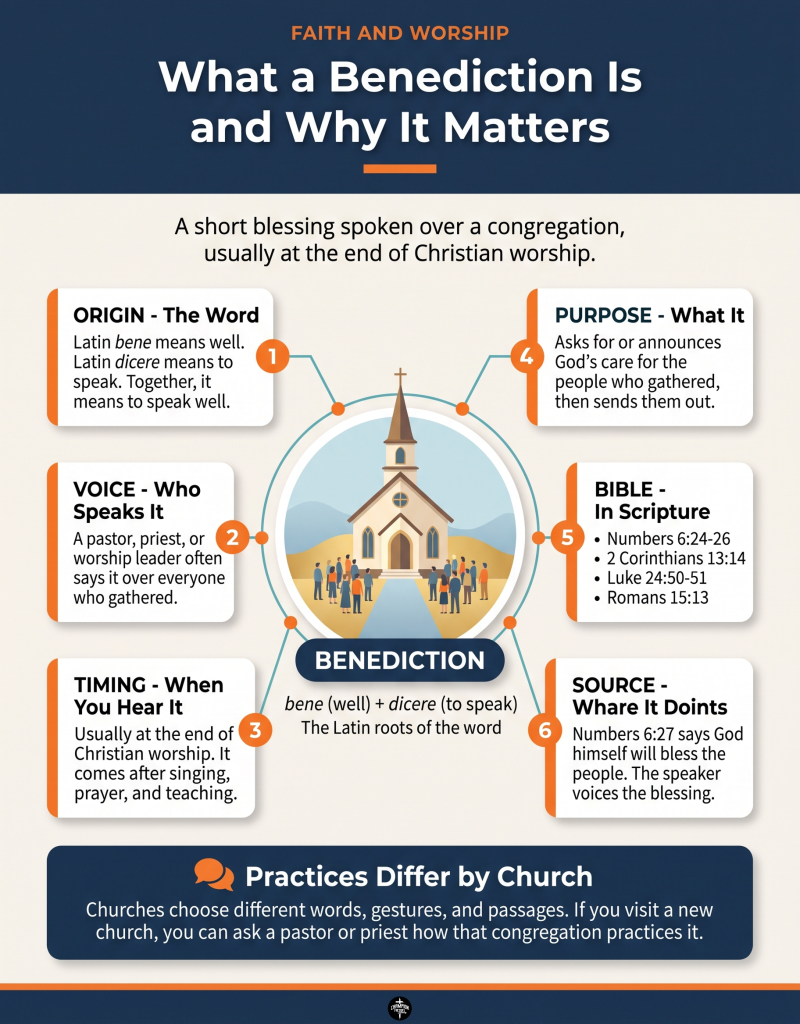
Encyclopaedia Britannica describes a benediction as a verbal blessing, usually spoken by a priest or minister at the end of a religious service. The English word joins the Latin bene, meaning well, and dicere, meaning to speak, according to Dictionary.com.
A benediction is separate from the announcements and the closing song. It is a set of spoken words addressed to everyone in the room.
Where Does the Bible Show Benedictions?
The Bible records many blessings that churches use as benedictions. The best known is the priestly blessing in Numbers 6:24-26. Another is Paul's blessing in 2 Corinthians 13:14. Luke 24:50-51 shows Jesus blessing his disciples as he leaves them. These passages give churches words to use and show that blessing has long been part of life together.
Numbers 6 and the Priestly Blessing
In Numbers 6:22-27, God tells Moses how Aaron and his sons should bless Israel. Verse 27 says God himself will bless the people. The blessing points to God as its source, and the speaker only voices it. Britannica notes that Martin Luther placed this blessing in his German mass, and Lutheran churches still use it.
Blessings in Paul's Letters and the Gospels
Paul closed his second letter to the Corinthians with a blessing that churches still use. 2 Corinthians 13:14 (NLT) says, "May the grace of the Lord Jesus Christ, the love of God, and the fellowship of the Holy Spirit be with you all."
Luke 24:50-51 (ESV) shows Jesus blessing his disciples: "And he led them out as far as Bethany, and lifting up his hands he blessed them. While he blessed them, he parted from them and was carried up into heaven."
These passages show blessing at moments of gathering and parting. They do not set a required form for worship.
How Is a Benediction Different From a Closing Prayer?
A benediction blesses the people who gathered. A closing prayer can bring any request to God. A doxology praises God. A call to worship opens the service. Churches arrange these pieces in different ways, and some combine them. Knowing the difference helps you follow what is happening in worship.
| Term | What It Does | Where You Often Hear It |
|---|---|---|
| Benediction | Speaks a blessing over the people | End of worship |
| Closing Prayer | Brings requests, thanks, or concerns to God | End of a service or meeting |
| Doxology | Praises God | Varies by church |
| Call to Worship | Invites the congregation to worship | Start of worship |
| "God Bless You" | Wishes good for another person | Everyday conversation |
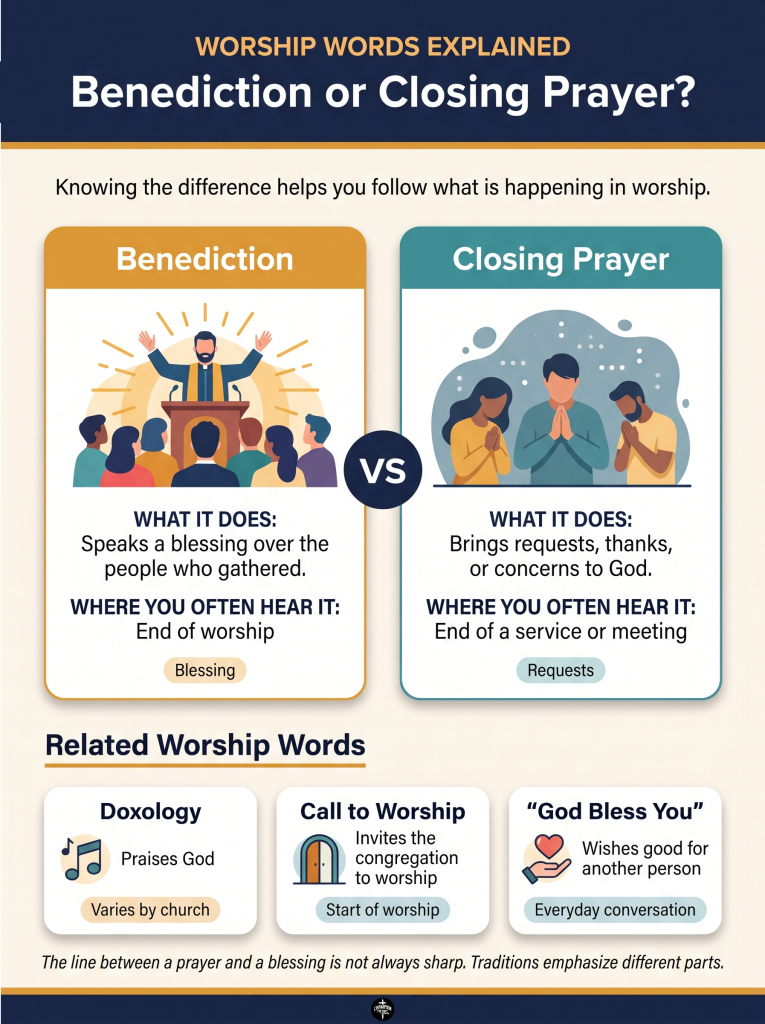
The line between a prayer and a blessing is not always sharp. Writer and minister Mary Fairchild, writing for Learn Religions, describes a benediction as a way of asking God for blessing, help, guidance, and peace. Kyle Norman, a priest writing for Crosswalk, describes a blessing as words that announce God's presence and favor. Both views take the words seriously, and traditions emphasize different parts.
Why Do Churches End Worship With a Benediction?
Churches end worship with a benediction to send people back into daily life with words of blessing. It marks a clear close to the gathering and reminds worshipers that God's care is with them wherever they go. Scripture records many blessings, but it does not set one required order of service. Churches choose how to close, and many choose a benediction.
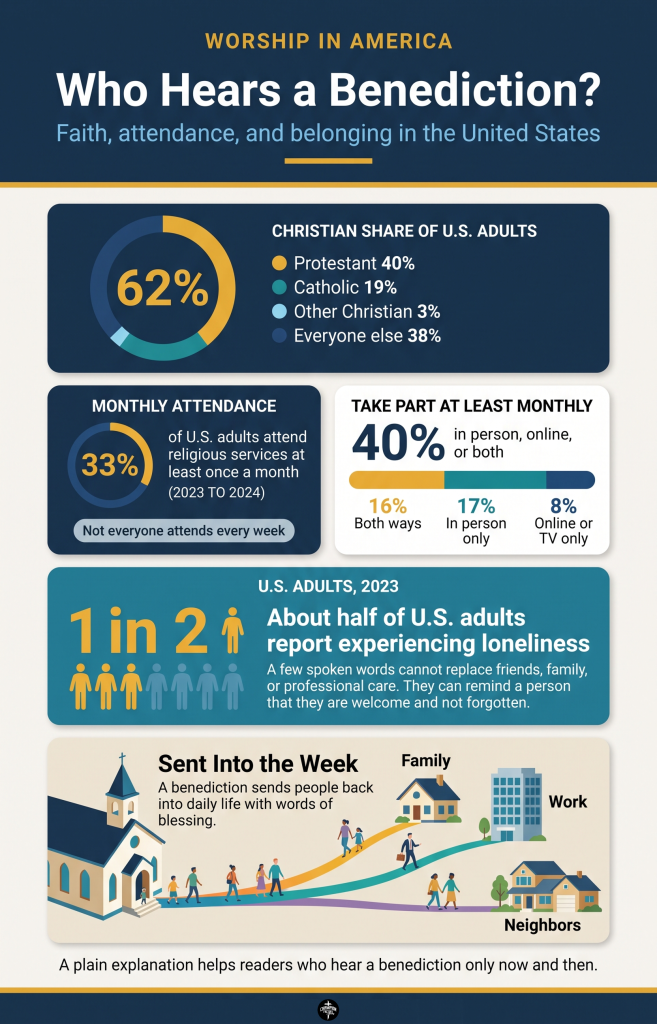
A typical service includes singing, prayer, Scripture reading, and teaching. The benediction comes last. A worship leader might speak Numbers 6:24-26 or 2 Corinthians 13:14, the congregation says Amen, and people head out to family, work, and neighbors.
A benediction does three things for a congregation:
- It closes the gathering with care.
- It reminds people that God's care is with them.
- It sends people toward family, work, and neighbors.
"Worship and outreach belong together. A blessing at the close of a gathering reminds people that what they received is meant to be shared with others." Art Montgomery, Global Evangelism Strategy Architect & Board Visionary Luminary
Not everyone attends every week. Pew Research Center's national religion study found that 62% of U.S. adults identify as Christian and 33% attend services at least monthly. A plain explanation helps readers who hear a benediction only now and then.
How Traditions Differ
Traditions use different words, gestures, and passages. Britannica notes that some churches prefer Paul's blessing in 2 Corinthians 13:14 over the blessing in Numbers 6. Roman Catholic churches also hold a separate devotion called Benediction of the Blessed Sacrament. It is different from a closing blessing.
Practices differ, so this article describes common patterns only. If you visit a new church, you can ask a pastor or priest how that congregation practices it.
What Can a Benediction Offer When Life Feels Heavy?
A benediction offers words of care that you can receive even when you feel tired or unsure. It does not ask you to feel a certain way. It does not promise a certain outcome. It speaks care over you and points you toward God's presence as you leave worship and return to your week.
"People come to worship with real worries and real losses. A blessing cannot solve those. It can remind a person that they are welcome and not alone." Todd Medina, President & Founder
The U.S. Surgeon General's advisory on loneliness reports that about half of U.S. adults experience loneliness. A few spoken words cannot replace friends, family, or professional care. They can remind a person that they are welcome and not forgotten.
Psalm 121:8 (NLT) says, "The LORD keeps watch over you as you come and go, both now and forever." This verse expresses trust in God's care. It does not promise that hard things will not happen.
If sadness, worry, or grief lasts or feels overwhelming, please talk with a counselor, doctor, or another trusted professional. Professional support and spiritual encouragement can work together.
How Can You Receive a Benediction and Share a Blessing?
You can receive a benediction by listening, pausing, and accepting the words as care spoken over you. You can share a blessing by speaking short, sincere words of encouragement to family, friends, and neighbors. Formal benedictions in worship follow each church's customs. Everyday blessings are simple, kind, and free of pressure.
Receiving the Benediction in Worship
- Pause when the leader begins. Let the room settle.
- Listen to each line without rushing to leave.
- Receive the words as offered care, even if you feel unsure.
- Say "Amen" if your church invites a response.
- Choose one phrase to remember through the week.
Sharing Blessings at Home
Families and friends can offer simple blessings at meals, at bedtime, or before a hard day. Romans 15:13 (NLT) works well as a prayer of encouragement: "I pray that God, the source of hope, will fill you completely with joy and peace because you trust in him. Then you will overflow with confident hope through the power of the Holy Spirit."
"Children learn the words of faith by hearing them often. A short blessing spoken at bedtime or before school gives a child words to remember." Todd Medina, President & Founder
You can also write your own. Here is a short example:
"May God's care be with you today. May you know you are loved and not alone. May you find steady hope for the day ahead."
A blessing like this is a prayer and an expression of care. It is not a promise of any outcome.
Receive the Blessing and Share It Through Your Week
A benediction closes worship with spoken care and sends you back into daily life. Scripture holds many examples, and traditions practice it in different ways. Its purpose stays the same, which is to offer blessing, welcome, and hope without pressure.
This week, listen closely when you hear a blessing spoken. Choose one phrase to remember. If someone you know needs encouragement, share a short blessing with them.
Champion Factory Ministry offers spiritual encouragement and practical care alongside, and not in place of, professional support. You can grow in faith through Nourish, our discipleship and spiritual growth program. You can find encouragement through Mentorship, or serve with us through Get Involved.
FAQ
What Is the Difference Between a Benediction and a Blessing?
A blessing is any set of words that asks for or announces God's care. A benediction is a blessing spoken over a group, usually at the end of worship.
Is a Benediction a Prayer?
Writers describe it both ways. Mary Fairchild calls it a request for God's blessing, and Kyle Norman calls it an announcement of God's presence. Your church may emphasize one view or both.
Does the Bible Require a Benediction in Every Service?
Scripture records many blessings, but it does not set one required order of worship. Churches choose their own customs, and many include a benediction.
Who Can Give a Benediction?
Churches answer this differently. Britannica notes that a priest or minister commonly speaks it in worship. Outside worship, anyone can speak kind words of encouragement to others. Your church's leaders can explain how their congregation handles it.
What Is Benediction of the Blessed Sacrament?
It is a separate Roman Catholic devotional service. Britannica describes its central act as blessing the congregation with the eucharistic host. It is different from the closing blessing in many other churches.
What Are Common Benediction Verses?
Churches often choose from these passages:
- Numbers 6:24-26, the priestly blessing
- 2 Corinthians 13:14, Paul's closing blessing to the Corinthians
- Romans 15:13, Paul's prayer for joy, peace, and hope