






Many people hear the word humility and picture someone who stays quiet, avoids credit, or puts up with poor treatment. That picture leaves people confused about what the Bible actually teaches. It can even leave hurting people feeling like they must keep shrinking to be faithful.
This article explains what biblical humility means, how Jesus modeled it, and how it differs from low self-esteem. You will find practical steps to grow in humility along with scripture that puts the idea in its proper context.
What Does Biblical Humility Actually Mean
Biblical humility means seeing yourself honestly before God. It is not a low opinion of yourself and not a performance of weakness. Humility recognizes your limits, your need for God, and the value of other people alongside your own worth.
Paul described this clearly when he told believers not to act out of selfish ambition, but to value others above themselves without ignoring their own interests (Philippians 2:3 to 4, NIV). That instruction assumes a person already knows their own worth.
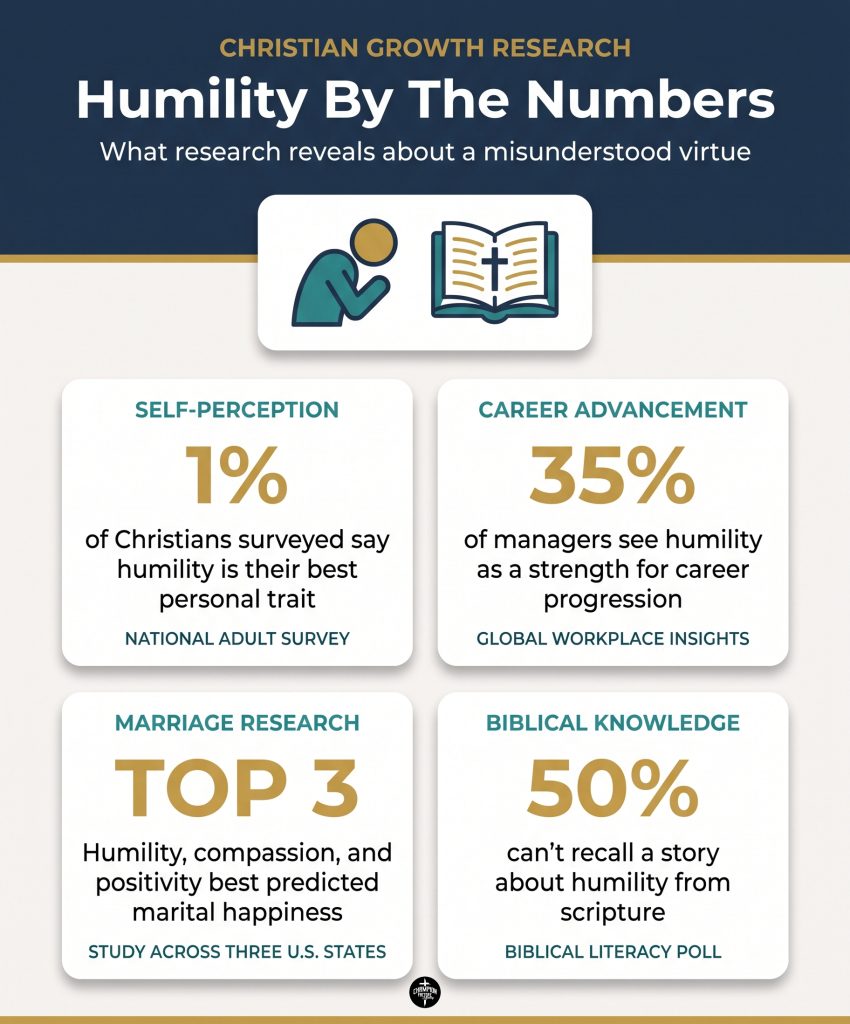
A recent survey by Barna Group found that very few Christian adults described themselves as strong in humility, and humility ranked among the least chosen traits people look for in a leader. That gap suggests many Christians still misunderstand what humility looks like in practice.
Biblical humility is not about disappearing. It is about seeing yourself clearly, without inflating or shrinking your worth.
How Jesus Modeled True Humility
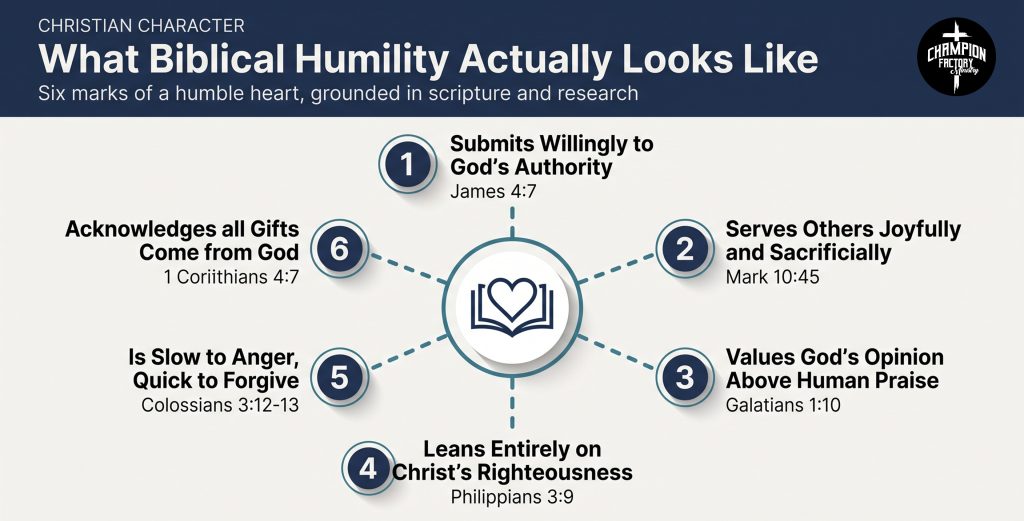
Jesus is the clearest picture of humility in the Bible. He held all authority yet chose to serve others, obey God fully, and give His life out of love rather than force. His humility came from strength, not weakness.
Paul described this mindset in Philippians 2:5 to 8 (NIV), explaining that Christ did not use His equality with God for His own advantage. Instead, He took on human form and humbled Himself even to death on a cross.
"When mentors choose to serve instead of demanding respect, humility stops being a lesson and becomes something young people actually want to imitate." Todd Medina, President & Founder
Practical Steps From Jesus's Example
- Choose to serve others without expecting recognition.
- Obey God even when it costs you comfort or convenience.
- Let love guide decisions instead of personal advantage.
Jesus never diminished His identity to serve others. He set His status aside for a time. That distinction matters for anyone trying to live out humility today.
How Humility Differs From Low Self-Esteem
Biblical humility is not the same as low self-esteem. Humility means an accurate view of yourself, while low self-esteem often means an inaccurate and overly negative one. A person can be humble and still know their worth.
Psychology researchers make this same distinction. A widely cited framework from researcher June Tangney describes humble people as those who see themselves accurately, admit mistakes, stay open to correction, and keep their focus on more than themselves, according to a summary published by the Society for Personality and Social Psychology. That definition lines up closely with the biblical picture of humility as honest self-awareness rather than self-rejection.
Psychology Today's coverage of the topic makes a similar point. Humility is not low self-esteem or self-loathing, and a humble person can still be confident and proud of real achievements.
For Christians, this distinction matters. God does not ask believers to think poorly of themselves. He asks them to see themselves truthfully, as loved and valued, while staying open to growth.
Why Humility Matters for Spiritual Growth
Humility matters for spiritual growth because it opens the door to God's grace and correction. Pride resists growth. Humility invites it. Scripture repeatedly ties humility to receiving grace and drawing closer to God.
James wrote that God opposes the proud but gives grace to the humble (James 4:6, NIV). That single verse explains why so many Christian teachers describe humility as the starting point for growth, not a side effect of it.
Research on spiritual maturity backs this up in an indirect way. A Barna Group study found that most Christians equate spiritual maturity with following biblical rules, rather than describing it as a change in character. Humility offers a fuller picture, since it shapes the heart behind obedience rather than just the actions themselves.
Broader research supports the benefits of humility too. A meta-analysis referenced in continuing education materials from the American Psychological Association links humility to better physical health, greater life satisfaction, and lower depression and anxiety. Spiritual growth and personal wellbeing often move together.
"Every outreach effort we build starts with the same posture Christ modeled, a willingness to serve people we have never met and expect nothing back." Art Montgomery, Global Evangelism Strategy Architect
Practical Ways to Practice Humility Each Day
Humility grows through small, repeated choices rather than one dramatic decision. Simple daily habits build a humble heart over time, especially when practiced inside real relationships.
Try these steps as a starting point.
- Ask someone you trust for honest feedback, and receive it without defending yourself.
- Notice when you want credit, and choose to give it to someone else instead.
- Serve in a way no one will see or thank you for.
- Admit a mistake out loud instead of explaining it away.
- Spend time in prayer focused on listening rather than only asking.
Humility in Relationships and Community
Micah 6:8 (NIV) sums up a humble life as one that acts justly, loves mercy, and walks humbly with God. That verse places humility alongside justice and mercy, not apart from them.
A Utah State University study of more than 1,500 people across three states found that humility, compassion, and positivity were the three character traits that most reliably predicted marital happiness. One researcher on the study said it was a surprise to see these traits matter more than communication style alone. Humility shapes more than a person's private walk with God.
Does Humility Mean Accepting Mistreatment
No. Biblical humility never asks a person to accept abuse, exploitation, or ongoing harm. Humility is about your posture toward God and others. It is not permission for someone else to mistreat you.
Some readers who have lived through hardship or unsafe relationships have heard humility used to justify staying quiet about real harm. That is not what scripture teaches. Jesus described His own humility as gentle, and He offered rest, not exhaustion, to those who were weary and burdened (Matthew 11:28 to 29, NIV).
Humbling yourself before God, as described in 1 Peter 5:6 (NIV), is a choice you make toward God. It is not a command to submit to someone who is causing you harm.
"We tell every person we walk with that humility before God never means silence in the face of harm. Their safety always comes first." Todd Medina, President & Founder
If you are navigating the effects of abuse, trafficking, or exploitation, your safety and wellbeing matter deeply. Champion Factory Ministry's rescue and recovery support walks alongside individuals with dignity and care, and a licensed counselor or trusted pastor can offer support this article cannot replace. Reaching out for that kind of help is itself a form of wisdom, not a failure of faith.
Choosing a Humble and Whole Heart Today
Biblical humility is good news, not a burden. It frees you from proving your worth while still holding onto the truth that you are valued. It asks you to see God, others, and yourself honestly, and it grows through steady, everyday choices rather than pressure or performance.
If this topic stirred something in you, spend time in Philippians 2 this week and ask God to show you one small way to grow. The Nourish discipleship program exists to help people take that kind of next step in a supportive community. You can also explore mentorship opportunities or get involved if you want to walk alongside others pursuing the same growth.
FAQ
Is humility the same as being a doormat?
No. Humility means valuing others without ignoring your own worth. It does not require you to accept mistreatment or stay silent about harm.
What Bible verse best describes humility?
Philippians 2:3 to 4 offers one of the clearest descriptions, calling believers to value others above themselves without acting from selfish ambition.
Can you be confident and humble at the same time?
Yes. Humility is about an honest view of yourself, not a negative one. You can recognize real strengths and still stay open to correction and growth.
How do I know if I struggle with pride?
Common signs include resisting feedback, needing constant recognition, or struggling to admit mistakes. Honest self-reflection and prayer can help reveal these patterns over time.