





Most people know the feeling of understanding exactly what God asks of them and still struggling to live it out. Maybe it shows up in a habit that will not budge, a relationship that needs honesty, or a daily choice that keeps slipping. King Solomon's story names that tension directly. He received wisdom beyond any other king, yet his later years tell a different story than his early ones.
This article walks through Solomon's prayer for wisdom, the turning point in his life, and what scripture and current research both suggest about the space between knowing and doing. The goal is not to hand out a warning. It is to offer an honest, hopeful look at how wisdom and obedience work together, and what helps a person hold onto both over time.
What Was Solomon's Prayer for Wisdom
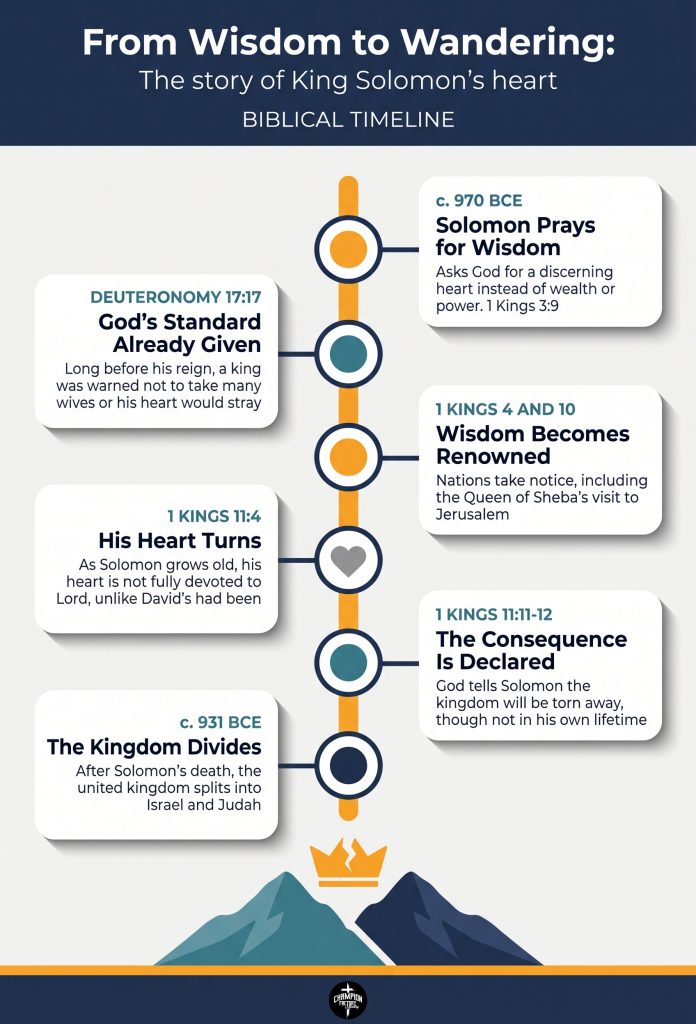
Solomon became king as a young man and asked God for a discerning heart instead of wealth, long life, or victory over his enemies. God was pleased with this request and gave Solomon wisdom beyond any ruler before or after him, along with riches and honor he never asked for.
This moment sets the tone for everything that follows in Solomon's story. He prayed, "So give your servant a discerning heart to govern your people and to distinguish between right and wrong. For who is able to govern this great people of yours?" (1 Kings 3:9, NIV). It was a humble request from a young leader who understood the weight of his responsibility.
God's response was generous. Solomon received wisdom that drew visitors from other nations and shaped some of the most quoted writing in scripture, including much of the book of Proverbs. This period of Solomon's life is the one most people remember. It also makes his later choices harder to understand.
Biblical Perspective
Solomon's request shows that wisdom starts as a gift, not something a person earns through effort alone. It also shows that receiving wisdom and living faithfully with it are two separate things, a distinction that becomes central later in his story.
What It Means That Solomon's Heart Was Not Fully Devoted to God
Scripture says that as Solomon grew older, his heart gradually turned away from full devotion to God. This did not happen through one dramatic decision. It happened through years of choices that ignored a command Solomon already knew, and it cost him the closeness with God that marked his early reign.
The turning point appears in 1 Kings 11:4, which says, "As Solomon grew old, his wives turned his heart after other gods, and his heart was not fully devoted to the LORD his God, as the heart of David his father had been." This verse is honest and specific. It places the weight of responsibility on Solomon's own heart, not on the people around him.
What makes this passage especially sobering is that Solomon was not acting in ignorance. Long before he became king, God had already given clear instructions for any future ruler of Israel, including a direct warning that a king "must not take many wives, or his heart will be led astray" (Deuteronomy 17:17, NIV). Solomon knew this command. He had likely taught it to others. The gap in his life was not a lack of information. It was a slow drift away from applying what he already knew.
Why Knowing the Right Thing Does Not Always Lead to Doing It
Solomon's story reflects something researchers and everyday experience both confirm, that knowing what is right does not automatically produce the action to match it. This gap between knowledge and behavior is common and well documented. Recognizing it is often the first step toward closing it.
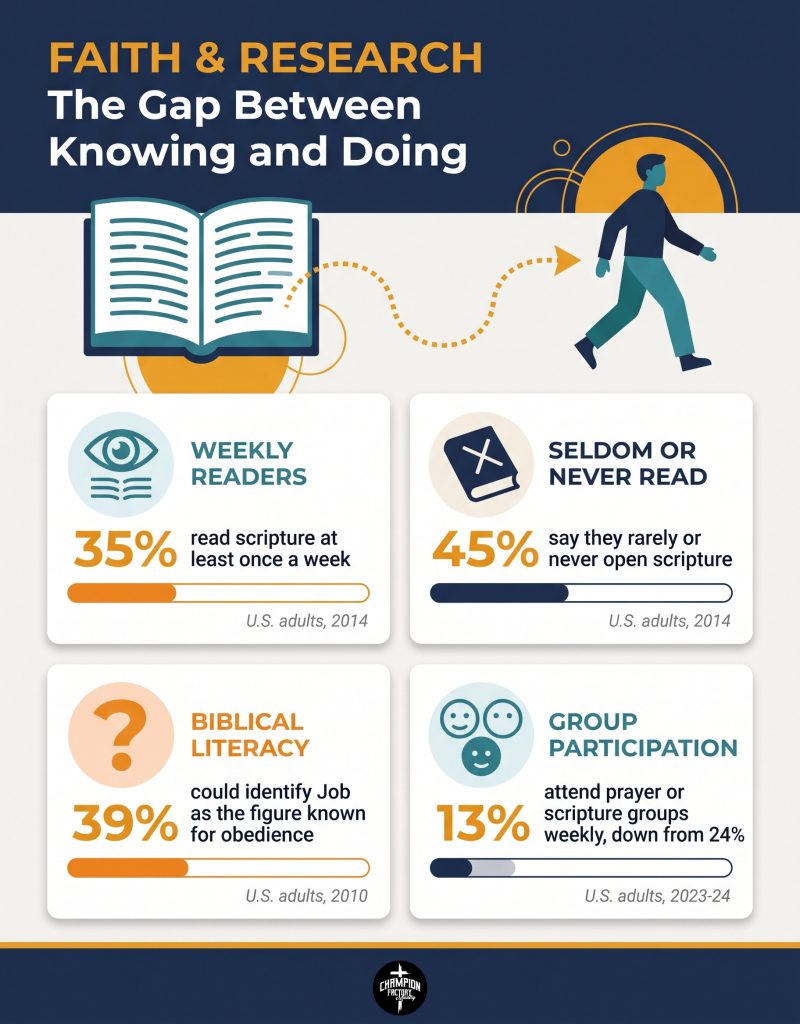
This pattern shows up outside of scripture too. A Pew Research Center study found that about a third of Americans read scripture at least once a week, while nearly half say they seldom or never do. The same research found that many people cannot recall basic biblical details, even when they consider that knowledge important to their faith. Knowing about scripture and living from it are not the same thing.
Management researcher Jeffrey Pfeffer coined the term the knowing doing gap to describe how people and organizations often fail to act on what they already know, not because they lack information but because of fear, inertia, or competing priorities. A peer reviewed study on personal values found something similar, that becoming aware of a gap between stated values and actual behavior can weigh on a person's sense of well being.
Solomon likely felt some version of that same weight. Wisdom gave him the ability to see what was right. It did not automatically give him the daily follow through to live it out, and that is a common human experience, not a rare one.
"Across the outreach work I have been part of in different countries, the pattern holds. A lack of knowledge rarely holds people back. Isolation does." Art Montgomery, Global Evangelism Strategy Architect & Board Visionary Luminary
What Solomon's Disobedience Cost His Family and Nation
Solomon's drift away from full devotion to God did not stay private. Scripture records that God told Solomon the kingdom would eventually be torn away from his family line, though not during his own lifetime out of respect for his father David. After Solomon's death, the nation split into two kingdoms.
This part of the story matters because it shows that personal compromise rarely stays personal. Solomon's choices shaped the future of an entire nation, not only his own reputation. The consequences unfolded slowly, over generations, which mirrors how disobedience often works in real life. It rarely announces itself with one dramatic moment. It builds over time.
It is worth naming clearly that scripture does not blame the women in Solomon's life for his sin. The text places the weight of responsibility on Solomon's own heart and his own decisions. Reading this passage as a warning about Solomon's specific choices, rather than as commentary on the people around him, keeps the focus where scripture puts it.
How to Close the Gap Between Wisdom and Obedience Today
Closing the gap between what a person knows and what they actually do is rarely accomplished through willpower alone. Scripture and current research both point toward the same practical answer, staying in honest relationship with God and with other people who can offer counsel, encouragement, and accountability over time.
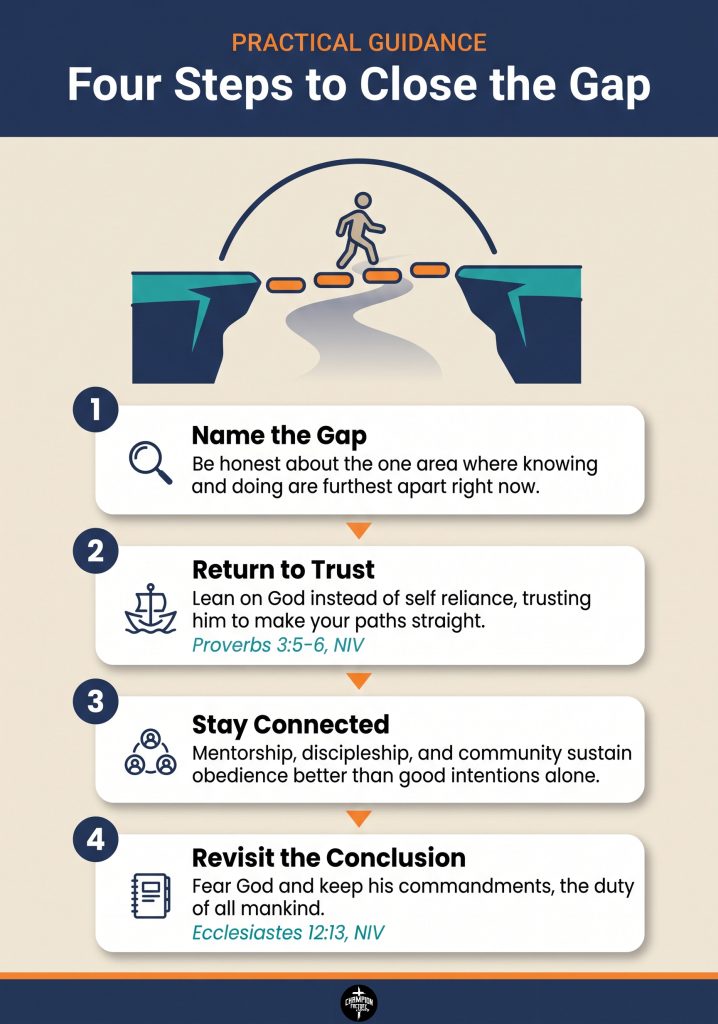
A few practical steps can help with this, whether the struggle is spiritual, relational, or personal.
- Name the specific gap. Be honest about the one area where knowing and doing are furthest apart right now.
- Return to trust instead of self reliance. Proverbs 3:5 to 6 offers this counsel, "Trust in the LORD with all your heart and lean not on your own understanding, in all your ways submit to him, and he will make your paths straight" (NIV).
- Stay connected rather than isolated. Solomon's later years show little evidence of the counsel and accountability that shaped his father's life. Consistent connection with others, through mentorship, discipleship, or community, tends to sustain obedience better than good intentions alone.
- Revisit Solomon's own conclusion. Late in life, he wrote, "Now all has been heard, here is the conclusion of the matter, fear God and keep his commandments, for this is the duty of all mankind" (Ecclesiastes 12:13, NIV). This reads less like a lecture and more like hard won honesty from someone who had lived both sides of the story.
"In discipleship work, we see this again and again. People often know what scripture asks of them long before they are ready to live it out. That gap tends to close faster in community than it does alone." Todd Medina, President & Founder
This is part of why Champion Factory Ministry places a strong emphasis on mentorship and ongoing discipleship through programs like Nourish. Wisdom is a gift from God. Obedience is a practice sustained best in relationship, not in isolation.
Walking Forward with Grace, Not Shame
Solomon's story is not about a wise man who suddenly became foolish. It is about the space every person lives in between what they know and what they do, a space scripture treats with honesty and grace rather than condemnation.
That space is common and human. It is not a reason for shame. Scripture is honest enough to show even the wisest man in the Bible struggling with it, and gracious enough to let his final words be a return to fearing God rather than a record of failure.
If this article stirred something in you, a small step is enough to start. Spend a few minutes in honest prayer about the specific gap you named earlier. Reach out to someone you trust for encouragement instead of carrying it alone. If you want ongoing community and support, Champion Factory Ministry's programs offer a place to grow alongside others working through this same tension between knowing and doing.
FAQ
Did Solomon ever repent for his sin?
Scripture does not give a clear, detailed account of a formal repentance late in Solomon's life. Many readers see Ecclesiastes 12:13, with its call to fear God and keep his commandments, as Solomon's own closing reflection after a life that included both great wisdom and painful compromise.
Is having wisdom the same as being obedient?
No. Solomon's life shows that wisdom is the ability to know what is right, while obedience is the daily choice to live it out. A person can have deep understanding and still struggle to apply it consistently, which is why ongoing relationship with God and others matters so much.
What is the main lesson from Solomon's sin?
The clearest lesson is that knowledge alone does not sustain faithfulness. Staying close to God and to trusted community over time matters more than good intentions or even great wisdom on their own.