






Many people hear the word glory in church, in worship songs, or in scripture and nod along without a clear sense of what it means. It can feel like a familiar word that carries weight but stays out of reach.
This article walks through what the Bible means by the glory of God. It uses scripture to ground the definition in something clear and personal, and it shows what this means for daily life, including how it connects to hope when life feels hard.
What Does the Word Glory Actually Mean in the Bible
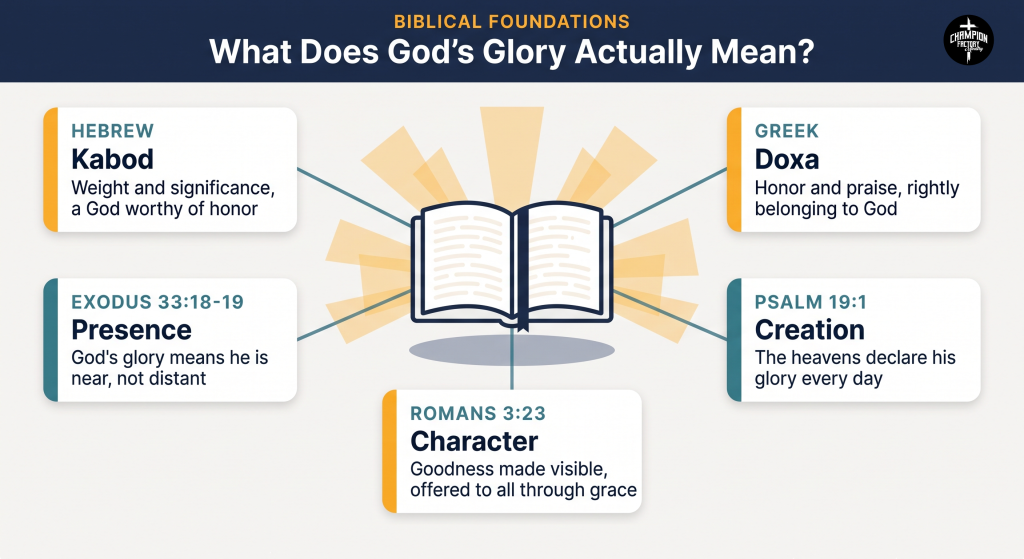
The glory of God means his character, presence, and worth made visible to us. It is not a vague feeling or a distant idea. It describes who God actually is, shown in a way people can see, sense, or understand.
In the Old Testament, the Hebrew word for glory is kabod. It comes from a root meaning weight or heaviness. When scripture calls God glorious, it means he carries real weight and significance, not that he is flashy or showy.
In the New Testament, the Greek word doxa is used. It relates to honor and praise. Together, these words paint a full picture. God's glory is his weighty, substantial character and the honor that rightly belongs to him.
A clear example comes from Exodus, when Moses asks to see God's glory directly.
"Then Moses said, 'Now show me your glory.' And the Lord said, 'I will cause all my goodness to pass in front of you, and I will proclaim my name, the Lord, in your presence.'" (Exodus 33:18 to 19, NIV)
Notice what God offers in response. Not a light show. His goodness. His name. His character. This sets the pattern for the rest of scripture. God's glory is fundamentally about who he is.
"When we teach children about God's glory, we start here. Not with lightning and clouds, but with his goodness and his name. Kids understand character faster than they understand mystery." Todd Medina, President & Founder
How Can I See God's Glory in Ordinary Life
God's glory is visible in creation itself. You do not need a mountaintop experience to encounter it. A clear sky, a change of seasons, or the quiet order of the natural world all point back to him.
Scripture makes this connection directly.
"The heavens declare the glory of God; the skies proclaim the work of his hands." (Psalm 19:1, NIV)
This verse does not describe a rare or hidden glory. It describes something on display every day, for anyone willing to notice.
The prophet Isaiah describes a vision where heavenly beings declare that God's glory fills the whole earth.
"Holy, holy, holy is the Lord Almighty; the whole earth is full of his glory." (Isaiah 6:3, NIV)
Practical ways to notice God's glory in daily life include the following.
- Pausing outside for a few minutes each day to notice something in creation
- Reading a short psalm before checking your phone in the morning
- Naming one thing each evening that reflected God's goodness that day
None of these require special training. They only require attention.
Common Misconception About God's Glory
A common misunderstanding is that glory only refers to dramatic, miraculous moments, a healing, a vision, or a powerful worship service. Scripture describes moments like these, but it also describes glory as something woven into ordinary creation and daily faithfulness. Glory is not only for extraordinary moments. It is present in ordinary ones too.
How Do I Glorify God in My Daily Life
To glorify God means to reflect his character through your words and actions in a way that gives him honor. It is less about grand gestures and more about consistent, faithful choices.
Paul describes this as a whole life orientation, not a single act.
"So whether you eat or drink or whatever you do, do it all for the glory of God." (1 Corinthians 10:31, NIV)
This verse does not list special spiritual activities. It points to ordinary things, eating and drinking, to show that glorifying God is meant to touch every part of life, not just religious moments.
Practical ways to glorify God each day include the following.
- Choose honesty in a conversation where a small dishonesty would be easier
- Offer patience to someone who is difficult to be around
- Do your work with care, even when no one is watching
- Speak encouragement instead of criticism when you have a choice
- Set aside a few quiet minutes to read scripture or pray

"I tell mentors all the time, glorifying God rarely looks dramatic. It looks like showing up on time, telling the truth, and following through on small commitments. That consistency is what people actually notice." Art Montgomery, Global Evangelism Strategy Architect & Board Visionary Luminary
Champion Factory Ministry's discipleship and spiritual growth track, Nourish, helps people build habits like these into daily life, one step at a time.
What Does It Mean That We All Fall Short of God's Glory
Falling short of God's glory means every person, without exception, fails to fully reflect God's character and holiness on their own. This is not a statement meant to shame anyone. It describes a shared human condition that scripture addresses with grace, not condemnation.
Paul writes plainly about this shared condition.
"For all have sinned and fall short of the glory of God." (Romans 3:23, NIV)
This verse is often quoted on its own, but it exists inside a larger story about grace. The point is not to highlight individual failure. It shows that everyone stands in the same need, which makes God's grace something offered to all people equally, not a reward for those who perform well enough.
If this topic brings up feelings of shame or self criticism, that response is common, but it misses the heart of the passage. Scripture pairs this truth with hope, not condemnation. If shame feels heavy or persistent, talking with a pastor, counselor, or trusted mentor can help you process it in a healthy way.
How Does God's Glory Offer Hope When Life Is Hard
God's glory offers real hope during hardship because scripture connects present suffering to a future glory that outweighs it. This does not erase current pain. It places that pain inside a larger story of restoration.
Paul, who experienced significant suffering himself, wrote this.
"I consider that our present sufferings are not worth comparing with the glory that will be revealed in us." (Romans 8:18, NIV)
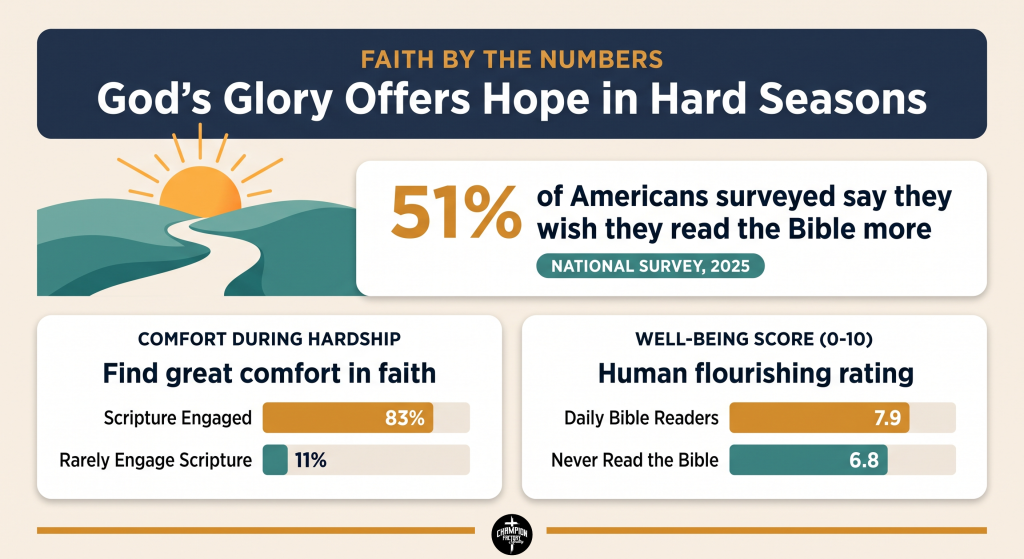
This verse does not ask anyone to pretend hardship does not hurt. It offers perspective alongside pain, not instead of it. Research supports a real connection between scripture engagement and comfort during difficult seasons. According to the American Bible Society's State of the Bible research, people who are highly engaged with scripture are far more likely to say they find great comfort in their faith during hard circumstances compared to those who rarely engage with it.
If you are walking through a season of grief, loss, family hardship, or recovery, this hope is meant to sit alongside real support, not replace it. Champion Factory Ministry's mentorship and support programs exist to walk with people through hard seasons. Professional counseling or medical care remains an important part of healing when hardship runs deep.
"I have sat with people in some of their hardest seasons. Scripture does not skip past the pain. It sits with it, then points to something more. That order matters." Todd Medina, President & Founder
Encouragement for Hard Seasons
If today feels heavy, you do not need to have this concept fully figured out to hold onto hope. Scripture allows space for honest pain while still pointing toward something good ahead.
Does God's Glory Mean He Is With Me
Yes. Throughout scripture, God's glory is closely tied to his presence, not just his power. When the Bible describes glory filling a place, such as the tabernacle or the temple, it describes God being near, not just being impressive.
Paul describes an ongoing, personal connection to God's glory for believers.
"And we all, who with unveiled faces contemplate the Lord's glory, are being transformed into his image with ever increasing glory, which comes from the Lord, who is the Spirit." (2 Corinthians 3:18, NIV)
This verse describes transformation as a process, not a one time event. Glory here is relational. It is about ongoing closeness with God, shaping a person gradually over time.
For anyone who feels distant from God right now, this passage offers a gentle reminder. Glory is not reserved for people who have it all figured out. It is offered in the process of drawing near, imperfectly and gradually, over time.
Living Out What You Now Know About God's Glory
Understanding the glory of God is not meant to stay in your head. It is meant to shape how you see your days, your struggles, and your relationship with him.
If you take one thing from this article, let it be this. God's glory is not distant or reserved for extraordinary moments. It is present in creation, in ordinary choices, in honest struggle, and in his ongoing nearness to you.
A simple next step could be as small as reading one of the verses above again tomorrow morning, or spending five quiet minutes in prayer before your day begins. If you want a supportive next step in your own growth, the Nourish discipleship program offers a place to explore questions like this one alongside others on the same path. If you would like to support this kind of spiritual growth work for others, you can learn more on our get involved page.
FAQ
What is the simplest definition of the glory of God?
The glory of God is his character, presence, and worth made visible. It describes who he is in a way people can see and understand.
Is God's glory only shown through miracles?
No. Scripture describes glory in dramatic moments, but also in ordinary creation and daily faithfulness. Glory is not limited to rare or extraordinary events.
How can I experience God's glory personally?
Scripture connects experiencing God's glory to reading his word, noticing creation, and drawing near to him in prayer over time. It describes this as an ongoing process, not a single moment.
Does believing in God's glory mean my struggles will go away?
No. Scripture is honest about real suffering. It offers hope and perspective alongside hardship, not a promise that hardship will disappear. Professional support remains an important part of healing during difficult seasons.