





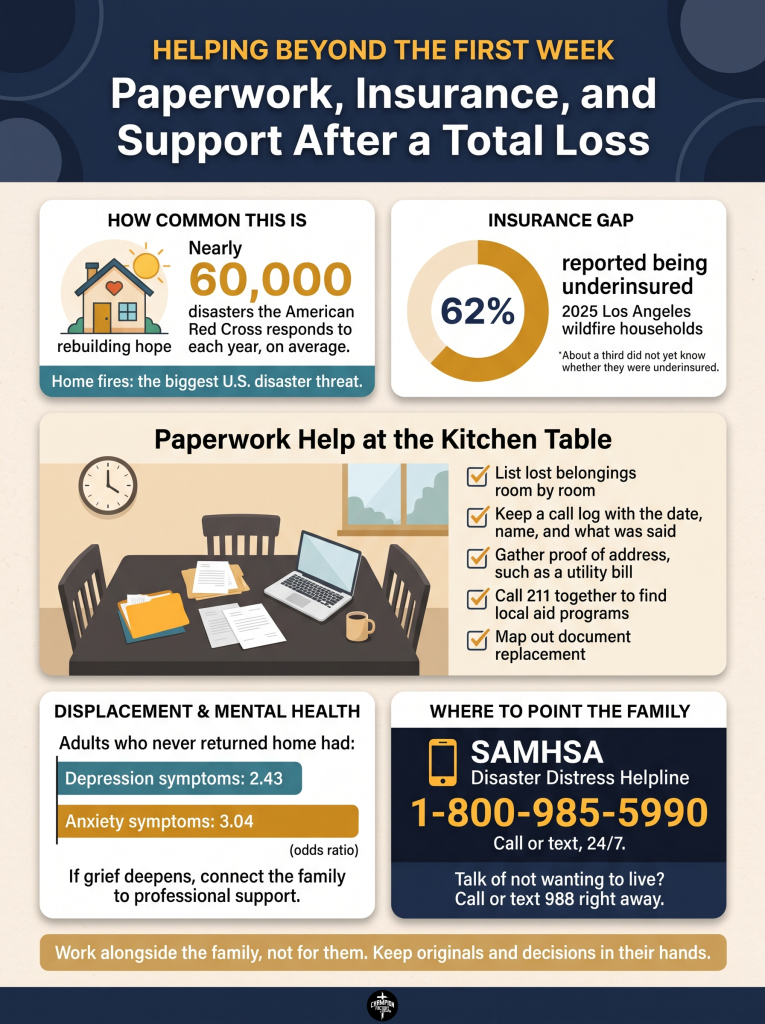
A fire, flood, or storm can take a family's home and nearly everything in it in one day. The American Red Cross responds to an average of nearly 60,000 disasters each year and names home fires as the biggest disaster threat in the United States. When it happens to someone you know, you want to help well.
At Champion Factory Ministry, we believe good help gives a family back the power to make its own choices while it replaces what was lost. That means asking before giving, protecting their story, and staying until they can lead their own recovery. This guide shows what is yours to do based on how close you are. For a day-by-day plan, read what to do when a family loses everything.
How to Start Helping Without Overwhelming the Family
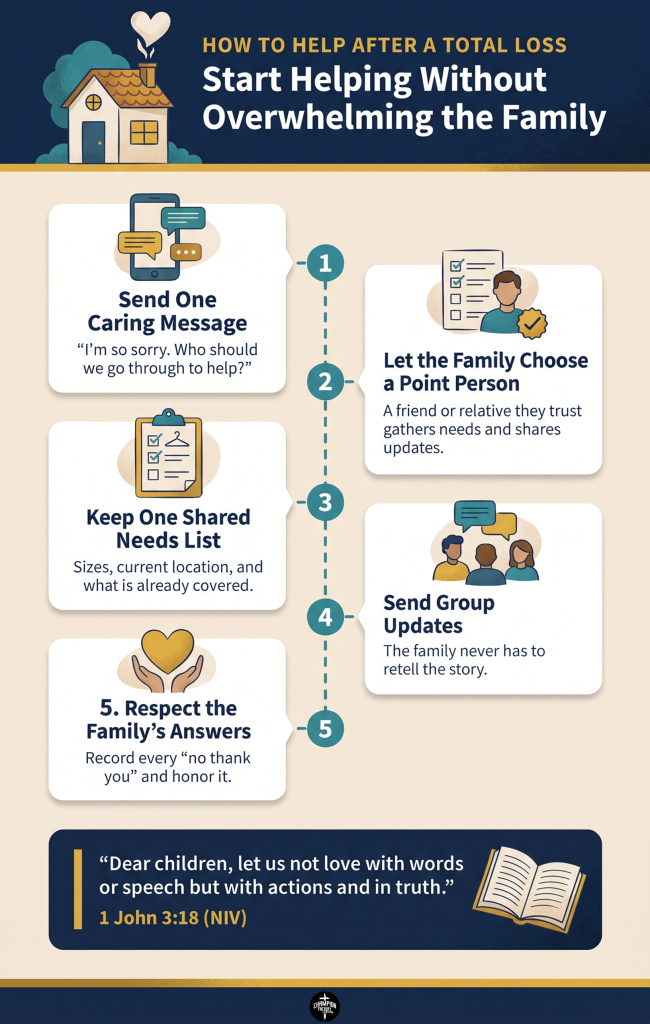
Start with one message: "I'm so sorry. Who should we go through to help?" Then help the family name one point person, a friend or relative they trust, to gather needs and share updates. The family answers one person instead of dozens, and every meal, ride, and donation goes through one list they control.
Setting Up a Point Person and a Shared Needs List
- Let the family choose. If they choose you, say yes only if you can serve for weeks.
- Keep one needs list with sizes, current location, and what is already covered.
- Send group updates so the family never has to retell the story.
- Record every "no thank you" and honor it.
Why "Let Me Know If You Need Anything" Falls Short
The offer is kind, but it hands the family a job. For example, a neighbor might say instead, "I can do your laundry Tuesday and Friday. Can I pick it up at the hotel?" Then the family only has to answer yes or no.
What Your Help Should Look Like Based on How Close You Are
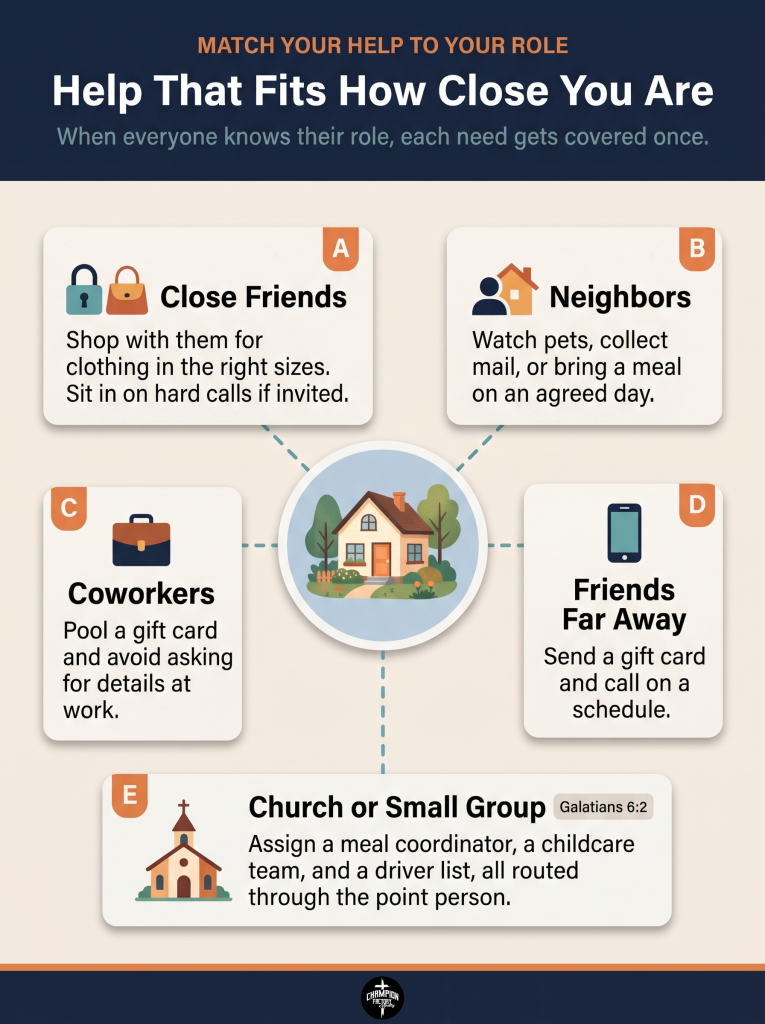
You may be a best friend, a coworker, a church member, or someone who lives far away. Each role fits different help. Close friends handle personal needs. Neighbors and coworkers take defined tasks. Churches organize shared work. Distant friends give money and steady contact. When everyone knows their role, each need gets covered once.
Help From Friends, Neighbors, Coworkers, and Those Far Away
- Close friends: Shop with them for clothing in the right sizes and sit in on hard calls if invited.
- Neighbors: Watch pets, collect mail, or bring a meal on an agreed day.
- Coworkers: Pool a gift card and avoid asking for details at work.
- Friends far away: Send a gift card and call on a schedule. Fire survivor Carolynn Spezza told KQED, "It will not be too late to give kindness for quite awhile."
How a Church or Small Group Can Share the Work
A church can take on the shared work Galatians 6:2 describes. Assign a meal coordinator, a childcare team, and a driver list, all routed through the point person.
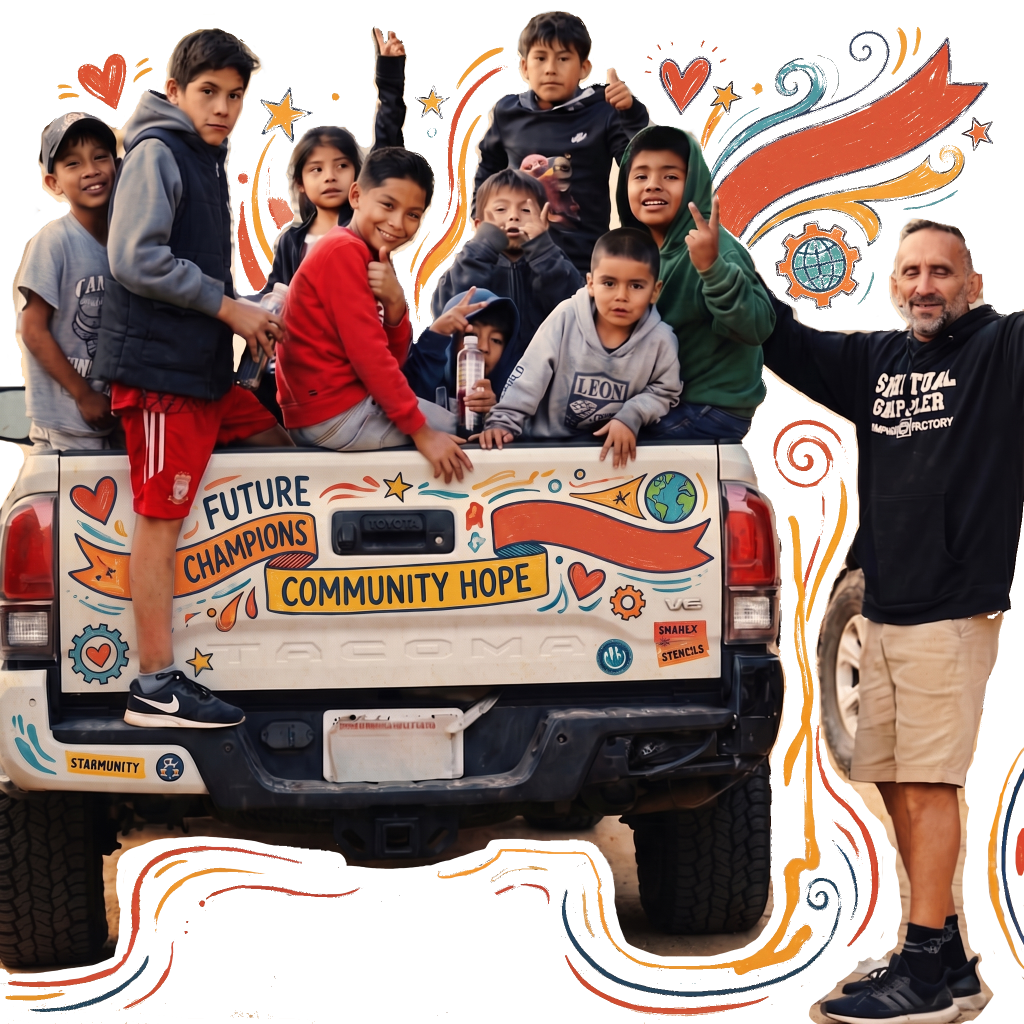
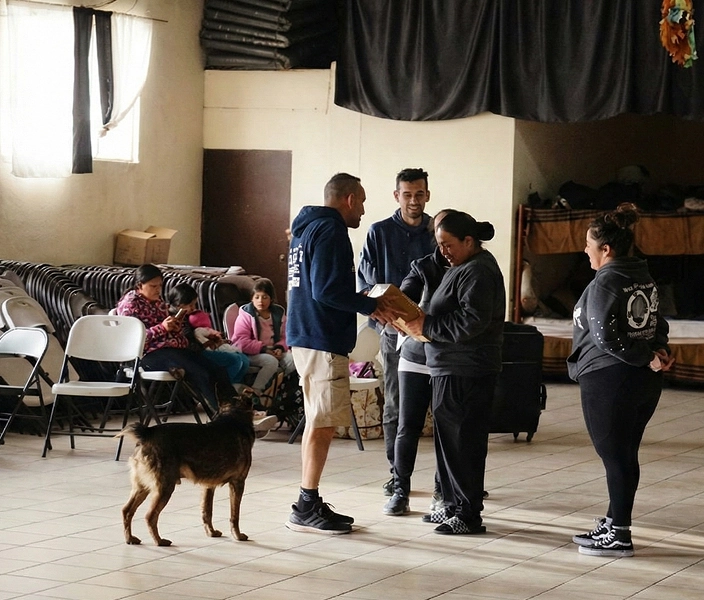
Leave room for neighbors to lead too. After a fire destroyed eight homes in a small Mexican community, the ministry distributed truckloads of clothing, blankets, and essential supplies. People who had lost their own belongings also began sharing with those who had lost more, and neighbors started working side by side.
What to Say to a Family Who Just Lost Their Home
Romans 12:15 (ESV) says, "Rejoice with those who rejoice, weep with those who weep." It asks us to join a family in grief, not correct it. Say "I'm so sorry" and "I'm here." Name the loss plainly, listen more than you talk, and let the family decide when to talk about faith.
Licensed counselor Stanley Ly advises helpers to "Resist the temptation to 'offer the bright side'" in his guidance for friends of fire survivors. Sorrow over photos, heirlooms, and years of ordinary life is honest. It is not a lack of faith.
Offering Faith Encouragement When It Is Welcome
If the family draws strength from faith, a short written note may help more than a speech. You might share Psalm 34:18 (NIV): "The Lord is close to the brokenhearted and saves those who are crushed in spirit."
Let the verse stand without explanation. It speaks of God's nearness, not a quick end to hard days.
How to Share Their Story or Start a Fundraiser With Consent
Get the family's clear yes before you post about them or raise money in their name. Ask what they want shared, which photos are okay, and who receives the funds. Choose one trusted organizer, send money directly to the family, and share only updates the family approves. Their story belongs to them.
An address, a child's name, or a photo of a damaged home can follow a family online for years.
"A family's story is not ours to tell. When we ask first, we give back a small piece of the control the loss took from them." Todd Medina, President & Founder
Agreements to Make Before Anything Goes Public
- Ask whether they want a public fundraiser, a private one, or none.
- Leave out addresses, children's names, and any talk about the cause of the loss.
- Show the family the post or page before it goes live.
- Ask again before posting later updates or photos.
Giving Money, Gift Cards, and Goods Wisely
Cash and gift cards let the family choose. FEMA's donation guidance says cash is best and warns that donated goods without planning can burden a community already in crisis. Ask the point person before giving items, and buy them new in the right sizes.
How to Help With Insurance, Paperwork, and Lost Documents
After a total loss, families face hours of forms, calls, and lists while still in shock. You can make calls, track deadlines, and help rebuild the contents inventory. Work alongside the family, not for them. Keep originals and decisions in their hands, and send legal or insurance questions to licensed professionals.
Paperwork Help You Can Offer at the Kitchen Table
- List lost belongings room by room for the insurer's contents inventory.
- Keep a call log with the date, name, and what was said.
- Help gather proof of address, such as a utility bill.
- Call 211 together to find local aid programs.
- Map out document replacement. FEMA notes that survivors registering for assistance need information such as Social Security numbers and proof of ownership or rental occupancy. Many lost papers can be replaced through vital records offices and the Social Security Administration.
Having Insurance Does Not Always Mean Being Covered
In a United Policyholders survey of 2025 Los Angeles wildfire households, 62 percent reported being underinsured, and about a third did not yet know whether they were. That is why "Did you have insurance?" is a tender question. Let the family share the answer when ready, through the point person.
How to Tell When a Family Needs More Than Friends Can Give
Friends and churches offer presence and practical care, but they cannot replace counselors, doctors, attorneys, or emergency services. Watch for grief that deepens over weeks, withdrawal from people and routines, or any talk of hopelessness. When you see these signs, gently connect the family to professional support and stay close.
A study in JAMA Network Open found that adults displaced by natural disasters had higher odds of depression and anxiety symptoms. Adults who never returned home had 2.43 times the odds of depression symptoms and 3.04 times the odds of anxiety symptoms.
Where to Point the Family for Support
SAMHSA's Disaster Distress Helpline offers 24/7 crisis counseling and support by call or text at 1-800-985-5990. If anyone talks about not wanting to live, call or text 988 right away.
How the Ministry Decides What Help Fits
The ministry's field approach is to help where help is possible, connect people to resources that can do more, and know when extended involvement would not produce the outcome everyone hopes for. In one outreach encounter, the team contacted a trusted ministry associate to help assess what support was appropriate and safe to offer.
"Knowing your limits is part of faithful service. Walking a family to the right counselor or agency is still ministry." Art Montgomery, Global Evangelism Strategy Architect & Board Visionary Luminary
No single helper has to meet every need. Psychological First Aid, from the National Child Traumatic Stress Network and the National Center for PTSD, lists linkage with collaborative services as a core action, alongside practical assistance and connection with social supports.
Show Up Soon, Then Stay While the Family Rebuilds
1 John 3:18 (NIV) says, "Dear children, let us not love with words or speech but with actions and in truth." For a family who lost everything, that love looks like specific offers, protected privacy, and calls months later. The family leads. You handle the tasks that are yours.
Christopher Hackett of the Property Casualty Insurers Association of America recommends "regularly checking in on them and just calling" in the months after a fire. Champion Factory Ministry's approach follows a similar pattern: immediate support, then ongoing care and mentorship, faith-centered guidance, and long-term restoration.
Text the point person today and ask for one task that is yours. Pray for the family by name. If your church or group wants to serve families in hardship, explore ways to get involved.
FAQ
How Can I Help the Children?
Ask parents before giving toys or clothes. Offer to keep familiar routines going, such as rides to school or practice. Do not ask children to describe what happened.
What If the Family Has No Insurance?
Ask the point person which costs are most urgent, such as a rental deposit, transportation, or replacing work tools. Direct financial help and local referrals through 211 often matter most.
Can Families Contact the Ministry for Support?
Yes. Families can reach out through the contact page. Support for Children and Families may include practical assistance, mentorship connections, encouragement, and faith-centered guidance, and support is relationship-based.