





A fire, flood, or storm can take a family's home, clothing, papers, and keepsakes in one day. The U.S. Fire Administration estimates there were 344,600 residential building fires in 2023. When it happens to someone you love, you want to help right away and may not know where to start.
At Champion Factory Ministry, we believe a faith-based response does two things at once. It meets physical needs quickly. It also stays long enough to help the family rebuild stability, dignity, and connection, while the family makes its own decisions. Here is how to help now and in the months ahead.
What a Family Needs in the First 72 Hours After a Total Loss
Start by making sure everyone is safe and has a dry place to sleep tonight. Then help with the first calls: 911 if anyone is hurt, the Red Cross, 211 for local resources, and the insurer or landlord. Next come clothing, toiletries, food, and medication.
Steps for the First Three Days
- Call for help. Reach the American Red Cross at 1-800-RED-CROSS. Its volunteers usually arrive within two hours of notification.
- Cover the basics: socks, underwear, toiletries, and a phone charger.
How One Community Was Cared For After Eight Homes Were Lost
In a ministry response in Mexico, a fire tore through eight homes and left families with nothing but the clothes they were wearing. Within days, the ministry distributed truckloads of clothing, blankets, and essential supplies, plus food and financial support to help stabilize temporary housing.
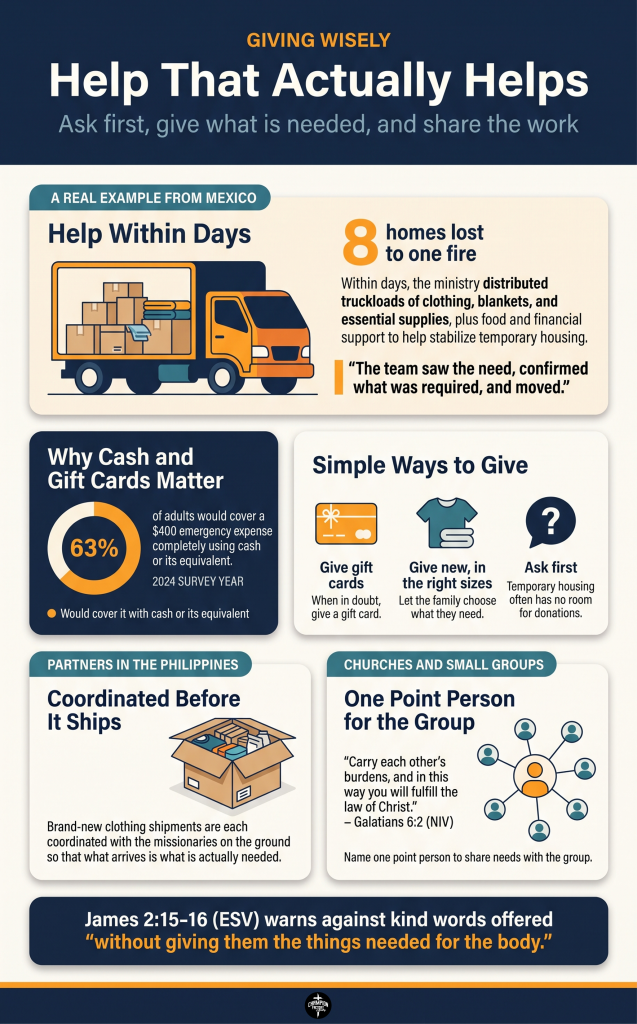
The ministry's report describes the order in one line: "The team saw the need, confirmed what was required, and moved." Notice the middle step.
What to Say to Someone Who Lost Everything, and What to Avoid
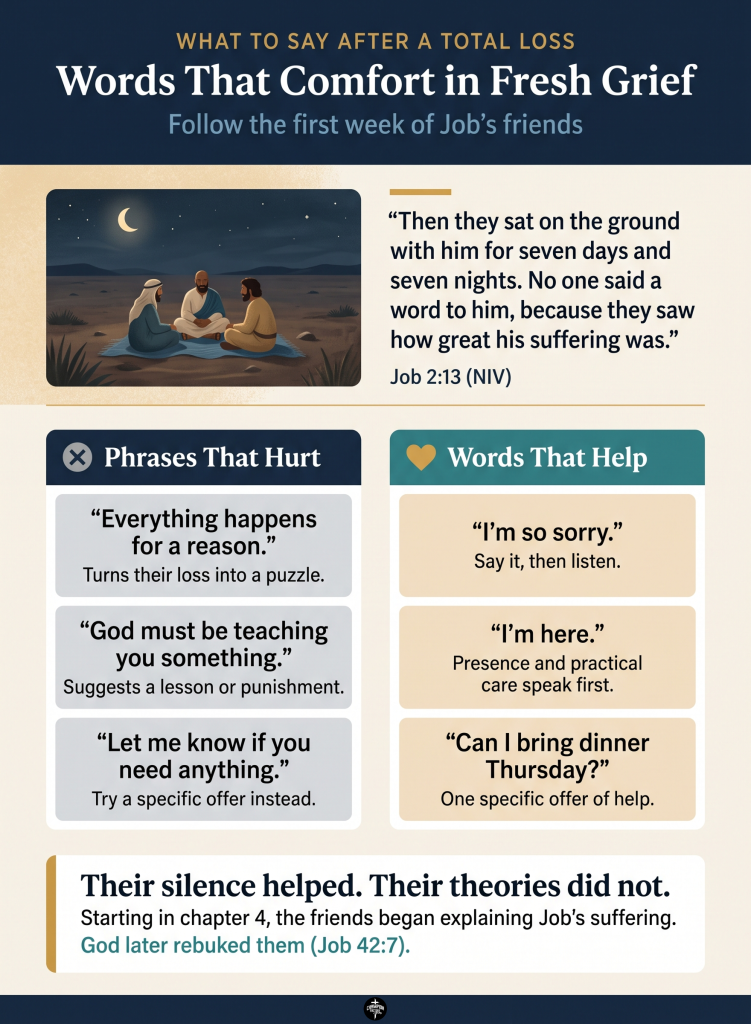
Job 2:13 (NIV) shows the first response: "Then they sat on the ground with him for seven days and seven nights. No one said a word to him, because they saw how great his suffering was." Start there. Say "I'm so sorry" and "I'm here," then listen.
Grief is not a lack of faith. "Grief is the natural response to loss, whatever that loss is," psychology professor Mary-Frances O'Connor told the Associated Press.
What Job's Friends Got Right, and Where They Went Wrong
That first week was faithful. Starting in chapter 4, the friends began explaining Job's suffering and blaming him, and God later rebuked them (Job 42:7). Their silence helped. Their theories did not.
"Presence and practical care speak first in a crisis. Let the family decide when to talk about faith." Art Montgomery, Global Evangelism Strategy Architect & Board Visionary Luminary
Phrases That Hurt More Than They Help
- "Everything happens for a reason." It turns their loss into a puzzle.
- "God must be teaching you something." It suggests the loss is a lesson or punishment.
- "Let me know if you need anything." Try "Can I bring dinner Thursday?" instead.
How to Give Practical Help Without Overwhelming the Family
You may want to fill your car with clothes and drop them off today. Pause and ask first. A family in temporary housing often has no room for donations. Gift cards, cash, and new items in the right sizes let them choose what they need.
James 2:15-16 (ESV) warns against kind words offered "without giving them the things needed for the body."
Simple Ways to Give in the First Weeks
- Give gift cards. "When in doubt, give a gift card," advises Emily Rogan of United Policyholders.
- Ask first, then give new. The ministry's brand-new clothing shipments to partners in the Philippines are each coordinated with the missionaries on the ground so that what arrives is what is actually needed.
How a Church or Small Group Can Share the Work
"Carry each other's burdens, and in this way you will fulfill the law of Christ." (Galatians 6:2, NIV)
A total loss is too heavy for one family or one friend. Name one point person to share needs with the group. In the Mexico response, people who had lost their own belongings began sharing with those who had lost more. Good help leaves room for neighbors and the family to lead.
How to Keep Helping After the First Month
After the first month, put your help on the calendar. Early help often comes quickly in the first week, and recovery lasts much longer. Set reminders at one, three, six, and twelve months, and plan around hard dates like the first holiday in a new place.
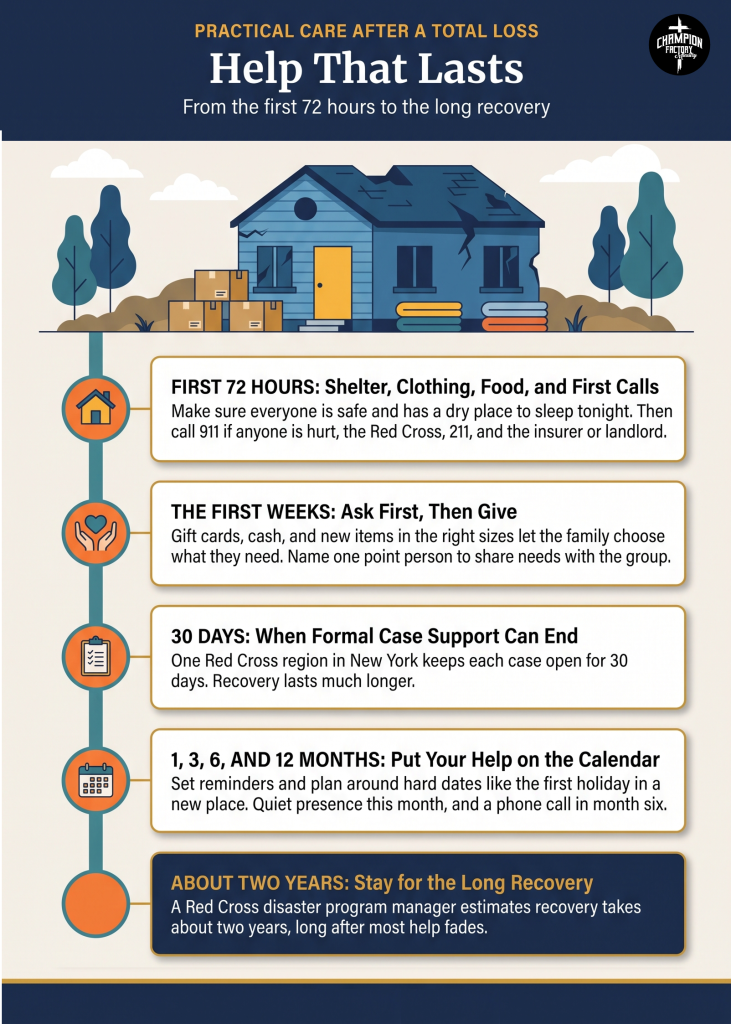
One Red Cross region in New York keeps each case open for 30 days. "On average, it takes about two years, either emotionally, financially, things like that, to recover from a home fire," Julianna Stella of the Red Cross told WHEC News10NBC.
"Children watch who comes back. When the same faces show up in month six as in week one, kids learn what faithful love looks like." Todd Medina, President & Founder
When Grief Needs More Than Friends Can Give
A study in JAMA Network Open found that displacement by natural disasters was associated with increased odds of reporting depression and anxiety symptoms, with the highest odds among adults who had not returned home in the past 12 months. If grief deepens instead of easing, encourage a licensed counselor. Friends and ministries offer support, but they do not replace professional care. The SAMHSA Disaster Distress Helpline offers free crisis counseling by call or text at 1-800-985-5990.
Rebuilding So the Next Loss Is Less Likely
For years, the ministry's team has built homes in the hillside neighborhoods around Tijuana from foam panels and wood framing, because that is what a family there can afford. When another family's house nearby burned to the ground, the team came back afterward to help the community pick itself back up. So the ministry chose steel for its new school, a material built to last decades, not years.
Show Up Quickly, Then Stay for the Long Recovery
A faith-based response is made of small, steady acts: clothing and food this week, quiet presence this month, and a phone call in month six. As psychology professor Jennifer Talarico told the Associated Press, a disaster "might be a marker of the before and after, but there is an after."
Today, pray for the family by name and send one specific offer of help. If you want to serve families facing hardship, explore ways to get involved with Champion Factory Ministry.
FAQ
What If the Family Has No Insurance or Savings?
Cash and gift cards matter most, because many households have little savings for emergencies. In the Federal Reserve's 2024 survey, 63 percent of adults would cover a $400 emergency expense completely using cash or its equivalent. Ask 211 about local aid programs.
How Can I Help the Children?
Keep school and bedtime routines steady. Let parents choose replacement toys or books, and offer childcare so parents can handle calls without children hearing every hard conversation.
Can Families Contact the Ministry for Support?
Yes. Families can contact us through the website to learn about available programs and support opportunities. Through Support for Children and Families, support may include practical assistance, mentorship connections, encouragement, and faith-centered guidance.